About This Site
Over 50 years of research into the Stratton, Schneider, King, and allied families—from colonial Massachusetts to Indiana and beyond. Built by Bill & Karen Stratton.

 Strattons of Massachusetts Bay
Running Through the Sands of Time

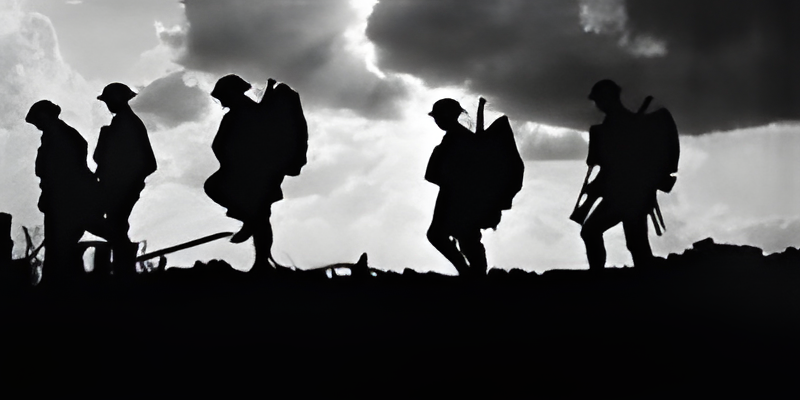
"The wireless telegraph is not difficult to understand. The scientific principles upon which it is based are simple enough." —Guglielmo Marconi
Before the war came for them, the three Stratton brothers were already listening.
Frank, the eldest at twenty-seven in 1917, had built the first crystal set in the back room of their Indianapolis home back in 1910, when radio was still more magic than science and the airwaves belonged to anyone patient enough to tune them in. As the responsible oldest, with a steady job wiring early telephone lines around town, he strung antenna wire between the barn and the roof, soldered connections by lamplight, and spent his evenings copying Morse from distant stations that flickered in and out like ghosts. Fred, two years his junior, watched and learned from the start. By the time he was twelve, he could tune a set by ear and diagnose a bad coil faster than Frank could pull the cover off; by sixteen, he was the one Frank called when something wouldn’t hum right.
Ferd, the youngest at nineteen when the call to arms came, was still too young to solder without supervision in those early days, but he had the best ears of the three. He could hear the difference between a clean signal and a drifting one, could pick out call signs through static that sounded like gravel to everyone else. The brothers worked as a crew: Frank theorized and led, Fred built with steady hands, and Ferd listened sharp for what the others missed.
When the United States entered the war in 1917, all three knew where they belonged—though duty pulled them in different directions. Frank, already established and perhaps seeing his role as shaping the next wave of signalmen, enlisted in the Army but stayed stateside, training fresh recruits at camps in Texas and Virginia. He taught boys straight off farms how to string wire and operate field sets, never seeing France or hearing a German shell, but sending hundreds of men overseas with skills that kept them alive.
Ferd, restless and eager to test his ears against the real thing, joined the Navy as a radio operator. He went to sea on a destroyer, one of the lean, fast ships that escorted convoys across the Atlantic, hunting U-boats and listening to the crackling distress calls of merchant ships that didn’t make it. His war was cold salt spray, the hum of engines, and the narrow bunk where he slept between watches, headphones still warm from the last operator’s shift.
Fred, the middle brother at twenty-one and itching for the front where his fixes could matter most, enlisted in the Army and told them he knew wireless. When they asked how well, he said, “Well enough to fix yours when it stops working.” They made him a private first class, handed him a toolkit, and shipped him to France with the 150th Field Artillery. By the time the transport cleared Hoboken piers, Fred was already trouble-shooting a balky spark gap set in the ship’s radio shack, sleeves rolled up, explaining to a skeptical ensign why the grounding lead mattered.
The three brothers wrote letters when they could—short, technical, full of complaints about inferior equipment and observations about how the Germans, the French, and the British all did signals differently. They didn’t write about fear, or mud, or the men who didn’t come back. They wrote about frequencies, antennas, and the stubborn, satisfying work of making a broken set talk again.
Frank stayed safe. Ferd stayed afloat. And Fred went to war carrying the lessons both his brothers had taught him: that the work mattered, that the set had to stay on, and that somewhere in the static and the chaos, there were voices worth hearing if you listened carefully enough.
This is Fred’s story—the one in the middle, who went to France, kept the radios humming, and came home with pieces of the war still lodged under his skin.
"We are not makers of history. We are made by history." —Martin Luther King Jr.
The President Lincoln was packed as tight as a boxcar and smelled the same, only wetter, with a stubborn tang of coal smoke and brine. Fred Stratton stood at the rail, boots braced against the roll, watching the New Jersey coastline fade into November haze. The President Lincoln, a stout vessel with brass fittings stamped in German and cabin numbers still painted in Gothic script, seemed to remember her Hamburg days even as she sailed under American guns.
Around Fred, farm boys from Indiana pressed their faces against the salt-streaked lifeboats, some trying not to look impressed or sick, most failing one way or another. The ship’s lower passages were a warren of pipes and exposed brass, beds packed into corners: old steerage and cargo decks now dense with men and their equipment.
Overhead, a single squat funnel stained the sky as the engines hummed—rebuilt by Navy yard men after the original German crew tried to wreck them when the war began.
Fred was twenty-one, his private first class chevron still sharp at the edges. He hauled a canvas tool roll as heavy as the Springfield on his shoulder. When the transport officer made rounds, squinting at his manifest, Fred answered, “Radio operator.” The officer raised an eyebrow, as if Fred might have announced he could fly.
“You mean telegraph?”
“No, sir. Wireless. Spark sets, tubes. Continuous wave, if they’ve got them.”
The officer frowned, scribbled something, and moved on, leaving Fred to his thoughts and the chunk of deck he’d claimed since the convoy left Hoboken. Above, Atlantic wind rattled the blackout curtains that swaddled every porthole. At dusk, the order was strict: no lights, not even cigarettes, not a sliver of glow for submarines to spot.
Nights on the Lincoln bled into one another. Destroyers prowled well off the beam, gray shadows darting in and out of view like faster fish herding the convoy’s slow cattle. Men whispered nervous jokes about U-boats, but no one misbehaved when the cruiser Seattle cut across their field of vision, signal flags snapping, her guns ready. Sometimes Fred caught sight of her silhouette—sharp, businesslike—out ahead, part guardian, part warning.
Below decks, the Lincoln pulsed with life. Air thickened—sweat, tobacco, boot leather, the occasional whiff of what might have been German pipe smoke from a bulkhead that remembered its past. Soldiers played cards in flickering lamplight, leaned over letters home, or swapped rumors. Fred spent his evenings perched on a rough bunk, manual open in his lap, tuning out the noise as if it were static on a bad line. He’d learned to block out chaos, eyes tracking the diagrams for crystal and gap-set repairs, ears attuned to engines’ healthy rumble, a mechanic’s son’s second language.
A sergeant, pausing in the narrow aisle, eyed Fred’s battered manual. “That gonna help you shoot Germans, Stratton?”
Fred didn’t look up. “No, Sergeant. But it might help someone tell you where they are.”
The man grunted—after two weeks at sea, most jokes washed dull.
The crossing wore on. Once, the alarm thundered—a submarine scare off the port bow. Below, Fred heard the ship stutter as engines shifted, zigzagging, escorts sliding in close. For thirty tense minutes, breath was rationed and jokes died off. Afterward, men didn’t call it a pleasure cruise anymore.
Convoy life was ordered chaos: days spent on deck in the wind, eyes sweeping the formation—the Lincoln, flanked by Henry R. Mallory, Pastores, Tenadores, and others. Nights were velvet-dark, ship speeds matched, watchers straining ears and nerves. Somewhere behind them, Fred sometimes thought, was a brother riding another ship’s static—two operators on separate signals, hearing the same Atlantic hiss.
When land returned, it was no fierce welcome—just a gray French coastline barely visible in the mist. St. Nazaire squatted under cranes and lighthouses, the port a clatter of shouting in three languages, the Lincoln nosing in past breakwaters scarred by the last war, greeted only by the stink of coal and wet rope. The ship’s great deck shivered as lines were thrown. Orders barked in American English, repeated in French, lost in the British laborers’ song—men who looked right past the cargo of fresh faces and new uniforms.
“Welcome to France, boys,” the captain managed, assembling them on stone slick from centuries of rain. “Try not to embarrass your mothers.”
On the broken cobbles Fred heard his name. “Stratton—fall out. HQ wants you.”
A runner led him into chaos: crates, canvas, a creaking building with a painted stencil of the 150th F.A. On a makeshift desk, a first sergeant squinted.
“You the radio operator?”
“Yes, Sergeant.”
“Can you really work one, or just check a box?”
Fred shrugged. “I can work it. Fix it. Build one if you have the parts.”
The sergeant thought, then pushed a stiff new set of corporal’s chevrons across the desk. “Congratulations. Signals section. They’ve got a set that’s supposed to talk to division, but it mostly hums.”
Fred pocketed the stripes, finding them warm from a previous owner. “Any chance to see the set first?”
“You’re looking at your chance, Corporal.”
Signals turned out to be three tents, a pair of mules, and a shed with a jury-rigged long-wire antenna—wires everywhere, some at home, many looking lost. The field wireless, caked in carbon, sat on a scarred crate beneath a hand-painted German warning, left from the ship’s past. A skinny private offered a lopsided smile.
“You the new radio operator?”
“Looks like. What’s wrong?”
“Everything. Hums and sparks, no range. We’ve used more runners than messages.”
Fred ran his eyes along the connections—look first, always. “When’d it last work?”
“Stateside, maybe. Since France—decoration.”
“Let’s see if we can make it sing.” He emptied his canvas roll.
Three days fixing: cleaning contacts, scavenging a condenser from a French depot, rewinding coils, soldering what the last man rushed. He replaced the antenna rope with wire tied to a half-standing mast, nodded satisfaction at the quieter spark gap.
When the set fired, the ether sang—a clean, bright arc.
The private nearly cheered. “It works!”
Fred grinned, fine-tuning. “Course it works. Just took someone who knows what ‘working’ sounds like.”
Soon, “radio operator” meant Fred. Officers brought him mysteries: silent phones, cut wires, hums with no signal. His circle—Sgt. Daniels, Kniptash with sharp eyes, Whittaker on switchboard, Haley the tireless hiker—kept the 150th’s lines alive. They called themselves the B.C. detail, their shop smelling of oil, hope, and the faint ghost of German tobacco—a detail Fred alone seemed to notice, like a signal still echoing beneath new orders.
"In modern warfare, the struggle consists in the delivery of the maximum amount of violence in the minimum time." —George S. Patton
One afternoon, a French liaison officer stopped by the signals shed and watched Fred adjusting the tuning on a receiver, headphones clamped over his ears, fingers delicate on the knob.
“You are young for such work,” the Frenchman said in careful English.
Fred pulled one earphone back.
“Old enough to hear it when it’s right, sir.”
The Frenchman smiled. “The Germans, they are very good with wireless. You will need to be better.”
“I’ll work on that,” Fred said, and went back to his tuning.
Training continued through the winter—cold, wet, and endless. The 150th moved from camp to camp, learning French artillery methods, American fire discipline, and how to keep equipment working in conditions that seemed designed to break it. Fred’s world became a cycle of maintenance, innovation, and improvisation. When division sent down a new procedure for coordinating fire missions over wireless, he was the one who translated it from theory into something that actually worked in a muddy French field. When a set’s tubes blew during a night exercise, he jury-rigged a replacement from parts nobody thought would fit together.
In early March, Fred and Sgt. Daniels drew a week-long detail to the 2nd Battalion, scouting wire routes and testing sets in the wet snow. Back at camp, Kniptash—left in charge with Whittaker and Haley—wrote in his diary how it felt like the first time he’d been “boss” since enlisting, watching French regiments march past under “Madelon” while the rain chilled them to the bone. Fred returned with notes on better grounding for damp fields, and the detail’s rhythm tightened: Daniels leading, Fred innovating, the privates executing.
The officers noticed.
“Corporal Stratton,” the signals lieutenant said one morning, “division wants a demonstration of our wireless capability next week. I need you to make sure we don’t look like idiots.”
“I’ll do my best, sir,” Fred said.
“Your best,” the lieutenant replied, “is the only reason we’re not still shouting at each other with flags.”
The demonstration went smoothly. The set transmitted clearly, received on schedule, and didn’t catch fire, which put it ahead of two other regiments. Afterward, the battery commanders started asking for Fred by name when they had a signals problem. The headquarters staff started assuming he’d have an answer before they finished asking the question. It was the kind of reputation that could get a man extra work, but it also kept him doing what he was good at instead of just what he was trained for.
By the time the 150th was ready to move toward the front, Fred had been with Headquarters Company long enough that the signals section felt like his own private workshop. The sets were clean, the procedures were solid, and the men who worked with him had learned not to touch anything without asking first.
One evening, sitting outside the signals tent with a cup of coffee that tasted like it had been brewed in a boot, the skinny private asked him, “You ever worry about what happens when we actually get shot at?”
Fred looked up at the sky, which was starting to show stars through the thin clouds.
“I worry about the set staying dry,” he said. “And the antennas not getting blown down. And having enough spare tubes.”
“That’s it?”
“That’s enough,” Fred said. “I can’t stop a shell, but I can make sure someone hears it’s coming. That’s the job.”
The private nodded slowly, as if the logic of it had just settled into place.
“Guess that makes you pretty important, Corporal.”
“Makes me pretty busy,” Fred said. “Important’s for people who give speeches. I just keep the wires humming.”
But late that night, alone in the signals shed with the soft glow of the tubes and the quiet hiss of the receiver, Fred allowed himself a small, private moment of satisfaction. Twenty-one years old, corporal’s stripes still stiff on his sleeves, and every wireless set in the regiment worked because he’d made them work. When the guns started firing for real, men would live or die based on messages that came through his headphones and went out under his fingers.
It was a lot of weight for a kid from Indiana, but Fred had spent his whole young life learning how to carry things that hummed, sparked, and only worked if you understood them.
He pulled the headphones on, adjusted the tuning one more time, and listened to the wide, crackling silence of the French night, waiting for the war to find its voice.
The French artillery school sat in a cluster of wooden huts and canvas shelters outside a town whose name Fred never learned how to pronounce. The instructors were veterans—lean, hard-faced men who had been firing 75s since 1914 and had little patience for Americans who thought enthusiasm could substitute for discipline. Fred respected that. He’d seen enough enthusiastic incompetence to last a lifetime.
The signals course ran for two weeks in late winter, a mix of American and French students crammed into a drafty shed that smelled like damp wool and stale tobacco. The French capitaine in charge, a man named Moreau with a clipped mustache and the patience of a poorly tuned spark gap, opened the first session by informing them—in accented but precise English—that American wireless procedure was “imaginative, but not reliable.”
“You think you can invent new methods because you are fresh,” Moreau said, tapping the blackboard where he’d chalked a list of call signs.
“You Americans have the imagination, yes—the cleverness to make your sets smaller, lighter, more reliable,” Moreau said, tapping the blackboard with a dry, knowing smile. “But on the frequency? There, just when you think your cleverness wins the day, that is when the Boche claims your signal—and your life.”
Fred, sitting in the second row with a notebook open, nodded slightly. He’d already figured that much out on his own, but it was nice to hear someone say it with authority.
The lessons covered joint fire coordination, shared wireless nets, and the arcane art of making French and American equipment talk to each other without mutual interference. Moreau drilled them on brevity, on phonetic discipline, on not cluttering the frequency with chatter. Half the American students looked bored. The other half looked confused. Fred took notes.
On the third day, Moreau set up a practical exercise: two wireless sets, one American, one French, operating on nearby frequencies. The students were to send a series of encoded fire missions without stepping on each other’s transmissions. It was harder than it sounded. Within ten minutes, the room was a chaos of overlapping signals, blown timings, and one American corporal who kept repeating “Stand by” so many times that Moreau finally unplugged his set.
“You,” Moreau said, pointing at Fred. “You try.”
Fred moved to the American set, checked the frequency, adjusted the tuning, and waited. The French student on the other set sent his first call sign. Fred let him finish, counted two beats, then sent his own. Clean. No overlap. He transmitted his fire mission, received acknowledgment, and stepped back.
Moreau studied him for a moment.
“You have done this before.”
“Yes, sir. Stateside, and some here.”
“You understand that the frequency, it does not belong to you?”
“I do, sir. It belongs to whoever’s using it at the moment, and I wait my turn.”
Moreau’s expression didn’t change, but something in his posture softened slightly. “Good. The rest of you, watch him. This is how you do not die because your battery cannot hear you.”
After the session, Moreau called Fred aside.
“Stratton, yes?”
“Yes, sir.”
“You are young. How long you work with wireless?”
“Six years, sir. Built my first crystal set when I was fourteen.”
Moreau nodded slowly, as if that explained something. “You will have trouble in your army, I think. The officers, they do not always listen to the sergeants who know more than they do.”
Fred allowed himself a small smile. “I’ve noticed that, sir.”
“But you will keep the set working, yes? Even when it is wet, even when it is under fire, even when the officer is an idiot?”
“That’s the job, sir.”
Moreau extended his hand. Fred shook it.
“Bon. The Boche, he is very good with wireless. You must be better. I think perhaps you will be.”
It wasn’t praise, exactly. But coming from a man who had spent three years keeping French guns talking to French infantry while the Germans tried to kill both, it was close enough.
Fred went back to his notebook, copied down the rest of Moreau’s procedures, and filed them away for the day when imaginative wouldn’t be enough and reliable would be the only thing keeping men alive.
"The will to win is important, but the will to prepare is vital." —Joe Paterno
The months that followed were a blur of French villages, temporary billets, and the slow, grinding process of turning an American artillery regiment into something the French would trust near the front lines. The 150th Field Artillery trained alongside French instructors who spoke little English and expected much, drilling on 75mm guns until every man could load, aim, and fire by muscle memory. Fred’s world narrowed to the signals shed, the wireless sets, and the endless task of keeping communications working as the regiment moved from camp to camp, each one a little closer to the sound of the big guns.
In July 1918, the 67th Brigade and the rest of the Rainbow Division moved into the Champagne sector, a quiet stretch of front that French intelligence said would not stay quiet much longer. German divisions were massing, the French Fourth Army was digging in, and every artillery headquarters from regiment to corps was stringing wire, registering guns, and preparing for what everyone knew was coming: the fifth German offensive, aimed straight at the Marne and Paris.
In late June, Fred hiked out with Daniels and Kniptash for a ten-day radio school near St. Jermaine, only to find it shuttered; they joined the Signal Corps advance party instead, marching 27 kilometers through the night to Vadena. The boys were “all in,” as Kniptash noted, but Fred used the downtime to tweak procedures from Moreau’s lessons, prepping the detail for the Champagne nets. Whittaker and Haley held the fort back at camp, splicing wire against the gathering storm.
By early 1918, the 150th, as part of the 42nd “Rainbow” Division’s order of battle, brigaded with other National Guard artillery units under the 67th Field Artillery Brigade. Fred, now firmly established as the regiment’s indispensable radio operator, found himself pulled more frequently into brigade-level work—setting up communications between regimental headquarters and the brigade command post, troubleshooting nets that stretched across kilometers of French countryside, and training men who thought “wireless” was something you did when the telephone wire got cut.
Fred Stratton, twenty-one years old and wearing corporal’s chevrons that no longer looked new, found himself in a brigade command dugout with a wireless set, a field telephone switchboard, and a timetable that told him exactly when the war was about to get loud.
”The task of the leader is to get his people from where they are to where they have not been.” —Henry Kissinger
By late afternoon of the fourteenth, the dugout felt more like a boiler room than a command post. The French called it Bastille Day; to us it was just Sunday with extra noise. Up on the slope behind us, the balloons were bobbing in the hot wind and every patch of brush seemed to conceal a gun or two, some French, some ours. You couldn’t walk fifty yards without stumbling over a masked battery, and nobody was bothering much with camouflage anymore. When the general says “fight to the last man and don’t let the Boche through,” the camouflage detail is usually the first to get reassigned.
Somebody had tacked the latest communique to the sandbag wall where the officers could read it when they came in to bother us. I’d already seen it. It laid out the whole fifth German offensive like a timetable—divisions, guns, objectives, the whole shooting match. The funny part was how calm it sounded. “Best German troops,” “superior artillery preparation,” “probable attack direction toward Châlons, Épernay, Reims.” Like a weather report. To the boys in the dugout it translated into one simple fact: when the Kaiser’s best started walking, they would be walking straight toward us.
I had the set up on a plank table in one corner, with the field telephone board shoved in beside it so the wires and cords looked like someone had spilled a plate of black spaghetti across the floor. The French had run us a decent ground line, which was more than could be said for some of the places we’d worked. We’d strung a long-wire antenna out the dugout entrance and up to a half-dead tree that had somehow escaped the last few barrages. Every time a big gun went off nearby the tree shivered, the wire groaned, and the set crackled like a brush fire. It wasn’t textbook, but neither was the rest of this war.
“Stratton, that thing going to live through tonight?” the colonel asked, ducking his head through the doorway so he didn’t knock his cap off on the timbers.
“It’ll live, sir,” I said. “Can’t speak for the operator.”
He snorted—about as close as he came to laughing when the guns were warming up—and went back to the map board. The B.C. table was under a hanging lamp that swung lazily in the draft, shining on a sector map that looked like a butcher’s diagram. Villages, roads, trenches, all marked in neat colors, with a row of little numbered tags where our batteries sat in their gunpits waiting for someone to tell them what to ruin next.
Around dusk, a runner came in waving another sheet of onionskin. The captain read it, frowned, and handed it over to me without a word. Prisoners had confirmed what everyone already knew: the attack would go in around the fifteenth, probably just after midnight. More artillery, more minenwerfers, more of the Kaiser’s best. We were to be ready to fire on pre-arranged lines at specified times whether anyone could see a thing or not.
“Good of them to give us the hour,” I said, folding the paper and tucking it near the codebooks. “Saves on alarm clocks.”
The telephone board kept up a steady conversation with the regimental P.C. and the infantry liaison posts, most of it routine: last checks on ammunition, confirming the locations of aid stations, reminders about gas discipline. Out past the B.C. entrance the sky reddened and then went dark, and the glow along the horizon turned a muddy orange as scattered batteries tested their guns. The noise built slowly, the way a storm does when it’s still over the next county.
By 2200 we were on watch proper. I’d rotated my men so there was always one on the phones and one on the set, with a third catching an hour’s sleep where he could on the timber bunks. The dugout smelled of damp earth, stale coffee, sweat, and hot vacuum tubes. The set’s filaments painted the operator’s face in a sickly glow that made everyone look like they’d been in a gas cloud too long.
“Static’s up,” the operator muttered, fiddling with the tuning knob. “Feels like the Boche are shelling the ionosphere too.”
“Just the humidity,” I said. “And half of France talking at once. Keep her on frequency and let the noise complain.”
Outside, our artillery opened up in earnest around ten. It started as a few irregular reports and then settled into a broad, rolling thunder that seemed to run along the line for miles in both directions. In the dugout ceiling, dust sifted down from between the timbers in thin streams every time one of the heavier guns let loose. The lamplight turned it into golden rain until it settled on the codebooks and the colonel’s shoulders.
At 0017 by my watch—close enough to the 0015 everyone had been whispering about—the German artillery answered. You could feel the change even before you heard it. The ground trembled differently, and then the overhead noise thickened, like two storms colliding. Shells began falling across the old front line trenches and back into what had been our first positions a few days earlier. The men out there had already pulled back to the intermediate line, but the Boche gunners weren’t planning for that. They were plowing up vacated ground with enough steel to bury any man who’d stayed.
“Well, that’s the fifth offensive, boys,” someone said behind me. “Right on schedule.”
“Be glad you’re not in the front line,” another answered. “Or be glad you’re not German infantry, which is going to be worse about an hour from now.”
I didn’t say anything. The phones and the headphones were both alive by then, and it took most of my attention just to sort the useful messages from the excited ones. Artillery observation posts called in corrections on the registration fires, infantry liaison reported that their front trenches were taking a beating—no surprise there—and there was the usual share of rumors passed off as fact. Off to the south, according to one lieutenant, the Germans had already broken through. Ten minutes later, another voice assured us that the French had thrown them back and were singing in the trenches. If you believed every wire, the war was lost and won three times an hour.
The brigade timetable for fire missions was less emotional. At 0030, shift to one line. At 0100, lift and search. Concentrations on likely assembly points. Harassing fire on the known roads. I relayed the code groups from the set to the fire direction officer, who translated them into actual target numbers and elevations. The guns behind us answered with an even steadier roar. It was as if we were working a giant mechanical typewriter, punching holes across the map line by line.
Every so often, a shell came in close enough to jar the dugout like a fist thumping a table. Once, the lights flickered out altogether and the set’s hum died, leaving us in that strangely complete silence you get between big noises. For a few seconds you could hear only the hiss of dust sliding off the rafters and someone’s breath catching. Then the reserve battery kicked in, the lamp flared back to life, and the set started its low song again. The colonel pretended not to have noticed, which is one of the courtesies of rank.
From the occasional report that wasn’t about shells or wire, we pieced together a picture of the front. German infantry forming up behind their smashed front trenches. Tanks—both theirs and ours—being engaged by direct artillery fire.
At Fort St. Hilaire, which we had all come to know by sight, the Germans were paying particular attention with heavy shells, apparently convinced it was still a key strongpoint full of defenders instead of battered stone and a few stubborn Frenchmen. It was a nasty place to be, but not as nasty as the open ground the attackers would have to cross.
Around dawn the tone of the messages changed. Instead of estimates and predictions, we got facts. German waves had gone over in our sector, three deep, shoulder to shoulder. The infantry, who had quietly abandoned the forward trench line hours before, let them pour into it and then caught them at point-blank range with machine guns, 75s, and trench mortars. One officer on the line said the first wave “simply stayed standing,” which was his gentlemanly way of saying they died where they stood because there was no room to fall.
“Looks like the best the Kaiser’s got isn’t enough,” I remarked, mostly to myself, as I logged the report.
“Don’t say that too loud,” the captain replied. “They might send us his second best as well.”
From our side, there were losses too. Word came in that a shell had landed on a spot where a New York signal detachment had had their station a day earlier. Six men killed. Another shell had killed a horse near one of our lines, which everyone mentioned because a dead horse doesn’t send letters home. It’s funny what people consider safe to talk about over wire.
By mid-morning on the fifteenth, the barrage had slackened enough that you could walk outside the dugout without feeling like you were sticking your head into a metal drum. The sky over the front still looked like a brush fire—smoke, dust, the flashes of an occasional delayed shell—but you could see the outline of Fort St. Hilaire and some of the battered villages beyond. The sausage balloon that had hung behind one of our batteries the day before was gone, whether from wind or enemy fire no one could say. The air battle had gotten lively overnight; I heard someone swear he’d seen a French pilot drop a string of balloons in one afternoon. It sounded like the kind of story that gets better each time it’s told, but the empty mooring cables suggested there was something to it.
We rotated the watch again, and I took a few minutes on the surface, leaning against the dugout entrance with my coffee and ears still ringing. Down the slope, the guns were firing at a more deliberate pace, putting shells onto the old Roman road and the approaches beyond. A medley of wagons, ambulances, and stray soldiers moved along the rear tracks. Some of the French wounded walked back on their own feet, bandages already stained through; others rode in on stretchers. I made a point of noticing that they weren’t bringing American dead past our dugout, not because I believed that meant we hadn’t lost any, but because it was the sort of fact a man could use to hold himself together.
A runner from division dropped off a bulletin around noon, stamped and official. It declared, in the understated way of such things, that the enemy offensive had failed. On most of the sixty-kilometer front, the Germans had gained not a foot; west of Reims they’d pushed in briefly and been thrown back farther than they’d started. One whole German division had been cut to pieces before the “real battle” even began. Our artillery and infantry had “broken the formations.” Everyone on the French staff was very pleased with us, we were told, and there was talk of a counter-offensive starting up around Château-Thierry.
“Biggest defeat since the first Marne,” the captain read aloud, then looked over at my table. “How’s it sound from the wireless side, Corporal?”
“From this chair, sir,” I said, “it sounds like we’ll be moving again before anyone remembers what a rest camp looks like.”
He grinned, tired and a little proud, because he knew I was right. The phones were already carrying rumors about trains, new sectors, fresh attacks. Men who had spent the night under the heaviest barrage of their lives were now grumbling more loudly about corned willie and hard-tack than about the Boche. The French were saying our division had earned as good a name as any outfit they’d seen, and that sort of talk is a dangerous thing to tell Americans. It makes the higher-ups greedy.
That night, just when I thought I might get four consecutive hours of sleep, a German plane came over and dropped a stick of bombs somewhere close enough to rattle the mugs on the table. One of them landed near enough to a tent outside that the man inside later described himself as being “flattened thinner than his blanket.” He said it with a grin in the morning, which is how you know he’d been scared enough to remember it.
I went back down to the set, checked the antenna connections, and made a small, neat note in my log about the time and direction of the raid. The colonel glanced over my shoulder.
“Always writing, Stratton?”
“Yes, sir,” I said. “Someone ought to remember which night this one was. The next fellows will want to know how loud it was supposed to be.”
"The higher the stakes, the more one must play the game with cold blood." —German military proverb
The roads to Château-Thierry were clogged with everything the war had to offer: artillery columns, supply wagons, ambulances heading back with their loads groaning, and infantry moving forward in long, mud-caked files that looked more tired than eager. The 67th Brigade pulled out of the Champagne sector in late July with the satisfied exhaustion of men who had stopped the Kaiser’s best and lived to talk about it. By the time they detrained near the Marne and started the march toward the front, that satisfaction had worn thin.
Fred rode with the headquarters column, his wireless gear packed on a wagon that jolted over roads the Germans had torn up and the French hadn’t had time to fix. The countryside here didn’t look like the neat, rolling fields of Champagne. It looked like something had taken a hammer to it. Villages that might once have been picturesque were now skeletal—walls standing without roofs, roads cratered, orchards stripped to blackened stumps. The smell was worse: smoke, rot, and the sickly-sweet stench of things left too long in the summer heat.
“This what winning looks like?” one of the drivers muttered as they passed through what was left of a town called Vaux.
“This is what it looks like when both sides try real hard,” Fred said, eyes on the rubble. Somewhere in that wreckage, he knew, there were dead men nobody had gotten to yet. The flies agreed.
The brigade set up in a battered farm complex a few kilometers from the line, close enough that you could hear the guns without straining. Fred and the signals section commandeered a half-collapsed barn, patched the roof with canvas, and strung the long-wire antenna between a leaning ridgepole and a tree that had somehow survived. The set went on a salvaged table; the switchboard went beside it. Within an hour they were on the net, and within two hours Fred was fielding frantic calls from forward observers who couldn’t get through on wire because the Germans kept cutting it faster than the linemen could splice it back together.
“Stratton, can you raise Baker Battery?” an officer shouted from the doorway.
“Working on it, sir,” Fred said, adjusting the tuning. Static roared in his headphones, punctuated by the distant crackle of other stations trying to talk over each other. The whole sector was a mess of overlapping signals, hasty procedures, and call signs nobody had bothered to coordinate. He found Baker’s frequency, tapped out their call sign, and waited. Nothing. He tried again. This time, a faint reply.
“Got them, sir. Weak, but they’re there.”
“Tell them to shift fire two hundred meters north. Infantry’s stuck and the Boche has a machine gun nest in that tree line.”
Fred relayed the message, confirmed it, logged it, and moved on to the next call before the first shells even landed. That was the pace now. No time to think, just react. Send, receive, confirm, log. The guns hammered away outside, close enough that each report rattled the barn’s remaining timbers.
The next few days blurred together. The Rainbow Division attacked through ground the Germans had held for years and didn’t plan on giving up cheaply. Every village was a fight. Every wood was a tangle of wire, hidden guns, and snipers who’d stayed behind to make the advance expensive. The 67th’s guns fired almost continuously, supporting infantry who measured progress in meters, not miles.
Fred’s world shrank to the signals table, the headphones, and the constant, grinding effort to keep communications working when everything—weather, terrain, exhausted men, and German counterbattery fire—conspired to break them. The long-wire antenna got shot down twice. He had it back up within an hour each time. A shell landed close enough to blow out two vacuum tubes in the set. He replaced them from his dwindling stock of spares and kept transmitting. The switchboard took shrapnel; he patched the cut lines and kept the circuits live.
One night, a runner stumbled into the barn, face pale, uniform caked in mud and something darker.
“Corporal, regiment says wire’s out to the forward OP and they need fire mission updates now.”
Fred glanced at the officer on duty, who nodded.
“Send it wireless. Do what you can.”
Fred keyed the set, sent the call sign, and waited. The reply came back broken, faint, barely readable through the static and interference. He copied it down, word by painful word, passed it to the officer, and sent the acknowledgment. The runner took the message and disappeared back into the night.
“Think he’ll make it?” one of the other signalmen asked quietly.
“He made it here,” Fred said. “That’s farther than some.”
They didn’t talk much after that.
The casualties mounted. Not just infantry—though they took the worst of it—but artillery crews, drivers, signalmen. A telephone lineman Fred had trained with in the winter got killed trying to repair a cut line under fire. One of the battery commanders took a shell fragment to the leg and had to be evacuated. The officer who had asked Fred about Baker Battery went down with gas and didn’t come back. Replacements arrived, wide-eyed and too eager, and within days they looked like everyone else: tired, dirty, and old.
As the brigade ground forward through Vaux’s ruins, orders came down: Fred was transferring to 67th FA Brigade HQ, his skills needed at higher echelons. Sgt. Daniels had caught shrapnel two days earlier and been sent back, leaving Kniptash, Whittaker, and Haley to hold the 150th’s lines. Months later, when Kniptash finally pinned on corporal, he’d write how it should have come “as soon as Stratton left us at Château-Thierry”—a nod to the vacuum Fred’s departure left in their small crew.
Fred kept working. The set stayed on. The net stayed live. Messages went out, fire missions came in, corrections were relayed, and the guns kept pounding. His hands moved by instinct now—tuning, logging, transmitting—while his mind stayed half a step ahead, listening for the next call, the next crisis, the next thing that would need fixing before it killed someone.
One morning, after a night of near-constant firing, the signals shed went quiet for a few minutes. Fred pulled the headphones off and rubbed his eyes. His ears rang. His shoulders ached from hunching over the set. Outside, the guns had paused, either to cool or because someone higher up had decided to let the infantry catch their breath.
The battalion adjutant stepped into the barn, looked around at the tangle of wire, the patched equipment, and the exhausted men slumped against the walls.
“You boys holding up?”
“Set’s working, sir,” Fred said. “We’re working. That’s about all I can guarantee.”
The adjutant nodded. “Division says we’ve taken our objectives. They’re calling it a success.”
“Good,” Fred said, too tired to sound enthusiastic. “Does success mean we get to stop now?”
“Not yet,” the adjutant said. “But soon.”
He left, and Fred went back to the set. Soon didn’t mean much in a place where time was measured in fire missions and casualty reports. But it was something to hold onto, like a frequency you could tune to when everything else was static.
By the time the 67th Brigade finally pulled out of the Château-Thierry sector in early August, Fred had been awake more than he’d been asleep for two weeks straight. The equipment was battered but functional. The men were hollow-eyed and down to half-rations because supply wagons couldn’t keep up with the advance. The division had pushed the Germans back, taken ground, and earned another round of praise from the French, who said the Rainbow boys fought like devils.
Fred didn’t feel like a devil. He felt like a man who’d spent two weeks trying to hold a conversation in a thunderstorm and had only half succeeded. But the set still worked, the net still held, and when they finally marched away from that battered sector, he carried the knowledge that every message sent, every fire mission relayed, had been one more small piece of keeping men alive.
It wasn’t much. But in a war measured in meters and minutes, it was enough.
"War is organized murder, and nothing else." —Harry Patch, WWI veteran
By the time the Rainbow Division pulled out of the Aisne-Marne sector in early August, the cost of the Château-Thierry fighting had been tallied in ways both official and personal. The division had taken its heaviest casualties of the war—over 6,500 men killed, wounded, or missing—and the 67th Brigade’s signals section had not been spared. One of the senior radio NCOs, a sergeant who had trained Fred back in the winter, had been killed by a shell that landed near a forward observation post. Fred Stratton, twenty-two years old and already indispensable, was promoted to sergeant.
The promotion came with no ceremony, just a set of chevrons and an expanded list of responsibilities. He was now the ranking radio operator at brigade headquarters, responsible not just for keeping the sets working but for training replacements, coordinating wireless schedules across the brigade, and troubleshooting problems that ranged from blown tubes to officers who thought “priority traffic” meant whatever they happened to be thinking about at the moment.
In late August and early September, the division moved south and east, part of a massive American concentration aimed at the St. Mihiel position—a bulge in the lines the Germans had held since 1914. This time, the attack would be American-led, American-planned, and backed by more guns, tanks, and aircraft than Fred had seen in one place. After the brutal improvisation of Château-Thierry, St. Mihiel promised something closer to order.
Fred wasn’t sure that was better, but he was willing to find out.
"Every moment spent in planning saves several hours in execution." —American Military Maxim
St. Mihiel felt different from the start, and Fred could sense it even before the guns opened up. The difference wasn’t just the scale—though there was plenty of that, with more American divisions, tanks, and aircraft massed in one sector than he’d seen in all of France combined. It was the planning. For once, someone higher up had actually thought things through, drawn maps that made sense, and given the signals section enough time to string wire, test sets, and coordinate call signs before the shooting started.
Fred, wearing sergeant’s stripes that still felt a little strange on his sleeves, sat in the brigade command post on the night of September 11th, running through the wireless schedule one more time. The dugout was dry, well-lit, and deep enough that you didn’t flinch every time a gun went off nearby. Compared to the barn at Château-Thierry, it felt like luxury.
“All stations acknowledging?” the signals officer asked, leaning over Fred’s shoulder.
“Yes, sir,” Fred said, pulling one earphone back. “Division, all three regiments, forward observers, and liaison with corps. Clean signals, no interference worth mentioning.”
“Good. Keep it that way.”
“I’ll do my best, sir. The Germans might have other ideas.”
The officer smiled thinly. “Let them. We’ve got more guns than they’ve got ideas.”
At 0100 hours on September 12th, the American artillery opened up, and the night turned into thunder. Fred had heard big barrages before—Champagne had been loud, Château-Thierry had been relentless—but this was something else. It wasn’t just noise; it was a statement. Thousands of guns, American and French, pounding a position that the Germans had gotten comfortable in for four years. The ground shook. The lamps swung. Dust sifted down from the dugout’s timber roof in thin, golden streams.
Fred kept his headphones on and his log book open, recording each check-in as the net came alive with traffic. Fire missions, corrections, confirmations. The choreography of destruction, all of it flowing through his hands and the hands of the men he’d trained. It was working. For once, it was actually working the way it was supposed to.
At 0500, the infantry went over. Within an hour, the first reports started coming back, and they were almost shockingly good. Objectives taken. Light resistance. Prisoners streaming back in bunches, hands up, looking more relieved than defeated. The Germans, it seemed, had decided that holding a position nobody cared about wasn’t worth dying for.
By mid-morning, Fred had logged more prisoner counts than casualty reports, which felt backwards after Château-Thierry. The brigade’s guns were already being moved forward, following the infantry deeper into the position. The roads, though torn up by years of shellfire, were passable. Supply wagons rolled. The tanks—great lumbering beasts that Fred had only seen from a distance before—clanked past the command post, French crews waving from the hatches.
“Stratton, you getting calls from the new positions?” the major asked, stepping into the signals corner.
“Yes, sir. Forward observers are in Pannes and pushing toward Thiaucourt. Wire’s keeping up so far, but I’m keeping the wireless net hot just in case.”
“Smart. Wire never keeps up for long.”
The major was right. By afternoon, as the advance stretched deeper, field telephone lines started going out—cut by traffic, by shellfire, or just by the chaos of moving an army faster than the communication could follow. Fred’s wireless became the primary link, and he juggled three sets now, cycling between brigade, division, and the forward observers who were calling in targets as fast as they could spot them.
One of the operators, a kid named Hoskins who Fred had trained back in August, looked up from his set with wide eyes.
“Sarge, I’ve got an observer saying he can see German supply columns retreating. Wants fire on a road junction.”
“Coordinates?”
Hoskins read them off. Fred logged them, relayed them to the fire direction officer, and watched the plot go up on the map. Thirty seconds later, the guns answered. Two minutes after that, the observer reported hits.
“Good work, Hoskins,” Fred said. “Keep that frequency clear and stay sharp. They’re moving fast out there.”
“Feels different than Château-Thierry, Sarge.”
“It is different,” Fred said. “This time we’re the ones doing the chasing.”
By nightfall on the first day, the St. Mihiel position had been bitten off. The 42nd Division and the 1st Division, attacking from opposite sides, had met and cut off a chunk of France the Germans had held since 1914. The cost—at least for the Rainbow—had been light. Twenty killed, maybe a hundred and fifty wounded, compared to the thousands at Château-Thierry. The signals section hadn’t lost a man.
Fred allowed himself a moment of cautious satisfaction as he updated the evening log. The sets had worked. The net had held. The coordination between wireless and wire had been seamless, or as close to seamless as anything got in a war. For once, the plan and the reality had resembled each other.
The next few days were cleanup: processing prisoners, securing the new line, moving headquarters forward into towns the Germans had just abandoned. Fred and the signals section set up in Essey, in a building that still had most of its roof and floors that weren’t ankle-deep in mud. The former occupants had left in a hurry—maps still on the walls, paperwork scattered on desks, and in one corner, a German field telephone set that looked newer and better maintained than half the American gear Fred had been issued.
“Think we can use that?” Hoskins asked, eyeing the German set.
Fred examined it, checking the connections and the condition of the components. “Probably. Might even work better than ours. Germans are good with this stuff.”
“That allowed?”
“It’s a telephone, Hoskins, not a battle plan. If it works, we use it.”
They did.
The days in Essey had an almost dreamlike quality. The guns were quiet, or at least distant. The weather was clear. Refugees who had been trapped in German-held territory for four years came trickling back through the lines, ragged and disbelieving, carrying what they could. French civilians looked at the Americans like liberators, which was a new experience for Fred, whose previous interactions with French locals had mostly involved trying to explain why the Army needed to requisition their barn.
One afternoon, Fred walked through the remains of a German supply dump near the edge of town. It was a surreal landscape: stacks of artillery shells, crates of rations, spare parts for vehicles, and even a few bottles of wine someone had been optimistic enough to bring to the front. American soldiers picked through it all with the focused enthusiasm of men who’d been eating hard-tack and corned beef for too long.
“Look at this, Sarge,” one of the drivers called, holding up a German helmet. “Souvenir?”
“If you can carry it,” Fred said. “Just don’t fill your pack with junk and then complain when we march.”
He found his own souvenir a few minutes later: a German signal manual, neatly printed, with diagrams of wireless procedures and call sign protocols. He tucked it into his pack. It wasn’t sentiment; it was professional curiosity. The Germans had been doing this longer, and Fred believed in learning from anyone who knew their business.
On September 15th, orders came down that the offensive was complete. The position was gone, the objectives taken, and the line organized. The Rainbow Division would hold in place briefly, then shift north toward another sector where, rumor said, an even bigger offensive was being prepared.
Fred sat in the Essey command post that evening, listening to the routine traffic on the net—situation reports, supply requests, nothing urgent. It was the quietest the war had been since Champagne, and it felt wrong somehow, like the pause before a storm.
Hoskins broke the silence. “Sarge, you think the rest of the war’s going to be like this? Easy wins?”
Fred pulled the headphones off and looked at the younger man.
“Hoskins, the Germans just gave us a position they didn’t care about defending. Next time, they’ll care. Don’t mistake smart retreating for losing.”
“You think it’s going to get bad again?”
Fred thought about Château-Thierry—the exhaustion, the casualties, the nights when the set was the only thing holding the line together. He thought about the rumors already circulating, about a huge American push planned for the Argonne, a sector the Germans had spent four years fortifying.
“Yeah,” Fred said quietly. “It’s going to get bad again.”
“But we’ll be ready, right?”
Fred looked at the wireless set, humming softly in the lamplight, at the neat rows of spare tubes and the carefully coiled antenna wire. He thought about the men he’d trained, the procedures they’d drilled, and the hard-won lessons of Champagne and Château-Thierry.
“We’ll be as ready as we can be,” he said. “And we’ll make it work, same as always.”
Hoskins nodded, reassured.
Fred wasn’t sure he’d reassured himself, but that was the job. You kept the set working, you kept the net alive, and you didn’t let the men under you see you doubt. That was what sergeants did.
He pulled the headphones back on and returned to the quiet hum of the wireless, listening to the war catch its breath before the next round.
After St. Mihiel the Rainbow had a brief spell in quieter villages, where the guns were distant and French civilians tried to remember how to live; it didn’t last, and orders for the Meuse‑Argonne were already moving down the wire
"In the morning, I walk with pain; at night, I fall asleep with hope." —Romain Rolland, French author
The village had a name Fred couldn’t pronounce and a population that seemed to consist entirely of old men, women, and children. The young men were either dead, in uniform, or so far from home they might as well be. The 67th Brigade’s headquarters section had been billeted here for three days—long enough to rest, reorganize, and absorb replacements before the next push. Long enough, also, for Fred to remember what it felt like to sleep in a bed instead of a dugout.
The house where Fred and three other headquarters men were quartered belonged to a widow named Madame Colbert, though Fred had learned her name only after two days of calling her “madame” and nodding politely. She was somewhere past sixty, rail-thin, with hands that looked like they’d spent a lifetime working and eyes that suggested she’d seen more than her share of soldiers come and go.
The billet was modest: stone walls, a tile roof that didn’t leak, two small bedrooms upstairs, and a kitchen with a wood stove that actually produced heat. Compared to a barn or a tent, it was a palace. Compared to what Madame Colbert had probably known before the war, it was probably just tired.
Fred and the others—Hoskins, a clerk named Patterson, and a driver called Mack—had done their best to be unobtrusive guests. They stacked their gear neatly in one corner, took off their boots at the door, and didn’t complain when the water for washing was cold. Madame Colbert, for her part, tolerated them with the weary grace of someone who had hosted too many soldiers to be surprised by anything they did.
On the third evening, she surprised them.
“You eat,” she said in careful, deliberate English, gesturing toward the kitchen table. “Here. With me.”
Fred exchanged glances with the others. Up until now, they’d been eating their rations outside or in the small back room, trying not to intrude. This felt different.
“Madame, you don’t have to—” Fred started.
She waved him off. “You eat. Sit.”
They sat.
The table was set simply: mismatched plates, a half-loaf of dark bread, a small pot of something that smelled like onions and herbs, and—most surprising—a bottle of red wine with no label. Madame Colbert ladled the stew into their bowls with an efficiency that suggested this was not a meal meant for compliments or conversation, just fuel.
Fred tasted it. It was thin, mostly vegetables and a little meat that might have been rabbit, but it was warm and seasoned and tasted like someone had actually cared while making it. After weeks of corned beef and hard-tack, it was close to a miracle.
“C’est bon, madame,” Fred said, using up about a third of his French vocabulary. “Very good.”
She nodded, satisfied, and poured wine into their cups—not much, but enough. Fred sipped it. It was rough, probably local, and tasted like it had been stored in someone’s cellar since before the war started. It was also the first real wine he’d had since landing in France.
“Merci,” Mack said, raising his cup slightly.
Madame Colbert raised hers in return, a small, solemn gesture. “Pour la victoire.”
“Pour la victoire,” Fred echoed, though he wasn’t entirely sure what victory looked like anymore. Winning battles, yes. Going home, eventually. But sitting in this quiet kitchen with a French widow who’d probably lost more than he could guess—that felt like something fragile, something that wouldn’t survive being looked at too hard.
They ate in relative silence for a while, the only sounds the scrape of spoons on plates and the crackle of the stove. Then Madame Colbert spoke, her English slow but determined.
“You are… radio, yes?” She gestured toward Fred.
“Yes, madame,” Fred said. “Wireless. Messages.”
She nodded thoughtfully. “My son, he was… télégraphiste. Before.”
The word hung in the air. Before. Fred didn’t need to ask before what.
“I’m sorry, madame,” he said quietly.
She waved a hand, not dismissively, but as if to say the apology was noted and unnecessary. “C’est la guerre.”
It is the war. Fred had heard that phrase a dozen times since landing in France. It explained everything and excused nothing.
Patterson, the clerk, tried to lighten the mood. “The food is wonderful, madame. Better than the Army gives us.”
She smiled faintly. “L’armée, she does not cook with love. Only with… necessity.”
That got a laugh from the table, small but genuine.
As the meal wound down, Madame Colbert poured the last of the wine into their cups and raised hers again.
“You are good boys,” she said. “You fight for France. You are… bienvenus. Welcome.”
Fred felt something tighten in his chest—gratitude, maybe, or guilt, or just the strange weight of being a guest in a war that wasn’t really his but had become his anyway.
“We’ll do our best, madame,” he said.
She looked at him for a long moment, then nodded. “I know. You will go soon, yes? To fight?”
“Soon,” Fred admitted. “A few days, maybe.”
“Then you eat, you rest, and you come back.” She said it like an order, not a wish.
“We’ll try, madame.”
After the meal, Fred helped her clear the table while the others went outside to smoke. She worked in silence, washing the plates in a basin with practiced efficiency. Fred dried them and stacked them on the shelf.
“Your son,” Fred said quietly. “Was he… was it the Marne?”
She paused, hands still in the water, then nodded. “Verdun. 1916.”
Fred didn’t know what to say to that. Verdun was a name that carried weight even among men who hadn’t been there. He set the last plate down carefully.
“He would be proud of you, madame. For doing this. For us.”
She looked at him, eyes tired but steady. “Perhaps. Or perhaps he would say I am foolish to feed more soldiers.” She dried her hands on her apron. “But you are here. And you are hungry. So.”
Fred nodded. “Thank you, madame. For everything.”
She touched his arm briefly, a gesture so light he almost didn’t feel it. “You go carefully, yes? The radio, it keeps men alive. You keep it working.”
“I will.”
That night, lying in an actual bed with an actual pillow, Fred stared at the ceiling and thought about Madame Colbert’s son, about the telegraph key he’d probably worked before Verdun swallowed him, about the strange, tenuous thread that connected a dead French telegrapher to a living American radio operator sleeping in his mother’s house.
In the morning, the brigade would pack up and move north toward the Argonne, where the next offensive was already being prepared. The guns would start again. The sets would hum. The messages would flow, and some of them would be about men who wouldn’t make it back.
But for one night, Fred had eaten at a table, drunk wine that tasted like earth and time, and been reminded that somewhere underneath all the noise and the mud and the killing, there were still people trying to live.
He closed his eyes and slept better than he had in weeks.
Within days the brigade was on the road again, north and east toward a place the maps called the Meuse‑Argonne, where the last and hardest work waited.
"Courage is fear holding on a minute longer." —George Patton
The Meuse-Argonne was everything St. Mihiel wasn't—slow, brutal, and determined to break anyone who thought the war was winding down. The Rainbow Division moved into the line in mid-October, part of the massive American push aimed at cracking the German defenses that had held this ground since 1914. The terrain was a nightmare—dense woods, steep ridges, wire everywhere, and German machine gun nests dug into positions they'd spent four years perfecting.
Fred set up the signals section in a captured German dugout near Exermont, a deep, well-built shelter that spoke to how long the enemy had planned to stay. It had bunks, a stove, and enough headroom that you didn't have to crouch. It also had the musty smell of men who'd left in a hurry and the faint, lingering odor of something chemical that made Fred check the gas alarm twice before he'd let anyone settle in.
"Sarge, this is better than anything we've had," Hoskins said, setting up the switchboard.
"It is," Fred agreed, "which means it's probably registered on every German gun map between here and Berlin. Don't get comfortable."
He was right. The German artillery knew this ground, and they shelled it methodically—not the wild, sustained barrages of Champagne, but carefully timed harassment fire that landed at intervals precise enough to set your watch by. Gas came with it, drifting into low spots and dugouts, a mix of mustard and phosgene that turned the night air into something you had to taste before you could trust it.
The offensive ground forward in meters. Every objective cost. The 67th Brigade's guns fired almost constantly, supporting attacks that gained a ridge one day and spent the next two holding it against counterattacks. The wireless net was strained to the breaking point—forward observers getting cut off, wire lines severed faster than the linemen could repair them, and the constant, grinding need to keep communications alive when everything else was trying to kill it.
Fred ran the section on rotating shifts, catching sleep in short, shallow increments that never quite felt like rest. The work was relentless, but he'd kept himself and his men whole through Champagne, Château-Thierry, and St. Mihiel. The Argonne, though, felt different—heavier, meaner, like the war had saved its worst for last.
By early November, rumors were circulating—whispers that the Germans were cracking, that armistice talks were happening somewhere behind closed doors, that this might actually end soon. Fred didn't put much stock in rumors. He'd heard too many that turned out to be wishful thinking dressed up as intelligence.
November came in cold and wet. The Argonne was turning into a muddy, shell-torn mess, and the brigade headquarters had pushed forward again, closer to the fighting, closer to the German guns. Fred's dugout was now within range of everything the enemy had, and they used it all—high explosive, shrapnel, gas.
On the night of November 2nd, Fred was on the late shift with Hoskins and a new replacement named Carver who was still figuring out the difference between urgent and routine traffic. The set hummed quietly, the stove glowed, and outside, the usual symphony of distant guns played its nightly overture.
At 2145, the first shells came in close—heavy stuff, walking across the ridge where the dugout sat. Fred felt them through the ground before he heard them, a rhythmic thump-thump-thump that meant someone was ranging in on something nearby.
"Gas alarm," Hoskins said, glancing toward the entrance where the sensor hung.
Fred checked it. Nothing yet. "Keep working. If it goes, masks on and we keep transmitting."
Another salvo, closer this time. The lamps swung. Dust sifted from the timber roof.
"Sarge—" Carver looked up, pale.
"Eyes on your log, Carver. Let the dugout do its job."
The shelling intensified. High explosive mixed with something lighter, airbursts designed to spray shrapnel across open ground. Fred could hear it patter against the earth above them like hail on a tin roof.
The gas alarm started its thin, reedy wail.
"Masks," Fred said, already pulling his on.
The world narrowed to the small glass eyepieces, the muffled sound of his own breathing, and the need to keep the set running. He adjusted the tuning by feel, sent an acknowledgment to a fire mission request, and logged it with handwriting that was only slightly worse than usual.
Then the dugout entrance flashed white.
The blast wasn't inside—somewhere close, maybe ten meters out—but the concussion wave rolled through the entrance like a fist. The stove tipped. The lamps went out. Something hot and sharp hissed past Fred's head and punched into the timber wall behind him.
For a second, there was only darkness and the ringing in his ears. Then pain, sharp and spreading, across his back and shoulder.
"Hoskins?" Fred's voice sounded strange inside the mask.
"Here, Sarge. I'm good."
"Carver?"
"I'm okay. I think."
Fred tried to stand and felt his legs wobble. His back was wet, and not from sweat. He reached behind him carefully and his hand came away sticky.
"Hoskins, light."
Hoskins fumbled with a pocket torch and got it lit. The beam swept across the dugout—overturned furniture, a shattered lamp, and Fred standing with one hand pressed to his shoulder, blood seeping between his fingers.
"Jesus, Sarge—"
"I'm fine," Fred said, though the room was starting to tilt in a way that suggested he wasn't. "Set still working?"
Hoskins checked. "Yes."
"Good. Keep it on. Log everything. I'm going to the aid station."
"Sarge, you can't walk—"
"I can walk," Fred said, and proved it by taking two steps toward the entrance before his knees tried to negotiate a separate peace. Hoskins caught him.
"Carver, go get a medic. Now."
Carver bolted.
Fred leaned against the dugout wall, mask still on, breathing in shallow pulls that didn't make his back scream quite as loudly. He could feel the shrapnel still in there, hot little pieces of metal that had punched through his tunic and kept going. His shoulder was the worst—something had gone deep, and the blood was coming steady.
"Set," he said again.
"It's fine, Sarge. I've got it."
"Good. Don't let—" Fred paused, the words slipping away for a second. "Don't let them shut it down. Brigade needs the net."
"I won't."
The medic arrived, a tired-looking corporal with a bag and a pragmatic expression. He took one look at Fred's back, cut the tunic away, and swore quietly.
"You're going to the aid station, Sergeant. Then probably farther."
"How bad?"
"Bad enough. Shrapnel, multiple hits. You're lucky it missed your spine."
Fred didn't feel lucky. He felt cold, and tired, and annoyed that he was going to miss the rest of the shift.
They got him out of the dugout and onto a stretcher. The gas had cleared, but the shelling hadn't stopped. The aid station was a quarter-mile back, a tent with a red cross that the Germans either respected or hadn't noticed yet. Fred watched the sky as they carried him—dark, flickering with distant flashes, indifferent.
At the aid station, they pulled the mask off, checked his breathing—rough, but functional—and started working on the shrapnel. A doctor with a French accent and steady hands probed the wounds, pulling out pieces of shell casing and dropping them into a tin dish with small, musical clinks.
"You breathe gas tonight?" the doctor asked.
"Some," Fred admitted.
"Your lungs, they are not good."
"They were fine an hour ago."
"They are not fine now." The doctor kept working, his fingers careful near Fred's spine. He paused, probed gently, then pulled his hand back. "There are pieces I cannot take. Too close. Too deep. If I go after them, you do not walk again."
Fred processed that through the haze of pain and exhaustion. "So they stay?"
"They stay. You live with them. Many men do."
The doctor cleaned the wounds, packed them with gauze, and began wrapping. "The big pieces, I have removed. The rest, your body will make... accommodation. You understand?"
"I understand."
"You will hurt for some time. The gas, it makes breathing difficult. You will rest, you will heal, and then we see if you are fit for duty or fit for home."
Fred closed his eyes, feeling the pull of the bandages across his back. Somewhere behind him, he could still hear the faint, familiar hum of a wireless set, or maybe he was imagining it. Either way, it was the last sound he wanted to remember from the Argonne—not the guns, not the gas alarm, but the steady, defiant hum of a set that refused to quit.
Even if he had to.
"Healing is a matter of time, but it is sometimes also a matter of opportunity." —Hippocrates
The hospital was in a commandeered school building twenty kilometers behind the lines, far enough that you couldn’t hear the guns but close enough that the convoys of wounded kept arriving in steady, grim succession. Fred spent the first three days in a ward that smelled of disinfectant, bandages, and the sour breath of men whose lungs had taken in things they weren’t meant to hold.
He slept poorly. The cot was softer than anything he’d used in months, but every time he shifted, the shrapnel wounds pulled and reminded him they were still there. The deeper pieces—the ones the French doctor had left alone—made themselves known in small, sharp ways: a twinge when he turned, a dull ache that settled in when the weather changed, a reminder that his body now carried souvenirs it would never give up.
The gas was worse. His chest felt tight, his breathing shallow, and every deep breath ended in a cough that left him tasting metal. The ward nurses—French and American both—checked him twice a day, listened to his lungs with stethoscopes, and wrote notes on charts he wasn’t allowed to see.
On the fourth day, an American medical officer made rounds and stopped at Fred’s cot.
“Sergeant Stratton?”
“Yes, sir.”
The officer consulted his clipboard. “Shrapnel wounds to the upper back and shoulder, multiple fragments retained. Gas exposure, moderate. Lung function reduced but stable.” He looked up. “How are you feeling?”
“Sore, sir. But awake.”
“Can you walk?”
Fred swung his legs off the cot carefully and stood. The room tilted briefly, then settled. “Yes, sir.”
“Lift your arms.”
Fred raised them, wincing as the shoulder protested. He got them halfway up before the pain made him stop.
“That’ll improve,” the officer said. “The retained fragments won’t. You’re going to carry those the rest of your life, Sergeant. They’re too close to your spine to risk removing.”
“Understood, sir.”
“The gas did some damage, but your lungs are clearing. You’ll feel it in damp weather, and you’ll never run a marathon, but you’ll breathe.” The officer made another note. “You’re not going home, and you’re not going back to the line. Limited duty. Rear echelon work only—no heavy lifting, no field operations, no exposure to further gas or combat conditions. Do you understand?”
Fred nodded. Part of him felt relief. Another part felt something closer to guilt.
“Your brigade is being rotated into occupation duty,” the officer continued. “You’ll rejoin them when you’re released. Another week here, maybe two, depending on how the wounds heal.”
“The set, sir—the wireless section—”
“Is being handled by someone else,” the officer said, not unkindly. “Your war’s not over, Sergeant, but the shooting part of it is. Be grateful.”
Fred was released on November 11th, just as news of the Armistice began to filter through the wards in whispers and cautious hope. He left the hospital with a clean uniform, a medical chit that said “Limited Duty” in two languages, and a dull ache across his back that he suspected would never entirely leave.
A supply truck gave him a ride to the village where Headquarters 67th Field Artillery Brigade had set up in the occupation zone. The driver, a cheerful private who talked the entire way, asked Fred what he’d been hit with.
“Shrapnel,” Fred said.
“Bad?”
“Bad enough that they left some in.”
The driver whistled low. “You’re lucky, Sarge. Lots of boys didn’t walk away.”
Fred looked out at the gray November countryside, at the muddy roads and the distant church spires, and thought about Hoskins keeping the net alive while he bled, about the men who’d carried him to the aid station under fire, about Madame Colbert’s son who hadn’t walked away from Verdun.
“Yeah,” he said quietly. “I’m lucky.”
"The task now is not so much to see what no one has yet seen, but to think what nobody has yet thought about that which everybody sees." —Erwin Schrödinger
When he reported to the brigade adjutant, the officer looked him over and nodded.
“Welcome back, Stratton. You look like hell, but you’re standing, so that’s something. We’ve got a signals room set up in town. Nothing fancy, but it needs someone who knows what he’s doing. You up for it?”
Fred thought about the occupation chapter already written, about the attic with the good antennas and the quiet work of keeping communications alive without anyone shooting at him.
“Yes, sir,” he said. “I’m up for it.”
And that was how Sergeant Fred Stratton’s war shifted from the chaos of the Argonne to the cold, methodical routine of occupation—still a soldier, still a radio operator, but now carrying pieces of the war inside him that no discharge paper would ever remove.
The “wireless room” turned out to be the attic—low roof, rough beams, and two dormer windows looking out over the crooked roofs of the town. Someone had already hauled up a table and one of the portable sets. The long‑wire antenna was tied off to a chimney on their building and another across the alley, drooping in the middle like a clothesline that had seen too many wash days. The field telephone switchboard sat on a crate nearby, cords hanging down like a curtain.
Corporal Jenkins, the ranking operator at the moment, stood up when Fred ducked under the rafters.
“Welcome back, Sarge. Heard a rumor you were full of holes.”
“Just the one good one,” Fred said. “Surgeon took the metal, left the rest. You boys been behaving yourselves up here?”
“We’ve kept the lamps lit and the tubes warm,” Jenkins said. “Lines to division, to the regiment billets, to the town major’s office. Wireless mostly for schedules and high‑level chatter. They keep saying they want us to coordinate with the French, but I think they forget we can’t speak French over static.”
Fred ran a hand lightly along the set, more out of habit than inspection, feeling the warmth of the cabinet. The tubes glowed steady. The improvised grounding lead—a length of wire clamped to a water pipe—was pure field expedient, but it would do.
“First thing,” he said, “we’re going to fix that clothesline you call an antenna. Second thing, we’re going to put the wires where people don’t trip over them every time they come up here to smoke. Third thing, we might even get you a chair with four legs.”
“Too much luxury will spoil us, Sarge.”
“That’s all right,” Fred said. “War’s over. They can afford spoiled operators now.”
The next few days settled into a rhythm that felt almost civilized. In the morning, after roll call and coffee so strong it could have doubled as paint remover, Fred went up to the attic with Jenkins and the others to sort out their little empire of signals. He had them pull down the long wire and re‑rig it higher, tying it off not just to the neighboring chimney but to a proper mast lashed to the roof ridge, with insulators scrounged from a German workshop. They ran a second, shorter aerial in the opposite direction for local work. It was the sort of installation he’d dreamed of in Champagne and the Argonne, when they’d had to make do with half‑broken trees and shell‑shocked poles.
“You’re making it pretty,” Jenkins said, holding the mast steady while Fred tightened a guy rope. “You expecting visitors?”
“Interference,” Fred said. “Our own, mostly. Division’s got a set, corps has three, every staff officer who’s ever seen a spark coil thinks he’s Marconi, and the French are still chattering away. If we run good antennas and keep our schedule, we hear what we’re supposed to hear and less of what we’re not.”
He didn’t mention the German signals. Even after the Armistice, there were still stations out there, some military, some civilian, some in that gray area in between. At night, when he couldn’t sleep, he sometimes tuned across the band slowly, picking up fragments of Morse like voices in another room. Weather reports, train schedules, the odd bit of coded traffic that sounded like the war hadn’t quite realized it was over.
On paper, the mission was simple enough: maintain reliable communication between the brigade, the division headquarters, the regiments, and the local authorities in their occupation area. In practice, that meant his little crew spent their days sending and receiving everything from routine orders and supply requests to reports on coal deliveries for German households and notices about curfews. Occasionally, a French liaison officer brought a message that needed relaying to a neighboring American sector, and Fred found himself explaining, in slow English and slower French, why they really did need to stick to the agreed call signs.
“Why so many rules?” the French officer asked one afternoon, tapping the code chart with a pencil.
“Because without them, sir,” Fred said, “we get four brigades trying to talk at once, and the only thing anyone hears is the loudest mistake.”
In the evenings, after the last scheduled net of the day, the wireless room quieted down. The switchboard still clicked occasionally—some regimental adjutant wanting to know about a truck, the town major reporting a broken streetlamp—but the furious pace of the Meuse–Argonne was gone. Fred sat at the table, headset around his neck, a blanket draped over his shoulders against the attic chill. The lamp cast a small circle of light; beyond it, the rafters disappeared into shadow.
Sometimes Jenkins or one of the other HQ men came up with a deck of cards and they played a few hands while the tubes hummed.
“You miss the guns?” Jenkins asked one night, dealing.
“I miss knowing exactly where the noise is coming from,” Fred said. “Out there, if something went bang, you could at least point at the hill. Now it all comes through wires.”
“Better than coming through your back again,” Jenkins said, nodding toward the place where the shrapnel had gone in.
“There is that,” Fred agreed. “Army finally found the one job where being full of holes is a qualification instead of a disqualification.”
Every so often, a dispatch came through from higher headquarters about the future—declaration that such‑and‑such regiment would be earmarked for early return, or that certain limited‑service men were to be assembled at a depot for processing. Those notices drew more attention than anything else in the attic. The HQ clerks passed them around like weather forecasts that might finally promise spring.
“You think they’ll ship us home with the brigade, Sarge?” a driver asked him after one such message. “Or keep us here to polish German sidewalks?”
“Depends which list you’re on,” Fred said. “Fighting fit, limited duty, or ugly but useful.”
“Which one’s us?”
“Two out of three,” Fred said. “We’ll find out which two when the orders come.”
One afternoon, Vernon Kniptash trudged up from the 150th’s billets, a balky set under his arm. “Stratton, this thing’s got me whipped,” he said, echoing his diary gripe from Blascheid. Fred took it apart in an hour—bad condenser, jury-rigged ground—and sent Kniptash back with a working unit and a tip on French jamming tricks. A few days later, Kniptash walked to Hillesheim just to say hello, only to find Fred had moved again; brigade life kept them chasing signals, not each other
In December, snow dusted the town, softening the piles of coal outside cellars and making the German houses look almost like something from a Christmas card. The occupation routine settled in deeper: inspections, training lectures nobody listened to, small disciplinary cases, endless paperwork. Fred found himself teaching a short course in basic wireless and telephone procedure to a handful of younger men from the regiments who had been pulled in for staff work.
“You’re not here because they like your faces,” he told them on the first morning. “You’re here because somebody has to keep the circuits working while the rest of the Army practices close order drill. That means you learn this alphabet, you respect these schedules, and you don’t improvise your own clever code groups unless you want to hear about it from more brass than you knew existed.”
One of the boys raised his hand. “Sergeant, the war’s over. Why’s it matter if we’re a little sloppy?”
“Because sloppiness is a habit,” Fred said. “And the day they tell you to send something important, you’ll send it wrong the same way you sent the unimportant stuff. Besides, the German newspapers are already making up stories. No sense handing them true ones.”
They laughed, but the message landed. After class, as he put away the charts, one of the students lingered.
“You really got that in the Argonne?” he asked, nodding toward Fred’s shoulder.
“Argonne’s parting gift,” Fred said. “You should see what I gave them in exchange.”
The boy grinned. “Glad you made it back.”
“So am I,” Fred said. “Now go memorize your code groups. You don’t want to get shown up by an old man with a leaky back.”
By late winter, the talk of going home had grown louder. Orders drifted up from division about assembling limited‑service men and convalescents from various units into casualty detachments that would sail separately from the main brigades. One morning, the adjutant sent for him.
“Stratton, you’ve been on the list for some time,” he said, tapping a paper. “You’ll finish the month here, then transfer to the brigade’s casualty detachment. They’ll move you to the port when the ship’s ready.”
“Which ship, sir?”
“Huntington, they say,” the adjutant replied. “You won’t be alone. It’s all HQ 67th men in that detail—clerks, drivers, signallers, couple of officers. You’ll know the faces.”
Fred looked at the names. He did know them—Jenkins, a couple of the mess sergeants, some of the older drivers, a lieutenant who’d spent most of the Argonne in the same dugouts he had. Men who had been close enough to the war to get hurt but not quite enough to get home early.
“Looks like a fine wireless crew,” he said. “Pity there’s no set on the boat.”
“There’ll be enough to do keeping each other entertained,” the adjutant said. “And you may be surprised what they decide to put on a ship these days.”
Back in the attic that night, Fred sat alone for a moment after the others had gone down. The set hummed softly; outside, a German church bell marked the hour. He tuned slowly across the band, listening to the faint, distant ticks of other stations. Somewhere, a French post rattled off a report. Somewhere else, a German transmitter sent out a commercial message in a code that no longer mattered.
He thought about the first time he’d sat at a wireless table in France, watching the valves glow while the guns shook the ground. Since then he’d seen Champagne lit up like a brush fire, watched waves of men march into killing zones, smelled gas and hot metal and hospital disinfectant. Now he was in a warm attic in a town that had survived most of the war without being pulverized, teaching boys how not to tangle their wires and waiting for a ship.
“Well,” he said aloud, mostly to the set, “it’s not a bad way to fade out of range.”
Then he picked up his pencil and added one more neat line to the day’s log, noting the time, the stations heard, and the simple fact that, for once, nobody was shooting at anybody.
”Home is the place where, when you have to go there, they have to take you in.” —Robert Frost
The Huntington left France on a gray morning that looked like it had been painted to match the ship. Fred stood at the rail with the rest of the 67th Brigade Headquarters detachment, collar up, watching the port slide backward. There were no bands, no flags, just cranes, sheds, and a long line of men in drab uniforms filing up the gangways of other ships. The Huntington, someone said, was taking “limited‑service cases” and “selected personnel.” To Fred, it looked like a collection of men the war hadn’t quite finished with but was willing to let go.
“Funny thing,” Jenkins said beside him, hands jammed in his pockets. “You spend a year praying for a ride home, and when it shows up, it feels like you forgot to finish something.”
“We finished enough,” Fred said. “The paperwork might not agree, but the scars do.”
They were packed into troop spaces that had already carried one lot of men eastward and another lot homeward. The bunks were stacked three and four high, steel frames with canvas slung between them like shelves. In the dim light, the scars, bandages, and limps showed more clearly than rank did. You could tell who had been in hospitals by the way they moved—careful with certain turns, favoring one side, coughing a little when the ship’s damp air caught in damaged lungs.
The casualty detachment was mostly HQ 67th men, just as the adjutant had said. Fred recognized nearly every face: the driver who had once navigated a gun column through a bombed French town in the dark; the clerk who’d typed orders in a Champagne dugout; the lieutenant who had spent half the Argonne living on the same rations and air as the enlisted men in the B.C.; Jenkins and the other operators from the attic. They greeted each other like men meeting in a familiar depot, not on the edge of the ocean.
“See, Sarge?” Jenkins said as they found their bunks. “We got the old gang back together. All we need’s a dugout and a leaky stove.”
“We’ve got the stove,” Fred said, nodding toward the bulkhead heater. “Dugout’s just been turned on its side and painted gray.”
There was, in fact, a wireless set aboard, though the crew kept it under their control. Regulations being what they were, no army sergeant was going to stroll into the ship’s radio room and start rearranging the knobs. Fred settled for knowing it was there, a quiet reassurance that somewhere on the upper deck, someone was listening to the same ether he’d lived in for the past year. It felt odd to be on a vessel whose wireless he wasn’t responsible for, like riding in a wagon and not holding the reins.
The days fell into a sea‑going routine. In the mornings, the detachment mustered on deck, where an officer from the brigade staff checked names and made sure nobody had lost themselves overnight. The air was cold and salty, with a smell that was nothing like powder or mud. Physical drills were halfhearted; limited‑duty lungs and patched‑up backs did not take kindly to enthusiastic calisthenics. The ship rolled just enough to make the exercises look like a choreographed stumble.
Below decks, when they weren’t on some minor fatigue detail—cleaning, carrying stores, helping in the galley—men passed the time with cards, letters, and talk. There was a lot of talk. Not the excited, future‑tense chatter of boys on the Lincoln, but a slower, past‑tense inventory.
“Champagne,” someone would say. “Remember that first big barrage?”
“St. Mihiel,” another would answer. “Easiest hard day we ever had.”
“Argonne,” a third would add, and the conversation usually grew quieter for a moment before picking up again.
Fred listened more than he spoke, adding a dry comment here and there. When they drifted into arguments about which division had really stopped the Germans, or whether the Rainbow’s reputation was deserved, he would say, “They can have the reputation. We can keep the sleep,” and that usually ended the debate.
At night, he found himself unconsciously assigning watches in his head, as if someone might need him to spell a tired operator in the ship’s radio room. Old habits died hard. Lying in his bunk, feeling the thrum of the engines through the steel, he thought about the path that had brought him here: from the Lincoln and French training grounds to Champagne’s firelit sky, from Château‑Thierry’s wreckage to St. Mihiel’s quick victory, from the Argonne’s mud and wire to a German attic full of humming tubes. Somewhere along the way he’d traded some flesh for knowledge and a clean pair of lungs for a set that whistled on damp mornings.
One evening, when the sea was calm enough that the ship’s doctor consented to come down among the bunks, he paused at Fred’s rack.
“Stratton, how’s the shoulder?” he asked.
“Stiff in the cold, sir. Scars pull some. But it stays put.”
“And the gas?”
“Comes and goes,” Fred said. “If the weather’s clear, I almost forget about it. If it’s foggy, it reminds me I was there.”
The doctor nodded. “You’ll be all right stateside. Keep clear of mills and mines. Plenty of quiet wireless work in the world these days.”
“Think they’ll let me touch a set that isn’t painted olive drab?” Fred asked.
“Stranger things have happened,” the doctor said, moving on.
On deck, the horizon remained stubbornly empty for days at a time, a thin line between two shades of gray. The men leaned on the rail, collars up, and talked about home in careful, measured ways—just enough to acknowledge it, not enough to let the longing knock the breath out of them.
“You going back to the same job?” Jenkins asked him one afternoon.
“Hard to say,” Fred replied. “World’s full of people who don’t know how their phones work. Someone’s bound to need a man who can find the short in their line.”
“You’d miss the guns,” Jenkins said.
“I’ll miss knowing what time it is by the sound of the barrage,” Fred said. “But I think I can learn to live by train whistles and factory sirens if I have to.”
The day land finally came into view, it did so quietly. A murmur ran along the deck, men pointing at a smudge on the horizon that grew, slowly, into something more solid. No one cheered at first. They just watched, as if afraid it might vanish if they were too eager.
When the coastline resolved into a recognizable harbor, the mood shifted. Talk got louder. Men straightened their uniforms, such as they were. Someone started a song and let it die after two lines. The ship slowed, tugs fussed around her, and the familiar shore drew closer.
Fred stood at the rail again, shoulder sore but tolerable, lungs working well enough, surrounded by the same HQ faces that had sat through Champagne briefings and Argonne barrages. The smell of land—coal smoke, city air, something fried somewhere—reached them, and it was so different from Flanders mud and German chimneys that he had to smile.
“Well, Sarge,” Jenkins said, “looks like we’re finally out of range.”
“For now,” Fred said. “Don’t get too used to it. There’ll be other noise.”
“Guns?”
“Factories. Radios. People arguing about what we did and didn’t do.” He shrugged carefully. “We’ll let them. We know where we were.”
The Huntington edged toward the pier. Lines were thrown, caught, made fast. Orders crackled through the ship—not over his set, not his responsibility, but he could hear the cadence and cadence was half the language. Men began to gather their packs, straighten their helmets, fold their blankets. The casualty detachment of Headquarters 67th Field Artillery Brigade shuffled toward the ladders, another column in a long war that had finally turned into a series of queues.
As he stepped off the gangplank onto solid American wood, Fred felt the ship still moving under his feet for a moment, an echo of the sea and the years behind him. Then it passed. Ahead lay a camp, examinations, papers, and eventually a door that would open on a world where artillery barrages were something you read about and radios brought in baseball scores.
He adjusted the strap of his pack so it didn’t rub too hard across the old wound, fell in beside Jenkins and the others, and moved forward with the column.
“Come on,” he said. “Let’s see if the folks back home learned how to listen while we were gone.”
"The sea, once it casts its spell, holds one in its net of wonder forever." —Jacques Cousteau
In the summer of 1920, fresh from the war’s echo and the uncertainty of homecoming, the ocean called Fred back to familiar work. He signed on as the radio operator for oil tankers running the Gulf route from Port Arthur to Mexico—summer jobs that fit neatly between university terms at Indiana University. The drama came not from shells but from tempests and the ever‑present fire risk: once, off Veracruz, Fred climbed slick ladders in a howling gale to patch a radio relay, his scarred shoulder burning, as a stray spark danced dangerously close to gasoline fumes heavy in the air. Night watches brought unease too—rumors of Mexican rebels shadowing convoys in small, fast boats, where a lost signal could spell disaster amid the border’s lingering violence.
The following summers—1921, 1922, 1923—saw Fred on mail boats between Cuba and New York, ferrying letters and packages under prohibition’s shadow. Radios crackled with coastal chatter, weather warnings, and the occasional rumble of rum‑runners evading patrols. A brutal storm once swamped the decks, shorting the main set and threatening to isolate the ship for days; soaked and steady despite the old wounds pulling at him, Fred coaxed it back to life, exhaling only when the confirmation crackled through: “Loud and clear from New York.” These voyages paid the bills and honed his precision, but by 1923, with dental school demanding full time, the sea’s pull faded—no more records of ocean runs, just the steady rhythm of lectures and labs.
Amid the salt and static, Fred found unexpected melody. At Indiana University, he picked up a banjo, its five strings a welcome counterpoint to the war’s Morse code. His playing—clean, rhythmic, with a veteran’s unflappable timing—earned him spots sitting in with Hoagy Carmichael’s band, jamming jazz standards in smoky campus halls. There, amid the laughter and improvisation, Fred glimpsed a different kind of harmony: not the life‑saving signals of Champagne or the Argonne, but the shared pulse of music that bridged silences without a word.
By 1927, Fred graduated as Dr. Stratton, trading tuning coils for dental drills. He opened a dental practice in Marion County, Indiana, where patients saw a calm, meticulous man with a quiet competence born of keeping lines open under fire—war and radio coiled tight behind the steady hands that now mended smiles. That October he married Frances Etta Feeley. The match did not come out of nowhere. Frances’ parents were neighbors to Fred’s parents at Tippecanoe Lake, and the two families’ summer houses stood close enough that Fred and Frances had known each other for years. They were likely courting during their college days, their relationship threaded through lake summers of shared piers, lantern‑lit evenings, and the easy familiarity of neighboring families.
In the spring of 1930, Fred had the opportunity to take over an established dental practice in the small town of Ligonier in Noble County, Indiana. Ligonier offered something closer to the life he imagined: a community where a dentist could know most of the faces that came through the door, and where news traveled more by word of mouth than by headlines. He and Frances made their home there, and it was in Ligonier that their marriage slowly came apart under the combined strain of the Depression’s uncertainties and differences that would not heal. By March 1933, the marriage ended in divorce—quietly, in the same town where they had tried to make a fresh start.
Lucille Dee was already part of that Ligonier world, born nearby on a farm and rooted in its fields and rhythms. In August 1933, Fred married Lucille. Where the first marriage had faded, this one took root quickly in familiar soil. Lucille brought warmth, steadiness, and a willingness to share both the burdens and the small joys of a small‑town dentist’s life. Their first child, Marilu, was born in July 1934; their second, William, in May 1937. The house filled with diapers, nighttime cries, and the bright clutter of young family life, even as Fred’s body carried quietly accumulating damage from a much earlier chapter. Through those years, he continued to practice dentistry in Ligonier, working until illness finally made it impossible to go on.
What Fred didn’t know—what no one could know in 1927, or 1935, or even early 1939—was that the war hadn’t quite finished its accounting. The chlorine he’d breathed in a hundred different dugouts, the mustard gas that had sent him to the hospital that November night in 1918, the toxic residue of a chemical war: all of it had done its work quietly, invisibly, in organs that had no way to forget.
In early 1939, while still practicing, Fred collapsed. Acute anemia, untreatable by the standards of the day. The doctors at Mayo Clinic eventually diagnosed Banti’s Syndrome—chronic enlargement of the spleen, destruction of blood cells, liver damage from causes they couldn’t quite pin down. The medical literature mentioned toxins, environmental factors, unknowns. Fred’s VA file noted his gas exposure, but in 1939 no one was connecting those dots. That recognition would take decades more, long after it could matter to the men who’d breathed the Argonne’s poison air.
Fred Stratton died in 1940 at the VA hospital in Indianapolis, twenty‑two years after the Armistice, after illness had finally forced him to give up practice. His youngest son was three years old. The death certificate listed Banti’s Syndrome as the cause. It didn’t mention Champagne, or the Argonne, or the night the gas alarm sang its thin warning in a captured German dugout. It didn’t need to. Fred had carried those with him all along—in his lungs and his liver and the pieces of the war that had gone too deep to ever come out.
The shrapnel he knew about. The rest—the poison that worked slowly, that took two decades to finish what a German shell had started—was a bill the war collected long after everyone thought the accounts were settled. Fred had kept the signals clear, kept the lines open, kept men alive through static and chaos. In the end, the war kept him on frequency longer than anyone knew, transmitting its damage in a code the doctors of 1940 hadn’t yet learned to read.
Frederick Stratton (1896–1940) was the son of Frank Nelson Stratton and Otilie Schellschmidt (Shellsmith) of Kokomo, Howard County, Indiana. He served as a corporal and wireless operator with the 42nd (Rainbow) Division in France during World War I, seeing action at Champagne, Château-Thierry, and the Meuse-Argonne. After the war he worked as a shipboard radio operator, earned his dental degree, and practiced in Ligonier, Noble County, Indiana. He married first Frances Etta Feeley and second Lucille Dee King. He died of Banti’s Syndrome at the VA hospital in Indianapolis—a delayed consequence of wartime gas exposure. He was the grandfather of the author.
 —Wm. F. Stratton, April 2026
Over 50 years of research into the Stratton, Schneider, King, and allied families—from colonial Massachusetts to Indiana and beyond. Built by Bill & Karen Stratton.
If you are tracing a Stratton line, start here. Harriet Russell Stratton's two-volume Book of Strattons is the most comprehensive Stratton genealogy ever compiled—both volumes are free and fully searchable online.