About This Site
Over 50 years of research into the Stratton, Schneider, King, and allied families—from colonial Massachusetts to Indiana and beyond. Built by Bill & Karen Stratton.

 Strattons of Massachusetts Bay
Running Through the Sands of Time

A Recollection Collection
“Never let the fear of striking out keep you from playing the game.” —Babe Ruth
“It ain‘t over ’til it's over.” —Yogi Berra
The evening progressed without drama—Christmas dinner with Karen and the boys, Karen's sister, Sandra, and her husband, Bill Lebenzon.
Gordon and I finished quickly, politely excused ourselves, and rushed upstairs to his bedroom to assemble a new computer from “Santa Dad.” He didn‘t see me pass out, but he asked me a question, I didn’t answer, and he looked over at the bed and I was out cold. He must have screamed loud enough to get Karen up there because my heart restarted on its own after several seconds, maybe a minute, and I came to, disoriented, Karen's face hovering above mine.
I don‘t remember the sensation of my heart stopping—there’s no memory of panic or pain, just a sudden absence, like someone had flipped a switch.
“Billy! Can you hear me? Stay with me!”
“I‘m okay,” I managed, though I was pretty sure that wasn’t true. “Just... give me a minute.”
“We're going to call 911. Now.”
“No, take me to the Navy Hospital. You can have me there before an ambulance can get here. I don't think we have that much time. Something is very wrong.”
Karen got me to the car and started driving toward the Navy Hospital in Bremerton. We were maybe ten minutes into the drive when it happened again—my heart stopped, restarted. This time I stayed conscious through it, felt the terrifying pause, the absence of rhythm, then the lurch as it kicked back in.
“Still with me?” Karen's voice was tight, controlled, the voice she used when she was scared but refused to show it.
“Yeah. Keep driving.”
The third time, we were pulling into the emergency entrance. My heart stopped, and this time it didn't restart.
I don't remember anything after that. What I know comes from what Karen and the hospital staff told me later.
The ER team got me inside, assessed the situation immediately—no pulse, no respirations. They began resuscitation protocols, but nothing was working. My heart had flatlined and showed no signs of responding.
By sheer coincidence—or providence, depending on how you look at it—a cardiology resident was at the hospital that night. He wasn't on duty in the ER; he was there teaching a group of corpsmen and physician assistants advanced emergency cardiac procedures. When the code was called, he came running.
He made a decision in seconds. Standard protocols weren't working, so he was going to try something more invasive. He inserted a cannula with a pacing wire through my carotid artery, threading it directly to my heart.
It had been more than two minutes since my heart had stopped.
The resident activated the temporary pacemaker. My heart responded, beating again under the electrical impulses from the wire.
I woke up hours later in a hospital bed at Madigan Army Hospital in Tacoma, groggy and confused, with Karen sitting beside me. There was a strange sensation in my neck, and when I reached up, I felt bandages.
“What happened?”
“Your heart stopped. Three times. The last time... it didn't come back on its own.”
“I thought I felt someone put a pencil in my neck. It was weird. How long?”
“Over two minutes.”
More than two minutes without a heartbeat. Long enough for brain damage. Long enough to die. No white lights, no ethereal being beckoning, nothing.
But I was alive because a cardiology resident who happened to be teaching that night had brought me back.
It turned out that Madigan didn't do pacemakers, so another ambulance ride and I was at Tacoma General, where Dr. Rome, the foremost cardiac pacemaker specialist in Washington, was ready to implant a device. It took him only a few minutes to determine the diagnosis, and about an hour after injecting some drug that put the heart in normal rhythm, wham bam, in went the pacemaker. I could feel and hear the curette scraping out the flesh, making a nest for the pacer, while Rome and his assistants serenaded us all with Christmas carols. I was in twilight sleep and it was so surreal I relive that procedure over and over.
Over the next few days, the cardiologists pieced together what had happened. The rheumatic fever from 1952—forty-seven years earlier—had damaged my mitral valve. That damage had eventually contributed to sick sinus syndrome, a condition where the heart's natural pacemaker malfunctions. My sinus node had simply stopped sending the electrical signals needed to keep my heart beating, and the backup systems that should have kicked in never did.
“You‘ll need to have this checked regularly,” Dr. Rome explained, “and the battery will need replacing every seven to ten years. But it’ll keep your heart beating at a steady rate. You won't have another episode like this.”
I lay there in that hospital bed, thinking about all the years I‘d spent pushing my body—running marathons despite the arrhythmia, playing competitive softball when my heart would suddenly race or skip, refusing to let a damaged valve slow me down. All that time, I’d been living on borrowed time, a ticking clock I hadn't even known was counting down.
Recovery was surprisingly quick—two days of soreness, some restrictions on lifting and arm movement, then back to normal life. Except now I had a small bump under my skin and a device keeping me alive.
Twenty-five years later, I‘m on my second pacemaker. The technology has improved—smaller, longer-lasting batteries, better monitoring capabilities. Every few months I go in for a check, and they download data from the device, tracking every heartbeat, every irregularity. It’s strange to think that a tiny computer is what stands between me and another Christmas night collapse.
I‘m due for a third pacemaker around May 2026, near my eighty-ninth birthday. Another surgery, another battery replacement, another decade or so of borrowed time. The cardiologist says it’s routine, which I suppose it is when you‘ve been doing something for a quarter century. But there’s nothing routine about the fact that I'm still here—still writing, still remembering, still playing the hand I was dealt.
Looking back, the whole chain of events feels impossibly fragile. If Karen hadn‘t gotten me to the hospital when she did. If that cardiac resident hadn’t been there teaching that night. If he hadn't made the decision to try the cannula and pacing wire. If my heart had been stopped for four minutes instead of three.
But none of those things happened. I survived, just like I'd survived everything else—rheumatic fever, decades of arrhythmia, a Navy career built around physical fitness requirements despite a documented heart condition. The odds were never in my favor, but I played anyway.
And on Christmas night 1999, I won a hand. Twenty-six years later, I'm still at the table.
“Life is trying things to see if they work.” —Ray Bradbury
For forty-five years, I‘ve documented my family’s history. Now I‘m looking back at my own journey—24 years in the Navy, grandparents as parents, from Indiana to Arizona, effectively living with strangers during my teens, married too young, divorced, remarried, a second family, several jobs—searching for the events that shaped my life, my acceptance of change, my ability to remain relatively happy while living through heartache. I’m trying to comprehend profound cultural shifts, the indescribable pain of losing two sons and a grandson, and a digital world that feels like Buck Rogers dropped into the eighteenth century. Are there defining moments, life-altering events? I‘m not looking for “what if.” I’m looking at “what is.”
I don‘t intend to take shots at the disagreeable people in my life, though I’ve encountered a few—and I couldn‘t help but notice I landed a couple of pretty good right hooks anyway. I do intend to relate stories—those that remain clear enough to tell with acceptable accuracy—staying with the facts as I remember them, even when they don’t feel like defining memories.
When my recollections include a child, grandchild, or great-grandchild, it‘s still my memory. I’m relating my recollection of how events affected me, what I learned, how I felt, focusing on stories that illustrate my experiences from my point of view.
“The past is never dead. It's not even past.” —William Faulkner
I‘m also writing biographies ofsome of my closest relatives, working as both historian and storyteller—filling gaps where evidence is strong enough, creating dialogue to bring scenes to life, preserving family lore between proven fact and cherished tradition. My great-grandfather’s biographical account became “Farmer, Lawman, Doctor, Spy,” a historical quasi-fictional work now filed in GEDitCOM II. I‘ve completed biographies for my grandfather Frank Nelson Stratton and my father Frederick Nelson Stratton. I have done a Civil War vignette on my Great-grandfather, Isaac Wm King and a bare-bones biography on my Mother, a work in process. It is unlikely that I will finish everything I’d like, but don‘t read anything into that. Like the omission of stories about my children, grandchildren, and great-grandchildren, these gaps are simply a matter of where I’ve found my voice and where it's yet to be found. No apologies, just the way it went.
My files are varied—paper, PDFs, htmls, plain text files, thousands of photographs organized mostly by date and name. Text files live as notes in my genealogy software and here in my text editor. I've digitized as much as I could.
Time reshapes memory, and I‘ve undoubtedly shaped these stories in the retelling. I’ve tried to be truthful, but autobiography is always reconstruction, never pure record. And I make no apology for the judgments here—mine of myself, and mine of those whose paths crossed with my own.
Every memory rippled like a reflection on water's surface, less precise but more profoundly true." — Steve Erickson
I‘ve lived a good life and had my share of fun under the circumstances that befell me. Like Tom Rush, I have “No Regrets.” Or better still, as Frank Sinatra and Willie Nelson sing, “Regrets, I’ve had a few, but then again, too few to mention.” And of course, as Willie and Merle Haggard sing, “I‘d have taken much better care of myself if I’d known I would live this long.”
The odds were never in my favor, but I played anyway.
Wm F Stratton—November 2025
“Every day is a new opportunity. You can build on yesterday‘s success or put its failures behind and start over again. That’s the way life is, with a new game every day, and that's the way baseball is.” — Bob Feller
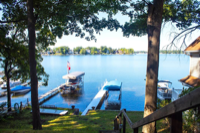
Like Abraham Lincoln, I was born in a rustic cabin—though mine sat on the northwest shore of Tippecanoe Lake, Indiana, rather than in Kentucky's wilderness. The location was about two miles west of North Webster and Webster Lake, bordered by the quiet, unincorporated community of Oswego.
Across the water on the lake's southeast shore stood Tippy Dance Hall, where the sounds of Duke Ellington, Louis Armstrong, and The Byrds drifted over the water from the 1920s through the 1960s. Even now I can sense the magic that place held, drawing famous musicians to that little corner of Indiana.
Dr. Quentin F. Stultz brought me into the world, making the twenty-mile journey from his office in Ligonier to attend my birth. No, he didn't arrive by horse and buggy—automobiles had long since replaced them on these country roads, except for our Amish neighbors who still preferred the old ways.
What I couldn't know then was that Dr. Stultz would become a constant presence throughout my childhood: my scoutmaster teaching me to tie knots and read compass bearings, my baseball coach yelling encouragement from third base, and eventually, a source of wisdom when I needed it most.
My sister Winifred Ellen—everyone called her Peg—loved to tell the story of my arrival. Peg was Mom's only child from her marriage to her high school teacher, Fred Hendrickson, and at fifteen, she was excited to have a baby brother. That enthusiasm lasted until she got her first good look at me.
“Mom, he‘s all wrinkled!” Peg stood beside the bassinet, staring down at me with genuine alarm. “He looks like a little old man. Can’t we do something?”
Mom, exhausted from labor and probably not in the mood for a beauty consultation about her newborn, tried to reassure her. “All babies look like that at first. He'll fill out in a few days.”
But Peg wasn‘t convinced. She’d seen pictures of babies in magazines—those plump, smooth-skinned cherubs that smiled up at the camera. I clearly wasn't meeting expectations.
Then inspiration struck. Baby oil! That‘s what mothers used on babies, wasn’t it? If it was good for diaper rash, surely it could help with wrinkles.
She found the bottle and applied a generous amount to my newborn skin, working it in with vigor. The wrinkles, unfortunately, remained. What did change was my texture—I became as slippery as a greased pig.
“There, that's bet—” Peg began, adjusting her grip to admire her work.
That's when physics took over. Her well-oiled hands lost their purchase, and down I went, landing squarely on my head with a thump.
“Winifred Ellen! What did you do?”
“I didn't mean to drop him! He was all wrinkled, and I thought the oil would—but then he got so slippery!”
I survived, obviously, though Peg claimed my infant crying reached decibels previously unknown to medical science. Mom, after ensuring I hadn't suffered any permanent damage, probably considered whether it was too late to return her helpful teenager.
“I didn‘t mean to drop him!” became Peg’s defensive refrain whenever the story came up in later years. By then, she'd laugh despite herself, shaking her head at her fifteen-year-old logic. “He was just so slippery! And still wrinkled after all that oil.”
“And I‘ve been hardheaded ever since,” I’d add, which always got a laugh.
It became one of those family stories that gets better with each telling, though Peg never quite lived it down . Little did we know that years later, that event could engender a second presidential comparison—giving new meaning to “Slick Willy” .
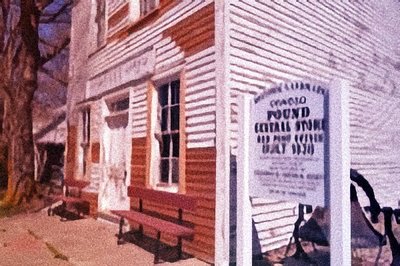
The cabin belonged to my father's parents, Frank and Otilie Stratton. Frank had died young in 1905 at just forty-two, leaving Otilie as the owner and landlord of this lakeside property. We were living there when I made my entrance into the world.
My father, Frederick Nelson Stratton—everyone called him “Doc”—was a dentist, a 1927 graduate of Indiana University. He practiced his profession in Ligonier, making the thirty-minute commute in a 1934 Chevrolet sedan. But Doc—I refer to my father as Doc— was fighting a battle that would reshape our family's trajectory.
He suffered from chronic anemia caused by a rare, incurable condition known as Banti‘s syndrome, diagnosed at the Mayo Clinic in Rochester, Minnesota. The weight of his prognosis hung over our household like a shadow. While we lived at the cottage—Doc, Mom, me, and my sisters, Marilu and Peg—Doc would periodically travel to Indianapolis to stay with his mother and brothers. There, he received the limited palliative care available at the time, including occasional blood transfusions at Indianapolis Veterans Hospital. Blood transfusion was still a relatively new therapy, constrained by the medical community’s inability to store and supply adequate quantities of blood.
This brings to mind a story Mom once told me, her voice dropping to almost a whisper: “Doc would make sure he was there when Grandpa slaughtered an animal. He'd drink a fresh cup of blood—said it helped him feel stronger.”
I remember asking, “Really, Mom?”
“He was grasping at straws most of the time. No one had any idea what to do.”
There was no way to verify that, then or now, but I believe it to be true. I can‘t imagine that a trained health care professional wouldn’t know the dangers of that with virtually no benefit. Desperate times indeed.
I wrote a quasi-fictional, historically accurate biography of Fred I called Fred's Story. It is part of my “portfolio” of bios and can be found in the family history application, GeditCom2 and as a pdf in my efiles. Read it when you can.
Life at the Tippecanoe cabin continued until April 1940, when Frank and Otilie showed up one day and invited us to leave. Doc was very weak then and I can only guess that Otilie thought she and Frank could take better care of him than we could. He was finally admitted to the Veterans Hospital in Indianapolis, where he remained until his death on October 16, 1940.
With our time at the lake cabin ended, Mom, Mary Lou (who would later adopt the spelling Marilu in the 1990s, and I use Marilu to refer to her throughout), and I gathered our things and moved to the farm to live with Grandma and Grandpa King—a transition that would shape the next innings—early childhood.
“In baseball, as in life, all the important things happen at home.” —Babe Ruth.
Mom remarried in 1941 to Roman Lamont “Jake” Hunter and moved to Ligonier. Marilu went with her, but Grandpa insisted I stay on the farm. The story goes that I went to town with Mom, Jake, and Marilu, but the next day Grandpa showed up and brought me back.
“That boy belongs on the farm,” Grandpa announced when he arrived at Mom's new place.
Whether that exchange was cordial or confrontational remains unclear, but the result was the same—I ended up back on the farm.
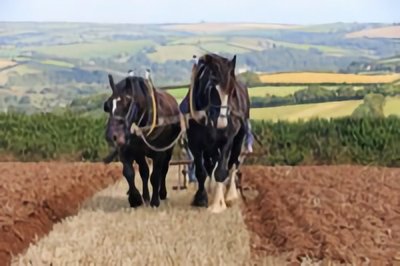
I have many recollections of farm life, nearly all of them good. No one is more attuned to the seasons and their effects on livelihood than a farmer, so I'll organize this by seasons.
Spring meant cleanup—removing winter debris, clearing fallen limbs and trees for firewood, and picking stones that emerged after heavy snow melts and spring rains. I remember Grandpa's stone sled, a sturdy wooden platform on wooden runners that hauled stones to a massive pile in the barnyard.
Plowing came next, the first step in preparing for planting. Then harrowing, disking, and other tilling to ready the soil for seeding. Good preparation meant good harvests.
I followed Grandpa as he plowed with his double-share plow and team of horses—Betsy the mare and Topsy the gelding. As he turned up the soil, I gathered handfuls of arrowheads and artifacts. When I moved to town years later, I left coffee cans full of these relics on the farm. I later learned the location was an ancient Native American meeting place that the University of Indiana eventually excavated.
One day I got caught in the tines of the manure spreader when my pant leg snagged on a chain that moved the paddles. The chain pulled me toward the spreaders, but the horses stopped before any damage occurred—likely because they felt the tug interfering with the mechanism.
“Whoa! Whoa!” Grandpa shouted, running toward me.
The horses were trained to stop when rocks caught in the tines to prevent breakage. Grandpa had to partially disassemble the spreader to free me.
“You alright, boy?” he asked, his weathered hands checking me over.
“Yes, sir,” I managed.
“Well then, let's get you unstuck and back to work.”
Before our Saturday night trips to town, Grandma would place a big oval copper boiler or tin washtub on the lawn. I'd carry heated water from the cookstove to warm the cold well water for my weekly bath. After the first bather, more well water was added to the hot water, washing away suds by overflowing onto the lawn.
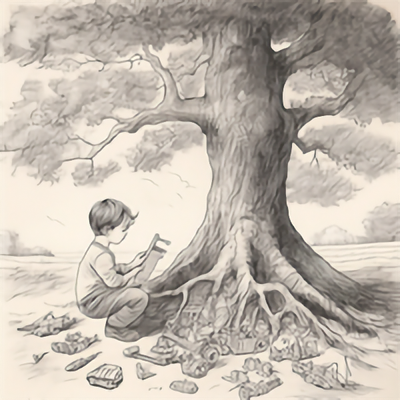
I spent summers playing with toy soldiers, miniature army trucks, and tanks—mostly box-back toys assembled from cereal box cutouts. Growing up from 1940 to 1945, war toys were everywhere. I ate plenty of cereal, and when a particularly good toy appeared, I'd convince Grandma that one of her cookie tins could keep the cereal fresh until I finished it.
“Grandma, this box has the best tank! Can we save the cereal in a tin?”
“I suppose so,” she'd say with a knowing smile. “But you need to eat that cereal.”
My favorite spot was under a big maple tree between the house and barn, where large protruding roots made perfect hills and hiding places for soldiers. From there I could spot visitors first and watch everything happening on the farm. The lane ran in a semicircle from the gravel road past the house, around n front of the barn, and back to the road. I also had a clear view of the kitchen porch where rabbits nested—catching baby rabbits was one of many diversions.
Jim Biddle and I decided to contribute to the war effort while earning pocket change by collecting milkweed pods for life preservers. The pay was ten cents for an eighty-pound gunny sack, which turned out to be more pods than we bargained for.
“How much does this thing weigh?” Jim groaned, trying to lift the half-full sack.
“Not even close to eighty pounds,” I admitted.
We quit with the sack half full.
Grandpa stored milk and cream cans in the spring house, where ice-cold artesian well water kept the evening milk fresh until the morning dairy truck pickup. We had a cream separator, so we always enjoyed fresh butter and clotted cream.
I received a physics lesson when a neighbor ran his truck into the ditch one muddy spring afternoon. Grandpa brought out his two massive Belgian work horses—Betsy and Topsy—and hitched them to the truck‘s front bumper. Those horses leaned into their harnesses, muscles rippling under their coats, hooves churning the soft ground. They pulled upright, straining straight back from the ditch at a ninety-degree angle to the slope. The truck rocked, settled, but wouldn’t budge.
Grandpa stood back, hands on his hips, considering. Then he sent word down the road.
An hour later, our Amish neighbor arrived with his team of mules—smaller animals, lean and wiry compared to the Belgians‘. But instead of hitching them perpendicular to the ditch, he angled them up along the slope itself, so they’d be pulling at a long, shallow slant. When he gave the command, those mules dropped low, practically on their bellies, scrambling for purchase. Their hooves bit into the earth at an angle that let them use the ground‘s resistance instead of fighting it. Inch by inch, the truck’s front end lifted, then the whole rig rolled free.
“See that, Billy?” Grandpa said, one hand on my shoulder as we watched the mules shake themselves off. “It‘s not always about strength. Sometimes it’s about the angle.”
Fall brought slaughter time—several hogs and one or two steers. Neighbors helped, as was customary in farm communities: our closest neighbors Harry and Mattie Slaybaugh, and the Shells (Mary and her husband, whose first name I can't recall).
The hogs became hams, pork bellies, chops, and roasts. Fatty pieces and skin were boiled in a large iron kettle over an open fire to render lard, with small pieces of crunchy goodness—cracklings—floating on top. Some folks cooked while others cleaned intestines in porcelain dishpans for sausage casing. A hand grinder processed meat for sausage, which was stuffed into casings, cold-packed in jars, and stored in the root cellar. Hams and pork bellies went to Grandpa's smokehouse to cure, then joined countless jars of fruits and vegetables in the root cellar. My favorites included cold-packed beef and noodles, sausage fried with hominy, and parched corn.
It was exciting when two huge pieces of equipment arrived—a steam threshing rig with a steam tractor and thresher connected by big leather belts. Grain harvest time had come. I watched grain pour into bags at the end of a chute while straw rode up another chute where men forked it into a huge stack—perfect for playing in and just the right distance from the barn's upper haymow for a challenging ten-foot jump.
All the neighbors came to help, and I discovered where the phrase “enough food to feed a thresher” originated. What a feast at dinner (the midday meal)! People overflowed onto the porch with plates piled high.
“Bertha, you've outdone yourself!” Harry Slaybaugh called out.
“There's plenty more,” she replied, beaming.
Alfalfa was cut with a sickle bar pulled by the horses, left to field dry, then raked and loaded onto the hay wagon with pitchforks. Riding the wagon, I learned to watch for snakes in the hay Uncle Ike King threw up.
“Watch yourself, Billy!” he'd call. “Got a snake coming up!”
From my perch on the wagon‘s end gate, I’d spot scurrying rabbits, quail, and pheasants. Once Grandpa shot a pheasant out of season and called it a “mud hen.”
“What's a mud hen, Grandpa?” I asked.
“That's a pheasant in the summer,” he replied.
Grade school was about a mile on the other side of Ligonier. I rode the bus driven by our neighbor Harry Slaybaugh—first pickup, last drop-off. Perry Centralized served first through eighth grades. Kindergarten didn‘t exist in rural Indiana until the 1950s. My first-grade teacher was Mrs. Zook (1943), second grade was Miss Judy (1944). Each classroom held two grades, so I stayed in the same room for both years. I was promoted to third grade mid-year but wasn’t happy with that group, so I persuaded Grandma to get me back with my friends.
“Grandma, I don't like those kids. Can I go back to second grade?”
“Well, if you're not learning anything being miserable, I suppose we should talk to the teacher.”
In fall, it was the grandchildren's job to wallpaper the outhouse interior with leftover wallpaper, creating an eclectic, colorful display that helped block winter wind and keep out daddy longlegs.
At Christmas, when most of my cousins were gathered at the farm, Grandpa would visit Barney Hile‘s store and return with the biggest peppermint stick imaginable—three or four inches diameter and at least a foot long. He’d pull out his jackknife and hammer off chunks for each grandchild.
“Line up, you young‘uns,” he’d announce, brandishing the massive candy. “Everybody gets a piece.”
One Sunday, December 7, 1941, I was listening to the radio when news of the Japanese attack on Pearl Harbor was broadcast.
“Grandma! Grandpa! Come quick!” I yelled. “Something's happened!”
World War II now included the USA. (Mom kept that radio, and I had it restored. Karen and Terry Vanette have it now.)
Except for Christmas and snow, winter wasn't my favorite season. I was assigned the chore of emptying the chamber pot—quite a hike to the outhouse with a full pot.
Grandma's kitchen sometimes resembled a restaurant, feeding unexpected visitors. Something tasty was always baking—sugar cookies, fruit pies, or cream pies. She used a South Bend Malleable Range with a metal bin at the back for drying fruits and vegetables. After cooking, washing, countless household chores, and supper dishes, she still had energy to darn socks and overalls.

I helped Grandma candle eggs to find fertilized ones for hatching—Cousin Jim Biddle's favorite chore when he visited.
“Can I do it, Grandma?” Jim would beg whenever he came over.
“You boys can both help,” she‘d say. “There’s plenty of eggs.”
The real treat came next morning when she'd fry those double-yolked eggs and pullet eggs from young hens, accompanied by fried potatoes, sausage, bacon, and fried mush, topped off with leftover pie.
“Best breakfast anywhere,” I'd say with my mouth full.
“Don't talk with your mouth full,” Grandma would scold, but she was smiling.
What a grandma! Could she ever cook!
Periodically, a big truck called the Huckster Wagon would arrive. Steps unfolded at the back so you could climb into a mobile variety store selling vegetables, sugar, coffee, tea, canned goods, sewing thread, candy, and PW Crackers in large tins or smaller boxes (made by the Perfection Biscuit Company of Fort Wayne, Indiana).
Grandpa's favorite snack was crackers and milk, which became mine too. He also enjoyed green onions and radishes with bread and butter—still one of my favorites.
Grandma made soap using wood ashes and lye, pouring the hot mixture into rectangular pans to cool and cut into bars.
I often hunted with Grandpa, who always bagged pheasants or squirrels. One trip seemed no different—the shotgun came up, Grandpa fired, and I looked up expecting to see a bird or squirrel fall. Instead, it seemed he‘d shot a rabbit, and I’d never seen him shoot anything on the ground!
He chuckled all the way home and told everyone the story, ending with “Billy thinks rabbits can fly.”
Grandpa had six milk cows—three Jerseys and three Guernseys—named after his children (I can't remember the sixth name since he only had five children, though I think it might have been Bertha). My favorite was a Jersey named Mary. I thought it was funny when Grandpa would squirt milk at barn cats, less so when I was the target.
“Gotcha!” he'd laugh as a stream of warm milk hit my face.
This reminds me of Grandpa‘s philosophy on feeding barn cats—he didn’t.
“Don‘t feed ’em,” he‘d say. “A hungry cat’s a working cat.”
Withholding food forced them to hunt, and hunt they did. There wasn't a catchable rodent within a mile of the farm. They also controlled barn swallows and other nesters, while the hogs handled the larger rats and kept the barn cat population under control. Any small critter that came within the hogs arena were food, and those pigs could really run.
The hogs, especially sows with piglets, guarded the corn cribs. Their voracious appetites and strategically located pens around the cribs were great for the hogs, not so much for rats—or for me when Grandma sent me to fetch corn for cornmeal.
“Billy, I need some tender ears for cornmeal. Be careful of those sows.”
It took a practiced eye to pick out tender ears from the typically tough field corn. Wading through muck while avoiding sows proved challenging and hazardous when they didn‘t know me or were particularly ornery. Pigs move much faster than you’d think, and many close calls made for a faster, more agile Billy.
A trophy carries dust. Memories last forever. — Mary Lou Retton
The summer of 1945 brought a change that altered the course of my early childhood. I watched from my tree root enclave as Grandpa shuffled toward the black 1937 Chevy four-door sedan, Uncle Ike holding the back door open. Grandpa moved slowly, like he wasn‘t quite sure where he was going. He didn’t look back at the house. He didn't wave.
Uncle Ike started the car, Grandma rigid in the front seat, staring straight ahead. The Chevy pulled away, dust rising from the gravel drive. When they returned that evening, Grandpa wasn't with them.
At eight years old, I couldn't comprehend his abrupt departure. Something had happened, something no-one would or could explain. Over the following weeks, I asked again and again.
“Mom, why isn't Grandpa coming home?”
“He needs to be where the doctors can help him.”
“But when is he coming back?”
“When he gets better.”
“Can we go visit him?”
“It‘s very far, Billy, and Grandpa’s not ready for a lot of visitors. As soon as visiting is allowed, we'll go.”
The stonewalling was frustrating. I knew something was wrong, but no one would talk about it. Grandpa had just... disappeared, as if mentioning him might somehow make things worse. I‘d catch Grandma sitting by the window sometimes, staring out at nothing. When I’d ask about Grandpa, she'd pat my hand and change the subject.
It was years later when I learned the truth—he had been admitted without his consent to the Veterans Hospital in Marion, Indiana, where he remained until his death in October 1966. Twenty-one years in that place. The diagnosis was vascular dementia due to arteriosclerosis, a condition that had slowly stolen away his personality and memory, leaving behind a shell of the man who had taught me to fish and told me stories about the war.
Looking back now, I see why both Grandma King and Mom were so adamant about their aversion to nursing homes. They‘d seen what happened to Grandpa, warehoused and forgotten. The implication was stark and frightening: that’s what happened when you became inconvenient, when your mind betrayed you.
I visited Grandpa only once, when I was eleven years old, just before I left for Arizona. Grandma decided it was time, though I suspect she needed company more than she thought I needed to see him. The drive to Marion felt endless, and the hospital itself was institutional and cold—long hallways with worn linoleum, the smell of disinfectant barely masking the odors beneath.
We found him in a dayroom, sitting in a chair by a window, a radio beside him. A White Sox game was on, the announcer's voice rising and falling with the action.
“Hello, Vol,” Grandma said softly, leaning down to kiss his cheek. “I brought Billy to see you. You remember Billy.”
Grandpa looked up at me, his blue eyes watery, faded and distant. There was no flicker of recognition, no smile of greeting. He studied my face for a moment, then turned back to the radio.
“Two and one count,” he muttered. “They need to get him out or the bases are loaded.”
“He‘s listening to the game,” Grandma said brightly, desperately. “He always loved baseball. Didn’t you, Vol?”
“Runner on second,” Grandpa continued, as if she hadn't spoken. “Sox are three games back in the standings. They need this win.”
He knew exactly what was happening in the game—the count, the situation, the league standings, all of it. His mind could track every pitch, every play, but couldn't recall his own grandson standing right in front of him.
“Do you remember when we went fishing?” I tried, my voice small. “You taught me how to bait a hook.”
Grandpa tilted his head toward the radio. “Swing and a miss. Strike two.”
Grandma‘s eyes glistened. “He remembers,” she whispered to me. “I know he does. He’s just having a bad day.”
But I could see the truth. Grandpa was gone, even if his body remained. Whatever disease had taken him had left behind only fragments—baseball statistics and game situations, but nothing of us.
On the drive home, Grandma talked about how good he‘d looked, how clean and well-fed. She convinced herself that the visit had meant something, that somewhere deep inside, he’d known we were there. I nodded and agreed because what else could I do?
Grandpa had served as a sergeant in the Spanish-American War, and I always wondered if malaria contracted in Florida while waiting to ship out for Cuba had contributed to his decline. The fever dreams, the parasites in his blood—could they have damaged something essential? Or was it age and bad luck, arteries hardening and narrowing until his brain starved for oxygen? A question that remains unanswered, unanswerable..
“The other sports are just sports. Baseball is a love.” — Bryant Gumbel
Uncle Ike—Mom's brother, Isaac William King—stepped up to take over at the farm. There had been no crops planted for a couple of years so it was milking and maintenance. Grandma and I were relocated to Ligonier to live with my mother and stepfather at 902 South Cavin Street. Mom utilized the $5,000 Grandma provided her from her impending inheritance to purchase a nineteenth-century double brick house. The heating system was rudimentary—a coal-burning furnace situated in the basement, devoid of a fan, which radiated heat through a single large register on the floor directly above. Additional registers in the upstairs bedrooms offered some warmth, while the downstairs rooms relied entirely on the circulating heat from that first-floor register. Although it was inefficient, it was warmer than the farmhouse.
I frequently got up in the middle of the night to close my bedroom register when it became too warm. I discovered that the register also served as a perfect conduit for eavesdropping—I could hear every conversation from the first floor, which meant I always knew what the adults were discussing.
Even as a child, I was puzzled and put off by Jake's remodeling efforts. I am sure the fact that I had lived in a farmhouse with the old style finishes was a major factor. A master carpenter by trade, he proceeded to nail plywood veneer over every door in the house, drop all the ceilings and plaster them with heavy swirl texture, and apply texture over the wallpaper in the living room. Thankfully, he stopped there—not because his taste improved, but because his daytime work and his evenings at the tavern chasing ladies left little time for home improvement.
Uncle Ike and Aunt Pearl had moved into the farmhouse, and Ike modernized everything: replacing the horses with a Farmall F-12 tractor, installing a milking machine, and bringing running water into the kitchen to replace the old hand pump outside the door.
I visited often, usually with my cousin Jim Biddle, and we consistently found ourselves in trouble with Uncle Ike, who was a prankster of the highest order. His idea of fun involved soaking corncobs overnight in cow manure and hurling them at us with considerable force—a memory that's impossible to forget.
Jim and I decided to devise our own prank. We balanced a milk bucket full of water on top of the slightly ajar door to the milking parlor. When Uncle Ike pushed the door open, the bucket came crashing down. The results weren‘t as amusing as we’d anticipated—that bucket carried the force of thirty-two pounds of water plus its own weight. As the old saying goes, “A pint's a pound the world around,” and we learned that lesson the hard way. Ouch indeed.
“Sliding headfirst is the safest way to get to the next base, I think, and the fastest. You don't lose your momentum.” — Pete Rose
One memory stands out—a story that says a lot about me and my personality, then and maybe still now.
We‘d driven out to the country for a picnic by a lake, parking in a pasture-like spot a good distance from the water. The plan was to unload the car, carry everything down, and find a nice place to spread out our blankets. But I didn’t wait for any of that. The moment I jumped out of the car, I could see the lake through a dense growth of large trees, maybe two or three hundred yards away. And as usual, I took off running.
I‘ve always been like that—impatient, impulsive, charging ahead without looking. My mother used to say I acted like the world would disappear if I didn’t get there first. So I ran, full speed, toward those trees and the glint of water beyond them.
As I got closer, the forest closed in—tree trunks everywhere, shadows and filtered sunlight. I was focused on the lake, not what was in front of me. I didn't see the strand of barbed wire strung between two trees at about head height until it was too late.
Somehow, in that split second, I managed to get my arm up in front of my face—pure instinct, a reaction faster than thought. It happened so fast that all I remember is the flash of movement, my arm rising, and then I was on the ground with blood squirting from my wrist.
I'd cut an artery. Blood was everywhere—on my shirt, on the grass, spurting in rhythm with my heartbeat. I started screaming.
My mother reached me first. “Get me a towel! Something! Anything!” she yelled, already pressing down hard on my wrist with her bare hands. The bleeding slowed under her pressure, but I could still feel it seeping, warm and wet, between her fingers.
Someone ran back to the car and came up with a tablecloth. Mom wrapped it tight around my wrist, holding the pressure, and we piled into the car. The picnic was over before it started.
Off we went to Ligonier, straight to Dr. Stultz‘s office. Doc Stultz was a fixture in my life—my family doctor, my Scoutmaster, my baseball coach. He knew me better than my mother did, better than almost anyone else at that time. He’d seen me slide headfirst into home plate when I should have stayed on third. He'd watched me climb trees I had no business being in. He knew exactly what kind of kid I was.
He cleaned the wound, numbed it, and started stitching. His hands were steady, his voice calm. And then, in that dry way of his, he looked up at me and said, “You know, running full speed into barbed wire is one way to get attention. Not the smartest way, but effective.”
I tried to laugh, but it came out shaky.
“This pell-mell behavior,” he continued, threading another stitch, “is going to get you into trouble again someday. You might want to think about slowing down once in a while. Looking where you're going.”
He was right, of course. But I didn‘t slow down. Not then, not later. That scar is still visible on my wrist today, a faint white line that runs just where the artery used to bleed. And the memory is just as clear—the trees, the wire, my mother’s hands covered in blood, and Doc Stultz's wry smile as he patched me up one more time.
He knew me. And he knew that no amount of stitches or warnings would change the way I moved through the world—fast, reckless, always running toward something.
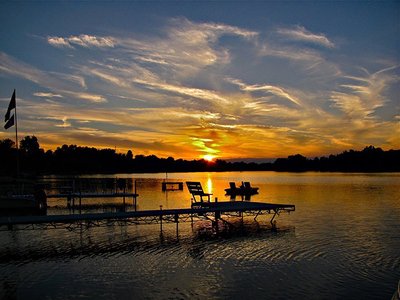
Of all the family dinners, holiday celebrations, and Sunday gatherings that punctuated my childhood, nothing came close to the Annual McConnell Family Reunions at Round Lake in Whitley County. Those long weekends—always clustered around the Fourth of July, beginning Friday evening and stretching clear through Sunday night—were magic compressed into seventy-two hours. Holiday food, a lake calm enough for young swimmers, a diving tower that seemed to rise halfway to the clouds, a huge lakeside property with a sprawling cabin big enough to house an army, and every single one of my cousins gathered in one place. The children of Mom's two brothers and three sisters, Grandma and Grandpa King presiding like benevolent monarchs, Great-Aunt Mary and her family, Great-Uncles Ross and George with their broods, all the in-laws, and yes, a few outlaws too. It was marvelous. And I never, ever wanted those weekends to end.
“Bill! You coming in or you gonna stand there all day?” Jim Biddle hollered from the diving tower, his voice carrying across the water.
I was standing at the shoreline, toes curled into the muddy sand, staring up at the platform. From the ground, it looked impossibly high—maybe ten feet, maybe a hundred. Hard to say when you're six years old.
“I‘m coming!” I yelled back, though my feet hadn’t moved.
“Come on, scaredy-cat! Even the little kids are jumping!”
That did it. I waded out until the water became too deep, then swam the last ten feet to the floating tower. I climbed aboard, grabbed the ladder, and started the ascent to the platform, my heart hammering in my chest with each rung. At the top, I walked to the edge. The lake stretched out below me, all the cousins treading water, watching.
“Don't think about it!” Jim shouted. “Just jump!”
So I did. The fall was terrifying and exhilarating all at once—the rush of air, the slap of cold water, the muffled underwater silence before I kicked back to the surface, gasping and grinning.
“See?” Jim said, paddling over. “Told you it wasn't that bad.”
It wasn‘t. And after that first jump, I couldn’t get enough.
The cabin itself was a marvel of organized chaos. Grandma King seemed to multiply herself, appearing simultaneously in the kitchen stirring something that smelled like heaven, on the porch shelling peas with Aunt Mary, and down by the water making sure nobody drowned. I never figured out how she did it.
“Billy, come here a minute,” she called one afternoon, waving me over from where I'd been trying to catch minnows in a tin bucket.
I ran up, still dripping. “Yes, Grandma?”
“Take this down to your Grandpa.” She handed me a Mason jar of cold lemonade, beaded with condensation. “He‘s down by the dock with Ross and George. And don’t spill it.”
I walked carefully, both hands wrapped around the jar, feeling important. Grandpa and the great-uncles were standing in the shade of a massive oak tree, talking in that slow, meandering way old men do when they've got nowhere to be and nothing pressing to do.
“Here you go, Grandpa,” I said, holding out the jar.
“Well, thank you, Billy.” He took a long drink, then passed it to Uncle Ross. “Your grandma make this?”
“Yes, sir.”
“Tastes like summer, doesn‘t it?” Uncle George said, taking his turn. He handed the jar back to Grandpa. “You’re a good boy, Billy. Now go on, get back to your minnows.”
I ran off, but I remembered that moment—the way they smiled at me, the way Grandpa's hand rested on my shoulder for just a second before I left. It was such a small thing, but it made me feel like I belonged.
The food was ridiculous—tables groaning under the weight of fried chicken, potato salad, deviled eggs, corn on the cob, sliced tomatoes, fresh biscuits, pies of every variety. And fireworks on the Fourth itself, the sky exploding in color while we sat on blankets by the water, stuffed and happy.
“This is the best place in the world,” I said to Jim one night as we lay on our backs staring up at the stars.
“Yeah,” he agreed. “Wish we could stay here forever.”
I did too. Those reunions were more than just gatherings—they were proof that I wasn't alone, that I had a place in something bigger than myself. After Grandpa King was taken away, after the farm years ended, after everything shifted and scattered, those weekends at Round Lake became the anchor I held onto. They reminded me of what family could be when it worked—noisy, chaotic, imperfect, but full of laughter and belonging.
I never wanted them to be over. And in a way, they never were. They live on in memory, bright and vivid as those Fourth of July fireworks, a reminder that for a few perfect summers, I was exactly where I was supposed to be.
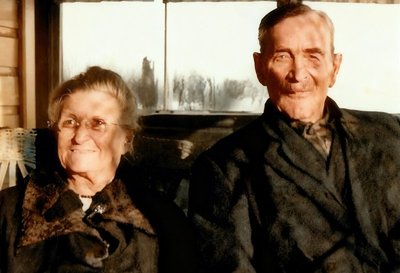
Jim Biddle was Tom Sawyer with a streak of meanness, and I was Huckleberry Finn—which meant Jim came up with the ideas and I went along with them, even when I knew better.
It was summer, 1945, at the McConnell Family Reunion at Round Lake. Jim had made a trip to Ohio with his folks and come back with contraband—a pack of cherry bombs, the fat red ones with green fuses that were illegal in Indiana. At ten, Jim was two years older and considerably bolder. At eight, I was just grateful to be included.
“Watch this,” Jim said, grinning as he placed an empty tin can over a cherry bomb in the dirt road beside the cabin property. He lit the fuse and we both scrambled back.
The explosion was magnificent—a sharp crack that echoed across the lake, and the can rocketed a good fifteen feet into the air, spinning end over end before clattering back to earth.
“Did you see that?” Jim crowed. “Let's do it again!”
We took turns lighting them, trying to see who could get the can higher. We were so focused on our competition that we didn‘t notice the occasional car or wagon passing by on the country road. We didn’t notice much of anything until a shadow fell across us and a deep voice spoke.
“You boys having fun?”
I looked up. A large man stood over us—easily six feet tall, broad-shouldered, wearing a khaki uniform and a star-shaped badge that caught the sunlight. The Whitley County Sheriff.
Jim's face went white. I felt my stomach drop.
“Uh... yes, sir?” Jim managed, his voice climbing an octave.
The sheriff bent down and picked up one of the unlit cherry bombs, turning it over in his hand. “You know these are illegal in Indiana, don't you?”
“We... we didn't know,” Jim stammered.
“Didn‘t know?” The sheriff raised an eyebrow. “Where’d you get them?”
“Ohio,” I blurted out before I could stop myself.
Jim shot me a look that could have curdled milk.
“Ohio,” the sheriff repeated slowly. He looked at the cherry bomb, then at us, then back at the cherry bomb. “So you boys went all the way to Ohio to get illegal fireworks, brought them back across state lines, and decided to set them off right here on a public road?”
“It wasn't my idea!” I said, which earned me another murderous glare from Jim.
The sheriff crouched down so he was eye-level with us. His face was stern, unreadable. “You know what I do with boys who break the law?”
Neither of us answered. I was pretty sure I'd stopped breathing.
“I take them to jail,” he said quietly. “Lock them up. Throw away the key.”
Jim looked like he might cry. I felt tears prickling at the corners of my own eyes.
The sheriff let the silence stretch out for what felt like an eternity. Then, slowly, a grin spread across his face.
“But since it‘s the Fourth of July weekend, and since you boys look like you’ve learned your lesson, I‘m going to let you off with a warning.” He stood up, pocketing the cherry bomb. “I’ll be taking these, though. And if I catch you with fireworks again, you won't be so lucky. Understand?”
“Yes, sir,” we said in unison.
“Good. Now get back to your picnic and stay out of trouble.”
He walked back to his patrol car, got in, and drove off, leaving us standing there in stunned silence.
“That was close,” Jim finally said.
“Yeah,” I agreed.
We didn‘t touch another firecracker the rest of that weekend. Or any reunion after. The sheriff had scared the bejesus out of us, and we knew it. Looking back, I’m pretty sure he had a good time doing it too.
I saw my first fast-pitch softball game in Ligonier. I was hooked from the first pitch.
Fast-pitch is nothing like the slow arc of backyard softball. The ball leaves the pitcher‘s hand at eighty to ninety miles an hour from forty feet 6 inches away—less reaction time than facing a major league fastball. The bases are closer, so stolen bases and double plays unfold in a blur. Everything happens faster. There’s no standing around.
Watching those pitchers wind up and release, watching infielders charge a bunt with no margin for error, watching base runners take risks because they have to—it's the kind of sport that rewards hustle and guts over everything else.
And maybe that's why I loved it. It matched the way I moved through the world—full speed, no hesitation, always running toward something.
I still have a glove and two softballs from the 1962 All-Navy Softball Tournament . The leather is cracked and stiff now, the balls scuffed and faded, but I can‘t bring myself to throw them away. They’re proof that I was there, that I played the game I loved, that for a few perfect innings on a diamond somewhere, I was exactly where I wanted to be.
I never lost that fascination. To this day, fast-pitch softball remains my favorite sport.
The women who play the game today—pitching in the seventy-mile-an-hour range—are every bit as good and every bit as fun to watch as the men who played it in every little town in America from the 1930s on. Women‘s collegiate softball has brought the sport into the spotlight, but it’s always been there, played on dusty diamonds in places like Ligonier, where local teams drew crowds on summer evenings and the crack of the bat echoed across the town.
-Ray Lehman singing “Oh Holy Night” in a Christmas program in the old gymnasium in the old High School building in Ligonier, probably 6th grade (December 1949).
-A new pair of Levi's from Oscar Barsch Clothing Store
-A handful of candy from Schlotterbach's
-A cherry or chocolate soda from Matthew's Soda Fountain
Saturday movies at Phil Schloss's “Crystal Theatre”
-Mr. Hayden with his food cart selling hominy, honey, sausages door to door
-Elaine Hall hugging me or just getting close (use your imagination, I was ten or eleven and she was a gorgeous, well-endowed young woman in her thirties)
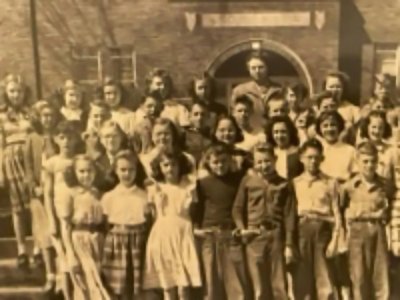
By Christmas 1948, I knew I had to leave. I had no idea where I would go, but staying wasn‘t an option. I’d talked it over endlessly with Marilu and with Grandma King, who had moved to Aunt Lou‘s before Thanksgiving. Everyone knew how I felt—I’ve never been shy about expressing my displeasure.
Mom arranged a visit to “Doc” Luckey, his wife Bess, and their high school-age son Jim. Their daughter, Pat, was married to my cousin, Don Schwab. The Luckeys lived on several acres with a large apple orchard and an impressive lakefront home on Big Cedar, the largest of three connected lakes.
Doc Luckey was a fascinating man. He owned, managed, and was a general surgeon at Wolf Lake‘s Luckey Hospital, having graduated from Indiana University’s medical school with surgical training in Austria. He and his brother Robert had inherited the hospital when their father, Dr. James Luckey, passed away in 1938.
What captivated me most were his two airplanes—a Republic RC-3 Seabee and a tri-gear Cessna 195. Doc let me take the controls of the Cessna each time we went up. I learned to maintain altitude and airspeed, and even got the plane airborne once. However, when I asked if I could try landing it, he hesitated. I wonder why?
In his barn, Doc kept one or two wooden-lidded buckets filled with lye solution, containing severed limbs, hands, or feet from his amputations. At the time, I thought body parts in buckets seemed a bit odd, though I supposed he was studying anatomical structure. I never asked.
That visit remains a particularly vivid and pleasant memory. I swam in the cool, clear water of Big Cedar, the least developed of the three lakes that made up “Tri-lakes.” The Luckey property covered the south shore, the Roths owned the north lakefront, and fewer than half a dozen other properties dotted the shoreline. It would be several years before the population at the lake created the pollution and overcrowding to the point that made the lake both unpleasant and nearly unusable.
We pressed apple cider using both fresh apples and ones preserved in cold storage. We even made some apple butter in a large kettle over an open fire, reminding me of the times on the farm that we had made apple butter in a huge copper kettle.
Jim and I built a Soap Box Derby car and took it to Ligonier for the competition. I didn‘t win the derby, but I did win three heats and advanced to the finals. Not that it mattered—I couldn’t have continued anyway, as I was bound for Arizona.
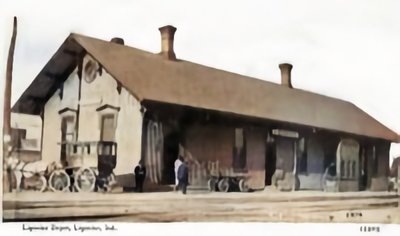

“Every day is a new opportunity. You can build on yesterday‘s success or put its failures behind and start over again. That’s the way life is, with a new game every day, and that's the way baseball is.” — Bob Feller
I left Ligonier in early September 1950, escaping the house where my stepfather made everyone's life miserable. At the risk of speaking ill of the dead, Roman Lamont “Jake” Hunter was a mean SOB when he drank—and he drank all the time.
My sister Peg (Winfred Ellen Hendrickson Wallace Whitmore) agreed to let me come live with her, her husband Marshal “Shorty” Wallace, and their two daughters, Sue Ellen and Shirley Jean, in Arizona.
I quickly discovered the invitation wasn‘t extended with full-throated enthusiasm, and I felt uncomfortable for awhile. But I wasn’t going back, so I learned to let the subtle hints of resentment slide by. Things eventually improved, though Peg was going through a rough patch with Shorty that I didn‘t quite pick up on at the time. I misinterpreted much of the underlying tension as directed toward me when it was mainly between the two of them. The light bulb didn’t come on until I was long gone, and I always felt a little guilty for not understanding that dynamic. I chalk it up to “live and learn.”
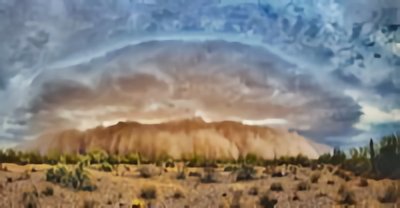
I arrived in Arizona in mid-September, and the state arranged a special greeting for me—two hailstorms with baseball-sized hailstones. Shortly after those storms came a record-setting dust storm that covered the inside of the house with several inches of desert. Welcome to Arizona, Billy!
We moved as soon as I arrived from a rental just off Thomas Road at 56th Street all the way across Phoenix to Sunnyslope, in the foothills of the Phoenix Mountains. I started eighth grade in September in Ligonier, attended for a week, then transferred to a school in northwest Phoenix for two more weeks. At Sunnyslope I spent the rest of the winter term before we moved again—this time to a ranch-style house in the middle of an orange grove in Scottsdale, where I finished eighth grade and started high school.
That‘s where we were when Marilu arrived in 1950. She liked it and stayed for the next fifty-four years, finally moving to Karen’s condominium in San Diego in 2004.
The house sat at the back of a twenty-acre orange grove between the Arizona Canal and Indian School Road, bordered on the east by Scottsdale Road—now the location of Scottsdale's 5th Avenue Mall. It came with a carport, a barn, and a small fenced pasture running along the back property line adjacent to the canal. It also came with scorpions, geckos, tarantulas, centipedes, and cockroaches. In that house, you were never alone.
Scottsdale Elementary was a fifteen-minute walk from home. I started high school at Scottsdale High School in the fall of 1951, along with just under 400 others. When Scottsdale incorporated that same year, it had a population of 2,000 and advertised itself as the “West‘s Most Western Town.” It might have been just that. The town’s only paved road was Main Street, also known as Scottsdale Road, and only within town limits. All the stores and saloons had hitching rails with horses always tethered there.
Scottsdale's population was less than half that of Ligonier, where everyone knew everyone. All the grammar school kids knew each other—the same was true in high school.
The town saloon, the Pink Pony, frequently had a pair of matching Arabian horses hitched outside. They belonged to a former rodeo showman who had featured intricate “Roman riding” and bareback stunts in his act. At night's end, those horses took him home—usually with him straddling one horse or the other, though occasionally he could still stand and depart Roman style. Quite a sight!
“Life is a succession of lessons that must be lived to be understood.” —Ralph Waldo Emerson
When I first moved into the house in the middle of the orange grove in Scottsdale, I spent that summer exploring every corner of the property. The Arizona Canal bordered the back of our land—really more like a small river with high, flat banks that formed a kind of road on top. Farmers used the canal water to irrigate their crops, and if there was excess, we could open our sluice gate and water our own land.
I was down by the canal one afternoon, wrestling with that sluice gate, when I heard hoofbeats thundering toward me. I looked up just in time to see a small horse with an equally small rider galloping straight down the canal bank—straight at me. At the last second, the boy spotted me. He leaned down hard, pulled the rope-fashioned reins against the pony's neck, and laid the animal down. Horse and rider skidded to a stop inches from where I stood, dust billowing around us.
The kid jumped up, grinning. “Sorry about that! Didn't see you there.”
“That was some stop,” I said, still catching my breath.
“Only way to do it with these wild ones.” He patted the pony‘s neck as it scrambled back to its feet. “I’m Jerry. Roped him off the Pima Reservation. Still training him.”
That was how I met my first and one of two best friends for the time I lived on that property.
Jerry and I spent nearly every day after that catching and riding the Indian ponies from the reservation. Most were so ornery they'd start running the moment you swung onto their backs, then try to unseat you by rolling over from a dead run. It was dangerous as hell, but we were young and stupid enough to think it was the greatest game in the world.
One afternoon, a Pima Reservation police officer rode up and stopped us cold.
“You boys know you're trespassing?” he asked.
Jerry and I exchanged glances. “Yes, sir,” we mumbled.
The officer studied us for a moment, then said something I didn‘t expect. “Tell you what. Pick out a pony—any one you want. Fifty dollars, and I’ll write you up a bill of sale. Legal and everything.”
Jerry shook his head. “I got no place to keep a horse.”
But I did. I‘d already had my eye on a black and white pinto that wouldn’t lie down to unseat me—he bucked like a rodeo champion instead. I couldn't stay on him for more than a few seconds, but I loved the challenge. And he was the healthiest-looking horse in the whole herd.
“I want that one,” I said, pointing to the pinto.
Getting Marshal and Peg to agree took some doing. I promised them I'd buy the grain and hay myself, keep the barn cleaned out, handle everything.
“You sure about this, William?” Marshal asked. “That's a lot of responsibility.”
“I'm sure. I can do it.”
They looked at each other, then back at me. “All right. But you're on your own with the costs.”
And just like that, I was a horse owner for the first time. The only horse I ever owned, as it turned out. I didn't do much riding after I left Arizona.
Training that pinto became a full-time affair. I had bruises on every part of my body—arms, legs, ribs, everywhere. But nothing broke, so I kept at it. Day after day, that horse would launch me into the dirt. Day after day, I'd climb back on.
I needed a name and I immediately thougt Apache, he was a tricolor pinto, but settled on Cochise, after the great Apache chief. But the more I worked with him, the more I realized I'd gotten it wrong. Cochise had been a peacemaker, a diplomat who eventually negotiated peace. This horse had no interest in peace.
One morning, after he'd bucked me off for the third time before breakfast, I dusted myself off and looked him square in the eye.
“You know what?” I said. “You‘re no peacemaker. You’re a warrior.”
I started calling him Geronimo that day. Geronimo—the Apache warrior who never surrendered, who fought until the very end.
And here‘s the strange part: his whole attitude seemed to change after that. Maybe it was coincidence. Maybe I’d just finally earned his respect through sheer stubbornness. But I always believed that pony knew the difference. He considered himself a warrior, not a diplomat.
After the name change, I could finally ride him without argument. We‘d come to an understanding, Geronimo and I. He’d found a rider who recognized what he really was.
Everything was going my way. I had baseball talent and was selected for the varsity team with a starting position in center field. At 145 pounds, I could throw a strike to home plate from deepest center field. I hit with consistency and was confident I'd be a team star!
The game of baseball isn‘t a contact sport in the way football, basketball, soccer, or rugby are, but injuries—and sometimes tragedies—do occur. My friend Hugh Massey’s older brother was struck by a pitch during batting practice. I was next up to bat and watched as the ball glanced off his head. It seemed to catch his forehead as he jerked back, not a direct hit, but he went down hard. Everyone recognized it as a serious beaning. Back then, helmets weren‘t part of high school baseball—they wouldn’t be for another 20 years—so the only protection was your own reflexes.
Hugh‘s brother went to bed that night and never woke up. I still remember the sorrow that followed, though I don’t recall it changing how I viewed the game—nor did I sense any shift in attitude from our teammates, except for the boy who threw the pitch, Leroy Spradling. Leroy never came back to the team, and as I left soon after due to my own illness, I never saw him again.
Another baseball memory: when our coach benched two senior players for disciplinary reasons, those two—with help from a few sturdy friends—hoisted the coach‘s car up onto an old telephone pole that marked the edge of the parking lot. Their prank earned them more games on the bench and several days of detention for their accomplices. Lesson learned—don’t mess with the coach, who personally oversaw the car's return to its rightful spot.
I played in ten games and was hitting over .400 when things took a turn for the worse.
“Things work out best for those who make the best of how things work out.” —John Wooden
Walking home from practice one day, I felt exhausted, and my head and joints ached. The pain was significant, making it painful to walk. The next several days brought no relief, so I told Marilu about it. The pain had nothing to do with baseball activity but was the primary symptom of rheumatic fever.
The diagnosis was confirmed, and I was treated over the next four months with penicillin and strict bed rest. That time in bed was excruciating—no baseball, no horseback riding. I was devastated and extremely bored.
Academics were never an issue during those long months of confinement. I kept up with homework despite everything, and was promoted to tenth grade with straight A‘s—or rather, straight 5’s, since our school had adopted a supposedly more reflective grading system. Whether you called it 5-4-3-2-1 or A-B-C-D-F, the difference escaped me.
Four months of bed rest might sound benign to anyone who hasn‘t endured it—just trips to the bathroom and an occasional shuffle to the dinner table. But when you’re fifteen and suddenly trapped in a body that won't cooperate, those months stretch into what feels like years. I read every book in the house, cover to cover. When I exhausted our shelves, Marilu brought me books from the school library, smuggling out whatever she thought might interest me. Even then, I had endless hours to stare at the ceiling and contemplate my existence. I added some extra credit projects and ended up with enough credits to skip my sophomore year.
Television offered little escape. This was an era before cable, before twenty-four-hour programming. During the day, you might catch four or five hours of scattered shows—game shows, soap operas, whatever the networks decided to air. Evening programming lasted maybe two hours before the screen went dark, replaced by the test pattern or simply static until morning. I quickly grew tired of waiting for something worth watching.
Radio became my lifeline. Between schoolwork, reading, and drawing, I spent countless hours repositioning my radio, trying to coax a clearer signal from WOWO out of Fort Wayne, Indiana, or WGN Chicago. I had their programming schedules memorized—knew exactly when my favorite shows would air. Those old AM stations, broadcasting at 100,000 watts, came in best at night when the atmospheric conditions were right. I‘d lie there in the dark, the radio pressed to my ear, listening to programs that had been rebroadcast from the daytime schedule. Some of them I’d heard so many times I could recite the dialogue before the actors spoke it.
By the time I was finally released from bed rest, summer was almost over. That's school summer, of course—the vacation months—not the season itself. Here in the Valley of the Sun, summer never really ends.
In late August, Peg's father, Fred Hendrickson, suffered a fatal heart attack. Peg inherited a 1951 Ford with the Continental Kit—a spare tire in a metal enclosure that matched the car—and enough money to buy a house in the east Phoenix suburbs at 4118 East Monte Vista Road. From a small town to a metropolis! In 1952, Phoenix boasted a population of 260,000, more than double the 106,000 it had in 1950.
That move meant I had to attend Phoenix Union High School, a school with 4,000 students and a 3.5-mile, 34-block trip down Van Buren. I wasn‘t eligible to attend North Phoenix, the other high school. As of July 2025, there are eleven high schools in that district. The Valley didn’t stop growing!
The good part was that we had a one-acre pasture behind the house so that I could bring Geronimo with me. I kept my horse but lost baseball.
The doctor had ordered limited physical activity after treatment and discontinued the antibiotics. (Peg and Marshall likely stopped filling the prescriptions.)
Continued antibiotic treatment was indicated when the heart was affected. My mitral valve was damaged and eventually became a problem requiring a pacemaker.
That damaged mitral valve would follow me through every physical challenge I undertook for the next forty-five years. It contributed to a lifelong arrhythmia that sometimes forced me to slow down during distance runs or step off the softball field mid-game when my heart decided to skip beats or race uncontrollably. The arrhythmia eventually developed into sick sinus syndrome, which nearly killed me on Christmas night 1999. But I'm getting ahead of myself.
Looking back, I realize no one explained that the doctor's restriction on physical activity was really about listening to my own body. They never said I could keep playing baseball as long as I stayed within my limits. All that time, I actually could have played.
Why this circumstance has lingered with me for so many years is hard to pinpoint. I avoid dwelling on “what might have been,” but this memory feels permanently etched in my mind, practically insisting I revisit it from time to time. Maybe it‘s because, as a freshman, I was one of the best players on a small-town team. Sometimes I wonder—if I’d been able to play at Phoenix Union, with 5,000 students, could I have stood out? Might I have caught the eye of coaches from Arizona State or the University of Arizona? Could I have been a standout in college, maybe gotten a look from the pros? The “what ifs” are endless, and I haven't quite let go of them.
Yet when baseball slipped away, something else emerged. Though I never played baseball again, I discovered fast-pitch softball, and quickly found my stride. Everywhere I played, I excelled. I never lost my speed or my glove. Whether I was at shortstop, third base, outfield, or even stepping up to catch or pitch, my game held steady and my bat stayed lively. I was always among the top hitters on any team. Even at age 80, stepping into a 70 mph batting cage, I could square up and command more than half the pitches. That game, in its own way, became a stage for my abilities—and a source of lasting pride.
Now, working through the memory of what might have been, I realize I don‘t regret the path I chose. Joining the Navy instead of going straight to college wasn’t a misstep. I shaped my own course, or perhaps simply followed the turns as they came—and I‘m genuinely at peace with where I’ve landed.
We had occasional visits from Aunt Mary and Uncle Sam Patton, who had taken Marilu in around seventh grade and kept her through high school. She was still living with them when she made the move to Arizona during her senior year. The cousins always came along on these visits—Sam and Ron Patton, and once they brought Sandra Biddle with them.
Those visits became adventures. We climbed South Mountain and Camelback Mountain, scaled the sandstone formations at Hole-in-the-Rock, and rode horses through the desert trails. The days were filled with the kind of easy camaraderie that comes from shared exhaustion and laughter. We'd scramble up rocky slopes, our hands scraping against sun-baked stone, racing each other to the summit where the whole Valley spread out below us like a promise.
The Camelback Mountain climb became legendary in family lore—at least for Ron and Sam. Every single time I saw them after that day, they‘d bring it up. “Remember when we climbed Camelback?” they’d say, grinning, as if we‘d conquered Everest instead of a 2,704-foot peak in the middle of the desert. But I understood. It wasn’t really about the mountain. It was about being young, being together, and feeling like the world was ours for the taking. Those visits, brief as they were, gave us all something to hold onto—a connection that stretched across the miles and the years between us.
The two and one-half years at Phoenix Union High School passed without any baseball heroics—in fact, sports were completely absent from my life during that time. But those years held their own kind of memorable moments, even if they weren't played out on a diamond.
As a member of the school chorus and the Chorus Club, I sang with a small ensemble of six voices. We were invited to perform at several events throughout my two years with the group, and one of those performances was televised. That might not seem like much today, but you have to understand—this was the early 1950s in Phoenix. Television was still a novelty, something magical and impossibly modern. Most families didn‘t own a set. The idea that my voice would be transmitted through the air into living rooms across the Valley felt almost like science fiction. For a kid who’d spent most of his childhood moving from place to place, being seen and heard by an invisible audience felt strangely important, like I was finally being noticed.
My school days ran shorter than most other students because I was only required to attend classes that counted toward graduation credits. The rest—the ones I‘d already covered—I could skip. To clarify: during that freshman year at Scottsdale High School, I’d picked up six extra credits on top of the standard six. That left me with just twelve credits to earn over the next three years. It was a pretty light load, academically speaking.
I filled that free time with work—lots of it. I picked watermelon in fields that stretched endlessly under the relentless Arizona sun, the fruit so heavy it made my shoulders ache. I picked grapes and some cotton, my fingers moving through the plants in a rhythm I can still feel in my bones. The work was hard, the kind that left you dusty and exhausted, but it paid. I set bowling pins at the local alley, ducking and dodging as balls came crashing down the lane. I picked up trash in parks. I rode horses whenever I could and worked in the stables to pay my horse's boarding until the day I finally sold him. Every dollar I earned went somewhere—toward gas, toward freedom, toward the car I wanted.
And then I bought it: my first car, paid for in cash. A 1942 Buick Roadmaster with a 320 cubic inch Fireball 8 engine, dual two-barrel carburetors, and a stick shift. That beast could hit 0-60 in about twelve seconds and had a top speed over 100 mph. It was power and possibility wrapped in steel and chrome.
I caught the speed bug when Peg traded her 1951 Ford for a 1949 Mercury Convertible—a beautiful machine with a 4.2L V8 flathead that purred like a predator. I‘d driven that car at speeds that would make your hair stand on end, flying down two-lane roads through the desert at night. More than once, I’d hit a rise in the road fast enough to go airborne, the stomach-dropping sensation of weightlessness before the tires slammed back down onto the pavement. It was reckless. It was intoxicating. It was freedom without consequences—or so I thought.
It may be hard to picture now, but in the early 1950s, the area around Phoenix and the nearby towns was just desert. If you‘ve seen that region in the last twenty years, you’d never recognize it. Back then, it was sparsely populated—miles of empty land, saguaros standing sentinel, and roads that stretched out like ribbons under an endless sky. There were no traffic lights outside the city limits. I don‘t ever remember seeing a police car beyond Phoenix’s boundaries. The Arizona State Police numbered maybe a hundred officers for the entire state.
So you get the picture: no supervision, no traffic enforcement, no one watching. Just open desert, powerful cars, and a teenage boy with too much time and not enough sense. It left Bill a very bad boy indeed.
“Baseball is a rookie, his experience no bigger than the lump in his throat as he begins fulfillment of his dream.” — Ernie Harwell
I was sworn into the United States Navy, along with about fifty others, on the afternoon of January 31, 1955. We were loaded onto a chartered bus and, 8 hours later, arrived at the Naval Recruit Training Center in San Diego.
February 1, 1955 - The First Letter
“I don‘t have much time to write and won’t have until I find my quarters. None of us has slept for about 24 hours. I am standing here under a shelter with about 600 other recruits.”
We assembled on a large, covered concrete slab adjacent to the parade ground. It was midnight, standing room only, and cold compared to Phoenix. I'd gotten to Los Angeles at 6 AM Monday and waited until 9 PM to be sworn in—crammed into a room designed for 50 with 200 other guys, unable to even write home. Now we huddled at that shelter until 6 am, when we were finally marched to a mess hall, fed, and then assembled again at the shelter, where we remained until lunch.
“We waited here in these shelters last night. Standing, that is. They didn't even have a bunk for us. We ate at about 5:00 this morning.”
We were getting much better at marching—we had no choice. We each received a buzz cut (“I haven‘t got my hair cut yet, but everyone that does looks like they’re bald”), then were marched to a warehouse where we were issued a seabag, clothing, boots, shoes, bedding, and a foot locker.
“In about an hour, I‘ll get my hair cut and then my gear. I’ll be lucky if I get out of this shed by tonight.”
The Reality Sets In
“If anybody says it‘s warm in San Diego, they’re crazy. Some of the fellows didn't wear jackets because the recruiting officer told them not to. I would like to talk to that recruiting officer at Phoenix because he sure did feed us a lot of bull.”
The recruiting officer had promised Sam and me we‘d be in the same company. That was the first lie. He’d said everything would be issued at the Navy's expense. Second lie—we got $25, of which $14 went right back for Navy issue in a “little ditty bag.” My right arm was already sore from shots, with more coming.
“I was scared for a while yesterday because when they saw I‘d had rheumatic fever, they made me do 2 or 3 more exercises and then checked my heart. Luckily it is alright and I’m full-fledged Navy.”
We were marched back to the shelter, where we were shown how to pack the seabag by rolling the clothing. The clothing issue consisted of dress blues, a jumper, and thirteen-button bell-bottoms, a black silk neckerchief, a blue baseball cap, blue denim dungarees, and a blue denim shirt. Additionally, there were white bell-bottoms, a white jumper, and a typical Dixie cup sailor hat, all paired with black gloves. Black pea coat, black lace-up high tops with canvas gators, two white underwear, two white tee shirts, two pairs of black wool socks, dog tags.
“As soon as you get your gear, you have to mark all of it, learn to pack it, then put it on and work all night. I won‘t mind too much—at least I’ll be warm.”
Meeting Chief Redford
We soon became competent at marching, and we marched everywhere! Our Company Commander was Chief Petty Officer Boatswain Mate BMC Redford, whose sole purpose was to produce the top Recruit Company at every graduation.
“My company has the good fortune of drawing the toughest Company Commander in the unit.”
But that toughness had a purpose. Ours was no exception to Chief Redford's standard, and we fulfilled his plan by graduating as the Honor Company.
Chief Redford was one of a handful of Boatswain Mates I encountered in my 24-year Navy career who wore gold rate insignia and gold service stripes, one stripe worn on the left sleeve of his uniform for each four years of good conduct. He wore five service stripes when he was our Company Commander. That signified 20 years of good conduct. The significance of this didn't occur to me for several years until I realized that the boatswain mate rating beckoned the saltiest of sailors, whose conduct was generally honorable but not typically what the Navy defined as good.
Finding Our Rhythm
February 8, 1955:
“I don‘t have much time to write and I want to write to Susie and Shirley and Mary Lou and Ernie. I wait every day at mail call for a letter from you and I wish you would send me a letter at least once a day. Mom, I need some money and some stamps as we can’t go to the P.X. or the Post Office to get stamps.”
The days blurred together—drilling, classes, more drilling, washing clothes, cleaning barracks.
“Our C.O. said we were so good that we didn't have to drill but an hour today. We start on schedule tomorrow and will be home April the 15th.”
The training was relentless but we were adapting. “I can‘t wait till I get through with boot but I don’t mind it too much—it's only for 10 weeks more.”
February 15, 1955 - First Week Complete
“Today is the end of our first week of training. Just eight weeks left. The chief just said we'd get shots and a haircut tomorrow. As if we needed either.”
The food was surprisingly good. “We eat pretty good in here. I like it and am really getting along well.”
And on February 18: “We had T-Bone Steak, potatoes, peas, corn, cauliflower, cake, pie, ice cream, milk, salad, etc.”
But the days were brutal—nine hours of drilling was not uncommon. “We drilled with our rifles today from 7:00 AM to 6:00 PM with time out for noon chow only—and two 1-hour classes. That comes to about 9 hours of drilling.”
The Competition
“Sam‘s company and mine are in competition with another company. Out of the 3, Sam’s company is third and we are second. The competition on infantry is about even and maybe we are a little ahead, but barracks and personal inspection they are ahead.”
We bought a radio for the barracks but couldn‘t listen to it unless our inspection scores were high enough. “We got a radio yesterday but can’t listen to it today because we only got a 360 on barracks, out of a possible 400. We have to have at least 380 to get to listen to our radio.”
The War Clouds
Even in boot camp, we could sense something larger brewing.
February 10, 1955:
“Oh! Well, by the looks of the papers we'll be in war in a little while. I hope I get home to see you if something should happen. I will, though, because they have to let me go home for a while after boot. Boy, you sure can tell something is going on here. There are cruisers, destroyers, battleships, and carriers coming into the harbor quite often.”
March 4, 1955 - Looking Ahead
“I think if I go to school I‘ll get to Electronics Technicians School. I think I qualify. It’s a $10,000 education if I can make it. There might not be any openings though. Anyway if I do get that school, I'll probably go to San Francisco. I think that is where the school is.”
But plans change quickly in the Navy.
Galley Duty and Liberty
“Well, today has been a long day and it‘s not over yet. I’m going to have to go back and serve another meal yet. This galley is the worst part of boot, they say. It's not too bad except you get your whites dirty and wash them every day. When we get out of galley we go on liberty.”
Liberty meant the chance to escape the base, to remember what normal life felt like—even if just for a few hours.
The Transformation
Boot Camp was a shock for most, and I was no exception. Despite the difficulties of surviving recruit life, I learned to play whist and pinochle, and to scrub my clothes and body with similar vigor. I gained 20 pounds of muscle and left boot camp at 165 pounds, feeling fitter than ever.
“My arms are tired and I can‘t hardly write without getting a cramp. They are loosening up though and I’m getting pretty used to it.”
The Medical Screening
With my score on the Navy‘s version of an IQ test, I was nominated to enter the Naval Aviation Cadet—NAVCAD—program. The flight surgeon detected a heart murmur that indicated damage to my heart’s mitral valve due to the bout with rheumatic fever. That damage disqualified me from flight school, but not from remaining in the Navy.
The rheumatic fever that had kept me out of flight school would steer me toward a different path entirely—one that would define the next 24 years of my life.
I stayed at NTC San Diego to attend Medical Assistant School for 10 weeks, at the end of which I had the option to continue training as a hospital corpsman or dental technician. I chose the dental path, probably because of Doc Stratton's profession. This was the last class to share basic hospital corps training, with the option to pursue a path as a hospital corpsman or in the dental field. The initial medical training qualified me for service as a field medic during armed conflicts.
May 5, 1955:
“I hope you will send my clothes before the 21st. My birthday comes on Sunday this year. I‘ll have duty that Saturday but I’ll be off on Sunday. I also like the idea of a box. You can send anything you want. I would like anything you could send. I would like some of your fudge and tell Aunt Mary her candy and cookies were good!”
The coursework was intense—more demanding than anything I'd done in high school.
“I don‘t like studying here in the navy. It’s awfully hard. There is an awful lot of things to bother you. It's hard to get anywhere anyway.”
The curriculum covered everything: Anatomy, Physiology, Dental Anatomy, Dental Materials, X-ray didactic & lab, Operating Room Assistance, Materia Medica, First-aid, Pathology, Chalk carving, Dental Materials Lab, and Typing.
“Some last 2 or 3 weeks and some for 5 or 6 weeks. We are always starting new classes and ending others.”
July 20, 1955:
The real work came when we rotated into the clinics.
“I came out with a 91% average and finished 6th. We had a high class. The 5 ahead of me were Dental Techs before but are just getting to school. I don't feel real bad about not doing better because of that.”
“I‘m working in surgery now. It’s a real bloody job. Most of the guys who we work on are just in the Navy a few days and have from 16-32 teeth to be extracted. In other words full mouths or full arch extractions. It is quite a job to assist on these as you have to keep the patient from passing out, run the aspirator, keep the cheek retracted, give the doc instruments, etc. I really like it tho!”
August 2, 1955:
Graduation was approaching, and with it, the chance to choose my first duty station.
“No excuses but I've been in the clinics and am pretty busy until 5:00. After that I go to chow & then hit the rack.”
“I graduate the 19th. I could go over there [Phoenix] if I know if they‘d be there. I guess not huh? Well I’ll be back on leave in a few months.”
I had my eyes on El Toro. One of my classmates informed me that duty at El Toro was outstanding due to overstaffing and involved working shifts, typically from 0700 to 1300 or 1300 to 1900, four days a week. That sounded like paradise compared to the boot camp and school schedule.
Intensive dental training lasted another six weeks. When orders came through, I got what I wanted: Marine Corps Air Station El Toro, near Santa Ana, California.
“Love is the most important thing in the world, but baseball is pretty good, too.” — Yogi Berra
After graduating from “A” School in San Diego, I took leave—Navy term for vacation—and headed to Ligonier. The transition from military base to small-town Indiana was always jarring. Everything moved slower here. People smiled more. Nobody inspected your shoes or asked why you weren't marching in formation.
School had just started so I decided to visit the high school, partly to see teachers who‘d encouraged me, mostly to reconnect with classmates who were still figuring out their lives while I’d already started mine. Walking those familiar hallways in my dress blues felt strange—like a museum of my past.
I was in the assembly hall during a free period, surrounded by friends. They wanted to know everything about boot camp, about what training was available, about what it was really like.
“Is it true they make you scrub floors with toothbrushes?” someone asked.
“Only if you're stupid enough to mouth off to the wrong person,” I said, which got a laugh.
“Do you get seasick?”
“Haven‘t been on a ship yet. I’m hoping I don't find out the hard way.”
I was mid-story, what it was I don't recall, when I noticed my cousin Sam Patton crossing the hall toward me. He had someone with him—a pretty blonde girl who moved with easy confidence, smiling at something Sam had just said.
“Hey, Bill!” Sam called out, grinning like he'd just won the lottery. “Got somebody you need to meet.”
The girl looked at me with curious hazel-green eyes as they approached. Up close, she was even prettier—the kind of pretty that made you check if your hair was combed and whether you'd remembered to polish your shoes that morning.
“This is Lila,” Sam said, clearly pleased with himself for making this introduction. “Lila, this is my cousin Bill. He‘s in the Navy now, thinks he’s pretty hot stuff in that uniform.”
“Ignore him,” I said, “And I don‘t think I’m hot stuff—the uniform does all the work.”
“We've met before,” Lila said.
“Perry Centralized?” Something clicked in my memory. “What year?”
“I was in first grade in...” she thought for a moment, “would have been 1943.”
“I was in second grade that year. Same room, other side and a step up.” I could picture it now—that four-classroom schoolhouse, two grades in each room.
Lila and I stood there for a moment, the noise of the assembly hall fading into background. She tilted her head slightly, studying me.
“I was hoping to find out if you're free sometime this week.”
“That depends. Do sailors on leave have a curfew, or can you stay out past nine o'clock?”
“I‘m on vacation. I can stay out as late as I want, as long as I promise to write my mother and tell her I’m eating vegetables.”
“Then I'm free Friday night. Pick me up at seven.”
“Friday at seven,” I confirmed. “Should I wear the uniform or civilian clothes?”
She smiled. “Surprise me.”
That was how it started—a chance meeting in a high school assembly hall, two people who'd technically been in the same room twelve years earlier but had taken completely different paths to get back to this moment.
Things took their natural course over the remaining days of my leave. Lila and I became friends, then more than friends—spending every available moment together, talking about everything and nothing, discovering the strange electricity that happens when two people just fit. By the time I had to return, I knew something fundamental had shifted. The Navy was still my life, but it was no longer my only life.
I'd found something—someone—worth coming home to.
“It isn't hard to be good from time to time in sports. What is tough is being good every day.” — Willie Mays
August 7, 1955:
“I‘m finally getting around to writing and I have a surprise for you; I’m stationed at a Marine Air Station. I was transferred yesterday and checked in here last night. I am still waiting for an assignment to a barracks so that I can get my gear stowed. I slept in the dental clinic here last night and I expect I'll be here until monday morning.”
“The duty tech happened to be a guy I knew in school so I‘m staying here at the clinic with him until I can get to the personnel office monday. Another buddy is coming up here after he finishes a 15 day leave. It looks as if I’ll be busy getting squared away for a while.”
“The guys I've talked to so far say that this is good duty and I know that this is good chow here; lots of it too. These Marines can really cook.”
My first duty station was one of my favorites. The work environment was ideal. We worked shifts—0700 to 1300 or 1300 to 1900—and every other week got a three-day weekend. The schedule gave us structure without grinding us down, and there was enough downtime to actually have a life outside the clinic.
We were busy, but it was the good kind of busy. The Commanding Officer was a big proponent of preventive care, and he set up a system to get every Marine and Sailor in for a checkup and cleaning once a year—twice a year for some of the non-brushers. We also handled all the dental components of annual flight physicals for active duty, reserves, and anyone still in flight status or potential flight status. Even in peacetime, everyone was postured for war, and that meant keeping everyone flight-ready.
October 7, 1955:
“Long time, no write! Too lazy! Say, guess who was in here to get some dental work done. Dick eubank! He is a 1st lieutenant in the air force, he‘s on exchange duty with the marines and is flying here on the base. He said he’d stop back some time to chat. Real nice to see someone from there. He didn't recognize me, but i recognized him. Looks just the same.”
“I am getting fat and lazy around here. Hope all of you are as contented as i am.”
By late October, I was already thinking about coming home.
October 28, 1955:
“I put in for leave and got 20 days starting around the 20th. I can‘t make it there unless I can borrow a hundred dollars. I will fly back but nothing else. If I can’t borrow the money I won‘t come back. It is useless for me to spend five days traveling when I can spend 12. I don’t know where you‘ll get hold of that much. I have 50 saved but I’ll need that for the leave and to get back here. The plane cost plus tax. Which rounds out to about $100 or less. That is to Chicago. From there its on foot or by bus or something.”
November 22, 1955:
The leave came through.
“Got your letter today. I also just found out that I start my leave on the 1st of December. You can expect me anytime after then. Sure was glad, not to mention being surprised, to get your phone call. They must have had a hard time locating me.”
“I‘m ’bout 'wrote out. See you in Dec., okay?”
That December leave changed everything. Lila and I spent as much time together as possible—and by the time I returned to El Toro, we both knew this was more than a short romance.
February 7, 1956:
But long distance was hard.
“Mom - you‘ve been talking to Lila haven’t you? Well you‘ve formed an opinion - it wouldn’t affect mine of course but I want you to like her. You do, don‘t you? Anyway I’m going to talk to the chaplain tomorrow or Friday about us. I‘ve thought a lot about it and can’t really say what I want in a letter - If only I could come home and talk to both of you. It would solve a lot of my problems if you were here. I really need it. Maybe I'll get to talk to you sooner than June. If you could only be here. I need someone to talk to.”
“Well - I'll stop crying and finish this letter. You do what you want - If you want to come out here do. We could do something. Anyway - I wish I could talk to you for a little while at least. Lots of things on my mind.”
March 29, 1956:
The uncertainty continued.
“I don‘t know about Lila. Something is wrong. Wish I could talk to you about it. Even more I would like to talk to her. Haven’t got enough money to call and I will never make it home on leave till July or August.”
“Mom - I can‘t seem to get myself straightened out. It all started when I went with Lila. She has been the one that started me really seriously thinking about myself. I’ve got a lot to do before I can ever get married and I can't seem to get that across to her.”
May 9, 1956:
“I was in Phoenix the last two weekends and Mary Lou is sick in bed. They have rented an apartment and are moving this weekend.”
Things were settling, slowly. The work was steady. The living was easy. And then the orders came.
June 21, 1956:
“Another little note to tell you about my leaving. I‘m going out tomorrow morning at 4:00. Get up at 5:00 and eat then I’m off. Sure am glad to get out of here. It isn't too pleasant around here - too many people.”
“I should fly to Hawaii on a commercial plane. Pan American probably. From there - I don‘t know what, at least I’ll be on my way. The sooner the better.”
“See you in a year or so huh?”
It was steady, purposeful work. You were actually taking care of people, not just patching them up after the fact. And when your shift ended, it ended. You could walk out the door, grab a beer at the enlisted club, or head into town without carrying the weight of the job with you. In fact, a pretty decent bar with fairly decent food sat adjacent to the front gate and became a frequent stop on my way out—and occasionally on my way in—The Tail of the Bull.

“You could be a kid for as long as you want when you play baseball.” — Cal Ripken, Jr.
After just less than a year at El Toro, I received reassignment to Marine Corps Air Station Iwakuni, Japan.
As a holdover from the Korean War, all Fleet Marine Force personnel could be reassigned by local administration to any unit within that fleet—in this case, El Toro, Camp Pendleton, Japan, Korea, or Okinawa. The air wing was still based at K-3 in Korea, but relocation was underway to move operations to Iwakuni.
June 30, 1956:
“I finally arrived here at Iwakuni Japan. The next stop is Korea. I went down to headquarters here at the base and they said to come back Monday to see whether or not I go to Korea. You see - the 1st Marine Air Wing is moving out of Korea and into Japan and here to Iwakuni. I‘ll come right back here anyway so they just might keep me here. It is really nice. Except it has rained all day - the guys say it’s rained for three days. It is the rainy season now. Will rain for a month or two.”
“The living quarters are awfully nice. Separate rooms, and 4 houseboys who clean the rooms, make your beds, wash and press your clothes, shine your shoes and generally make themselves useful. Makes you lazy they say.”
“I guess I‘ll like it, although for the first time since I came into the service, I’m homesick. I really miss you all. It's a long time till a year is up.”
“The fellows here are almost all old buddies. About two of them I didn't know - the rest I have been stationed with at El Toro or San Diego. That is nice - huh?”
July 7, 1956:
“Today is the first sunny day that I have seen in Iwakuni. It is pretty warm and since it has been raining so much, it is sticky. The rainy season is just about over now; then come the typhoons. You are restricted to the base when they come.”
“I have finally got a rack in a barracks, and I even have two lockers. It is good to be settled. The clinic here is one of the nicest I have ever seen. The crew is great too. We are close to Hiroshima, and about three of us plan to take a trip there sometime in the near future.”
August 7, 1956:
Life settled into a new rhythm.
“I‘M SORRY I haven’t written MORE OFTEN. NO EXCUSES, but I am going to be busy from now on. I am taking judo 3 nights a week, today I put in for a history ‘CORRESPONDENCE’ COURSE, & starting Sept, I'll be taking JAPANESE SPEAKING LESSONS. Quite a schedule, huh?”
Then typhoon season began.
September 7-8, 1956:
“Finally getting a letter written. It rained all last week but this has been a pretty nice week. It ought to start cooling off pretty soon. I am taking a correspondence course in history now. It is taking most of my spare time. Ought to finish it in a couple of months but I don't know.”
“Have you been reading about an air attack? That plane that was shot down with 16 men aboard off China coast was from here. I‘ve had to identify the two bodies they’ve found by their dental charts. Really interesting.”
“I ordered a camera and some china yesterday. The china cost about $50 (which is pretty cheap). The camera is a 35 mm. ‘Ricoh’ with a F2.8 lens. It is really nice. Will get it in a couple of months. Then I can send you some pictures.”
“See, wait - we just got the word to secure - a big typhoon is expected to hit this weekend. We have to prepare the place for typhoon condition #3. That means it‘ll come within 72 hours. I don’t know if I'll get out or not. You might not get this letter for quite a while. Gotta go.”
I arrived in Iwakuni in early September, just as Typhoon Emma was battering the region. The storm had already devastated Okinawa with sustained winds of 143 mph and gusts up to 155 mph, along with over 41 inches of rainfall at Kadena Air Force Base. The typhoon then swept across Kyushu, bringing 22 inches of rain that caused extensive flooding. The storm leveled much of the Marine camp, which consisted of hardback tents—mostly Medium General Purpose thirty-two by sixteen-foot tents with two-by-four and two-by-six frames. My scheduled flight to Korea was delayed and eventually canceled, leaving me stranded in Iwakuni with nothing to do. The result? A three-week paid vacation.
September 26, 1956:
“Well - another typhoon. It is supposed to hit here about 3 AM this morning. It‘s not a very big one. It’s the third one to hit this year. This is about the lousiest weather I've ever seen. Rains all day and when the rain stops - the wind starts.”
“Mom - things are really getting bad as far as the World peace goes. You know they are really expecting war over here. The people and the boys. Enough of that.”
September 8, 1956:
“I ordered a camera and some china yesterday. The china cost about $50 (which is pretty cheap). The camera is a 35 mm. ‘Ricoh’ with a F2.8 lens. It is really nice. Will get it in a couple of months. Then I can send you some pictures.”
I bought my first 35mm camera at the base exchange—a Ricoh for twenty-five dollars. It was an inexpensive way to learn photography, and I took it everywhere. I ended up winning a photography contest with a black-and-white landscape shot. I kept that print for years, but it got lost somewhere during one of my fifteen moves. It was one of those lucky mornings when everything just came together—light, shadows, subject, composition. The win felt even better because it wasn't just amateurs entering. One day of fame!
Life at Iwakuni was surprisingly easy. Japanese civilian staff who'd been there when the Americans took over stayed on, and there were more of them than Navy personnel. The result was shorter workdays and four-day workweeks.
October 12, 1956:
“Well - I‘ve got a new job. I’m not assisting a doctor anymore - I'm working in the record office and also at the reception desk. I have my own desk and am sort of independent. No one around to tell me what to do. Good.”
Iwakuni had been a major Japanese Imperial Naval air base and headquarters of the Kamikaze group during the war. The Pilot Prayer Garden was still there, unchanged since the war ended. The concrete hangars that once protected Zeros from American bombs stood intact, pockmarks from the bombing clearly visible.
Australians and New Zealanders still had small aviation detachments on base. The Australian EM Club was the best on that base—maybe one of the top three I ever visited. The food was especially good and really affordable.
Two of the most visited attractions near Iwakuni were Iwakuni Castle and the nearby Kintai Bridge, both from the seventeenth century—though I learned later that what stood in 1956 were reconstructions. The bridge had been washed away by Typhoon Kijia in 1950 and rebuilt in 1953, just three years before I arrived. The castle I saw was still the original ruins on the hilltop; the modern reconstruction wouldn't come until 1962.
Another place that stuck with me was the famous “floating” torii gate at Itsukushima Shrine on Miyajima Island, located in the Seto Inland Sea just off the coast near Hiroshima. I didn‘t know much about its history back then—just that it was old, sacred, and unlike anything I’d ever seen. The shrine buildings sat on piers right over the water, and at high tide it all seemed to float. From Iwakuni, I could reach Miyajima by taking the Sanyo Main Line train to Miyajimaguchi Station (about 25 minutes), then a short ferry ride to the island. It was a popular day trip for guys stationed at MCAS Iwakuni, and I made the trip several times. With all day to explore and not much else to do, I got to know the village pretty well.
Living in Iwakuni meant being connected to the rest of western Japan by rail. The town sat right on the Sanyo Main Line, which ran along the entire southern coast of Honshu from the eastern coast port of Kobe to Shimonoseki at the western tip. That year, I watched as they finished electrifying the line—modern electric locomotives replacing the old steam engines, making travel faster and more reliable.
Hiroshima was practically next door, just 42 kilometers away. I could catch a local train from Iwakuni Station and be in Hiroshima in under an hour—some trips took as little as 45 minutes. Trains ran every thirty minutes throughout the day, starting around 5:10 AM and running until nearly midnight. The fare was cheap, and I made the journey often enough to know the rhythm of the route by heart.
From there, I could go just about anywhere. Heading east toward Osaka and Kyoto was straightforward. I took that journey to Kyoto and stayed in a traditional ryokan where, by pure chance, Bob Cummings and Art Linkletter were staying with their wives. It felt surreal—this kid from the States suddenly rubbing shoulders with Hollywood in an ancient Japanese inn.
Closer destinations like Yamaguchi and Shimonoseki were easy day trips, with frequent local trains stopping at small stations all along the line.
What struck me most was how many trains there were. Stations seemed to pop up every few kilometers, and trains ran more frequently than anything I'd known back home. The base had just expanded dramatically in July 1956 when the 1st Marine Aircraft Wing moved its headquarters from Korea, bringing about 2,500 more Americans to Iwakuni. A lot of us relied on those trains to explore the region, visit Hiroshima, or venture further to the temples and historic cities the Sanyo Line made accessible.
October 4, 1956:
“Well - It‘s about time I was getting to bed but I’ll write a little first. I‘m off to Hong Kong tomorrow morning at 4:00. Phil and I are going on a plane flown by the commanding officer of this base. We are pretty lucky to get on the flight. Will take a lot of pictures. We’re just going for the weekend but it‘ll sure be great. I haven’t got much money but I'll try to buy something.”
October 12, 1956:
“Well, I‘m back from Hong Kong. It was a wonderful trip but since I didn’t have much money, I didn‘t get to buy very much. In fact I didn’t buy any clothes at all except a sweater for Lila and some material.”
The most memorable adventure during my time at Iwakuni wasn‘t in Japan at all—it was in Hong Kong, and getting there was an experience in itself. The R4Q transport was as ungainly as flying machines come: a squared-off fuselage, twin booms in the tail, massive clam-shell doors built for cargo, not passengers. It had been an Air Force plane before the Marines got it, and one of the mechanics told me the Air Force basically dared the Marines to “let’s see you keep these in the air.” I made the crossing to Hong Kong twice in thirteen months, and both times I wondered if we'd make it. We did, obviously, but it left me uneasy each time.
Where the flight was rough, the reward in Kowloon was something else entirely. Both visits brought me to the Peninsula Hotel, which was already famous. I didn‘t know much about its history—just that it had opened in 1928 and was considered one of the finest hotels in Asia. The lobby was full of well-dressed people, afternoon teas, and a level of service I’d never experienced. For an eighteen-year-old sailor, stepping into the Peninsula felt like entering a completely different world—sometimes the roughest journeys lead to the best destinations.
Hong Kong in 1956 was alive in a way I'd never experienced. The collision of cultures, British control, Chinese energy, and the harbor activity created a restless atmosphere that burned brightest along the waterfront and the ferry crossings. From the floating restaurants of Aberdeen to the military shopping center at the harbor, and finally to the Peninsula Hotel in Kowloon, every moment felt charged with possibility—including one encounter with a woman everyone called “Hot Pants Molly Malone.”
The Tai Pak Floating Restaurant sat in Aberdeen Harbor—a converted boat that by 1956 had become famous for seafood banquets and wedding feasts, with gilded dragons on the banisters. A sampan operator steered through the maze of junks calling out, “Best restaurant, best price! You come, you see!” The smell of oyster sauce, ginger, and salt air mixed with conversations in Cantonese and English. At the gangplank, a hostess in a crimson cheongsam bowed. “Welcome to Tai Pak. Table for how many?” Lanterns bobbed on the water, their glow mixing with laughter and the clang of woks.
Back toward the city, the military shopping center at the harbor buzzed with activity. British uniforms mixed with families and traders selling watches, silks, and—if you knew the right person—contraband whisky. A young hawker leaned in: “Swiss watch, very good, very cheap! You want?” The place had history written all over it—Victoria Barracks, Stonecutters' Island in the distance, the echo of military drills now replaced by commerce.
To get from the island to the peninsula, the Star Ferry was the way. The Kowloon City Ferry Pier had just opened in 1956, with ramps and lifts moving passengers back and forth all day. A ticket clerk called out, “First class upper deck, second class lower! Move along, please!” Seagulls circled, porters rushed past, and passengers stared at the neon glow ahead as the propellers churned the water. Time aboard—the clanging ticket machine, the salt spray, the growing skyline—felt suspended between the city's colonial past and its electric future. An elderly woman on a bench murmured, “I remember when sampans were all we had. Now look at this city.”
Near the Peninsula‘s doors, I encountered “Hot Pants Molly Malone.” The name was a sailor’s joke—borrowed from an Irish song but given to a young Chinese woman who worked the twilight hours between Salisbury Road and the harbor. She wore a crimson silk qipao split high on the thigh, and her laugh was sharp and knowing, drawing cameras and curious crowds.
“You like see the real Hong Kong?” she called out in accented English. A British officer walked past grinning and shaking his head. She winked at him.
I stopped—maybe bravery, maybe curiosity—and asked, “Why do they call you Molly Malone?” She tilted her head, eyes catching the neon reflecting off the harbor. “Some sailor boy, very drunk, sing me that song about Dublin girl. He say I remind him. So now I am Molly Malone of Kowloon.” She laughed—a sound like wind chimes rattling in a storm. “Every harbor got a story, mister. You just gotta know where to find it.”
I didn‘t know much about her life then, and I’m not sure I understood it fully even later. But Molly seemed to know everything worth knowing: rumors about visiting dignitaries, where to find an illegal chess club off Spring Garden Lane, or the best place for fresh lychees at dawn.
Hong Kong in 1956 was a place of constant transformation—each street corner and harbor crossing a stage for fleeting encounters and characters who vanished with the tide but left their mark. Molly Malone was one of those legends, alive wherever the sea met the city.
What struck me most wasn‘t the encounter itself—it was what it revealed about Hong Kong’s street economy and the characters who became part of the harbor's living folklore. Molly was still working that same stretch when I returned to Hong Kong ten years later during my Vietnam tour, still handing out those calling cards with the same practiced efficiency. In a city where everything changed rapidly, some things remained constant—the neon, the ferries, the hustle, and Hot Pants Molly Malone working the twilight hours near the Peninsula.
January 4, 1957:
“Well the holidays are over and here it is 1957. Time is really flying. I'm getting awfully short. (Time I mean). The weather is getting cooler but it is still pretty nice.”
“I got a package from Mary Lou and quite a box from Lila. Well - Marshall is married by now. I've got to send him a present.”
“Well - June will soon be here and I‘ll soon be there. I have some good pictures and have seen quite a bit of the Far East. I’m ready to come back.”
***
“My motto was always to keep swinging. Whether I was in a slump or feeling badly or having trouble off the field, the only thing to do was keep swinging.” — Hank Aaron
July 29, 1957:
But first, a detour. After returning from Iwakuni, I found myself in the hospital.
“Well I guess you should have been notified by now but if you haven‘t - I am in the hospital. I’ve been here since the 25th and expect to be around for another week or more. They were suspicious of an acute attack of rheumatic fever but all tests so far are negative. I‘m just lying around now. They’ve been giving me tests and trays etc, and still have quite a few more.”
“Mary Lou called yesterday and said hi. Everyone is fine. Guess Lila has been here with Mary Jane about 2 times. She stayed about 7 hours yesterday. She is planning on going home next weekend unless I am released or get liberty. We haven‘t seen an awfully lot of each other but we’ve done pretty well.”
“Boy - this is really the life! They bring you a menu and you order what you want to eat, then they bring it to you in bed. I have a television set right next to my bed. Everything is nice but I still wish I could get out - till Lila leaves at least. She was only here 5 days when I was admitted.”
“As soon as I am released I‘ll try to get leave and come home. I’d sure would like to see you all.”
The tests came back negative. It wasn't rheumatic fever—just exhaustion and stress. I was released, and soon back at El Toro.
September 26, 1957:
“About time I‘m writing. No excuses. I just haven’t. Lila has probably been telling you the news. I guess you already know about Marshall's boy?”
“Well Lila should be coming in 3 weeks. I‘ve been thinking a lot about what to do after getting out. Maybe stay here or in Arizona. Maybe I’ll come back there. Haven't decided yet.”
“Things are going fairly well. Weather has been real nice. I‘m going to school four nights a week. I’m taking a course in Psychology, one in Speech and one in History. Pretty good.”
Familiar faces filled the base—most of the sailors rotated between Iwakuni and El Toro, so when I returned, nearly everyone on staff was already known to me.
But change was “a‘comin’”—a big one. Remember that Lila and I had maintained a steady correspondence since our chance meeting at Ligonier High School?
Just days after I returned from Iwakuni, Lila decided to visit. Conveniently, a family friend of hers lived in Long Beach, just 22 miles from El Toro. While that might have seemed close by car, my third-class petty officer‘s pay was a mere $100 a month, and I didn’t own a vehicle.
It was easy enough to hitch a ride to Long Beach early Saturday morning. We spent the day in Mary Jane‘s neighborhood, near the beach, with plenty to see. That night, around 2300 hours, I set out on foot for Santa Ana. Mary Jane had gone to spend the night with a friend, so there was no transportation available. Long story short: hitching rides late at night isn’t always successful. I ended up walking the entire 22 miles—no rides.
With a bit of planning, the rest of the week went smoothly, thanks to transportation provided by Mary Jane and some friends.
As one thing had led to another, I made a trip to Indiana soon after Lila had returned. That's when Lila and I were married in Burr Oak Church, a little country chapel, with cousin Jim Biddle as Best Man and Deanna Hite as Bridesmaid. We borrowed a car and drove to Holland, Michigan, for a brief honeymoon.
Without a great deal of imagination, you can see the fairytale romantic angel just wasn't there, and did that or should that have portended the ultimate failure of the marriage? Who knows? I shall not ponder.
I returned to El Toro alone, with a plan to bring Lila out once I found a place to live. My new salary—with housing allowance—was over $500 a month, enough for a small place and some groceries.
I found an old remodeled house with rooms on the first floor. One of my shipmates lived with his wife on the top floor. The landlord, a retired Navy Chief Warrant Officer, lived with his mother in the back half. Our quarters in the front opened onto a sidewalk just steps from the curb and street—Tustin Avenue. Tustin Avenue was the main road through Tustin, designated State Road 55, and would later become Interstate 5.
I don‘t recall whether it was during my first tour at El Toro, the second, or a little of both, but over those years we had the opportunity to meet some genuinely famous people who came through for their flight physicals. These weren’t just celebrities—they were former combat pilots who'd served in either World War II or Korea and maintained their reserve status.
Tyrone Power came through. The movie star who‘d flown transport missions in the Pacific during World War II and then returned to active duty as a Marine pilot during the Korean War—he was the real deal, not just some Hollywood type playing soldier. Jimmy Stewart, the actor who’d been a decorated bomber pilot in Europe, flying missions over Germany when most people were buying war bonds and planting victory gardens. And then there was Pappy Boyington himself, the legendary Marine ace with twenty-eight confirmed kills who'd spent twenty months in a Japanese POW camp. Meeting him felt like shaking hands with history.
I had a signed copy of his book, Baa Baa Black Sheep, which I treasured. But somewhere over the years it disappeared—probably when Lila gave away or sold all my stuff while I was TAD from El Toro during my tour as an MSC Officer. That loss still stings. You don‘t replace a book signed by a man like Boyington. It wasn’t just about the autograph; it was about that moment when a living legend took the time to sign it for a young corpsman who was just trying to do his job. Gone, like so many other things from those years.
All of them got their annual flight physicals at El Toro because they were still in flight status or potential flight status, still postured for war even years after their combat days were over. It was surreal—one moment you‘re doing routine dental work on some twenty-year-old Marine who’s never been anywhere, and the next you‘re face to face with men who’d flown combat missions that were already the stuff of legend.
We also had an active reservist dentist who came through one week, twice a year. He was a Beverly Hills dentist who'd served in Korea, and he brought his wife with him—a former movie star whose name escapes me now, though I can still picture her: elegant, gracious, a lady in every sense of the word. She must have been in her fifties or early sixties by then, from an earlier Hollywood era, and she carried herself with a dignity that felt like it belonged to another time.
And then, briefly, for about two weeks at the beginning of my first tour, Bill Cosby was at El Toro as a corpsman. I don't recall if he was permanently stationed there or just passing through on reserve duty, but he was there, working alongside the rest of us before he became the Bill Cosby the world would know. Just another corpsman trying to make it through his service.
It was one of those odd things about military life—rubbing shoulders with legends and future legends, all of us doing the same work, getting our hands dirty, following the same regulations. The stars didn‘t exempt you from anything. You still had to show up, pass your physical, and do your job. And somehow that made meeting them more real, more human, than if I’d just seen them on a movie screen.
“The only person you are destined to become is the person you decide to be.” —Ralph Waldo Emerson
In May 1958, I reenlisted for four more years. I'd been promoted to Petty Officer Second Class and was now earning $165 per month—more than double my original $76 when I first joined the Navy. The reenlistment came with a bonus of over $10,000. While that amount might sound modest today, its buying power then would be more than $100,000 now.
“Tell me and I forget. Teach me and I remember. Involve me and I learn.” —Benjamin Franklin
I was thrilled to be selected to attend Laboratory and Blood Bank training. It was nine months of intense specialty training, which provided a career path in the Navy's medical research sector.
The trip to Philadelphia was an adventure in itself. We drove cross-country in our 1956 VW Bug—which had been without a battery for two months before we left. We made the entire journey with a six-month-old baby, Kelli, born November 28, 1958. Lila was pregnant with Eric, who would be born June 28, 1960, by the time we finished the course.
Philadelphia offered advanced courses in histopathology and microbiology, in addition to the regular Clinical Laboratory studies. The training day consisted of two hours of didactic followed by 6 hours of practical training. “See one, do one, teach one” was the Navy training philosophy, and I thrived in that environment.
This was a cake walk in terms of work-day because of my intense interest in the subject matter and my ability to learn quickly. I was the perfect example of what was commonly called ‘see one, do one, teach one.’
I made friends with one of the lab techs who managed the hospital cafeteria on weekends and evenings and he offered me a part time job as a short order grill cook. It was good pay for relatively easy work and short hours. I even filled in for lunch grill cook at times and it all worked out beautifully.
We were living in subsidized housing in a neighborhood called Passyunk Housing. Two words should give you an idea of where we lived—subsidized housing. But it was a clean neighborhood with no crime, since the place housed half the organized crime family's “staff” who ran Philadelphia. We had a house of ill repute and two numbers runners as our neighbors, along with a Smirnoff Vodka employee and a fantastic middle eastern pastry chef.
I graduated top of my class, which allowed me to pick my next duty station, and I selected the Naval Medical Research Institute in Bethesda, Maryland. NMRI was located on the campus of the Navy's premier facility, Naval Hospital Bethesda, which later became the Walter Reed National Military Medical Center.
The center of government medical research, the National Institutes of Health (NIH), was located directly across the street, and NMRI and NIH collaborated on many studies.
“I find that the harder I work, the more luck I seem to have.” —Thomas Jefferson
This was my first duty station after clinical laboratory training, and I was assigned to the tissue lab in the dental research wing of the Naval Medical Research Institute on the grounds of the Naval Hospital at Bethesda. The hospital is directly across the street from the National Institutes of Health, and many joint projects were underway. My job was using a microtome, a machine with a massive, razor-sharp blade, used to slice hard tissue (bone and teeth primarily) for microscopic examination.
Laboratory Work
While the rest of the country debated water fluoridation—41 million Americans had access to fluoridated water by 1960—I was processing rat dentition for early studies on fluoride-enhanced toothpaste. [1] The protocol required autoclaving expired laboratory rats to extract their teeth for analysis.
The smell was unforgettable. Wet fur and tissue under high-pressure steam created an odor so pervasive that for several years afterward I couldn't bring myself to eat Kentucky Fried Chicken. The association was instant and visceral—one whiff of that particular combination of seasonings and my mind returned to the autoclave room. It was an occupational hazard no one had warned me about.
By the time I moved on to work with Dr. Philip J. Boyne, I thought I'd developed the detachment necessary for medical research. Dr. Boyne—a pioneer in bone grafting and maxillofacial reconstruction who had performed facial surgery on soldiers during the Vietnam War—ran a different kind of laboratory. I served as his research assistant and animal anesthetist, managing surgical anesthesia and processing tissue samples for his groundbreaking work on bone morphogenetic proteins and sinus augmentation techniques.
One afternoon I opened the lab refrigerator to retrieve my brown-bag lunch and came out holding a different brown bag entirely—this one containing a severed male head preserved for research. Dr. Boyne, who had orchestrated the switch, possessed a wry sense of humor that thrived on boundary-testing pranks. I don‘t remember my precise reaction, but I don’t remember laughing. What I do remember is that I had a particularly special lunch that day, one I never retrieved. With all respect for the dead, I've harbored a quiet hope over the decades that Dr. Boyne choked on that sandwich—just a little.
The third research position took me back to hard tissue analysis, this time processing bone and dental samples from U.S. Navy veterans who had served as ship crew during the Bikini Atoll nuclear tests. Everyone called the principal investigator “Duke,” though I can‘t recall his full name now. These weren’t Marshall Islanders but American sailors who had scrubbed contaminated decks, stood watch in fallout zones, and absorbed radiation doses that wouldn‘t be fully documented for years. [4] Processing their tissue samples required the same professional detachment I’d cultivated with autoclaved rats and cadaver specimens, but with an added weight: these were recent veterans whose health had been compromised by their service, and our work was building the evidence base they would need to prove service-connected disabilities.
Each of these positions demanded what might charitably be called emotional distance—the ability to autoclave rats without losing your appetite, to handle cadaver material without flinching, to process radiation-damaged tissue without dwelling on the human cost. I managed two out of three. The Kentucky Fried Chicken boycott lasted several years.
The Research Assistant Becomes the Subject
Now I am monitored by the VA as part of the Agent Orange surveillance group. My liver function, tissue markers, and long-term health outcomes are tracked and documented—data points in epidemiological studies examining herbicide exposure effects decades after the fact. The detachment I cultivated in those early laboratory positions—processing tissue from Bikini Atoll veterans whose military service had compromised their health—is now tested from the patient side of the examination table.
The irony is not lost on me. In the early 1960s, I processed hard tissue samples documenting radiation exposure in Navy veterans, building the scientific evidence base they would need to prove service-connected disabilities. I handled their bone and dental specimens with professional distance, measuring radiation biomarkers and cataloging damage, always aware that these weren't just research materials but evidence of what those sailors had absorbed in service to their country.
Six decades later, my own tissue and medical records occupy the same position in a different archive. When I die, I will become a histology study—tissue samples processed by someone with their own version of professional detachment, contributing to the long-term documentation of Agent Orange effects. The research assistant has become the research subject. The processor has entered the database.
I understood the cost of military service when I was twenty years old, measuring it in micrograms of radiation absorbed into sailors' bones. I tried to avoid paying that cost myself through strategic career planning and careful timing. History had other plans. Now I wait to see what my liver tissue will eventually tell some future researcher about dioxin exposure and long-term hepatotoxicity—the same way those Bikini Atoll samples once told me about fallout and bone marrow damage.
Every memory rippled like a reflection on water's surface, Steve Erickson wrote, less precise but more profoundly true. The reflection I see now, looking back across sixty-five years from laboratory bench to VA examination room, is perfectly clear: I have come full circle. The brown bags in the refrigerator, the autoclaved rats, the tissue samples from irradiated veterans—all of it was preparation for understanding what I would eventually become. Not the researcher, but the specimen. Not the one who processes the tissue, but the one whose tissue gets processed.
I also got a part-time job working evenings at the Washington Hospital Center in downtown D.C. I worked in the lab, drawing blood samples, doing emergency lab procedures, and occasionally performing cross-matches for blood transfusions. I held two jobs the entire time I was stationed there.
Our first daughter, Kelli, had been born before we arrived. Eric came on June 28, 1960, and Jeffrey Porter arrived November 13, 1962. Life was full—work, second job, three young children, and somehow I still found time for softball.
I played fast-pitch softball and coached the team that represented Bethesda in the all Navy tournament.
As I look back on that time, I wonder how I did what I did. I played in two softball leagues and managed to find time for family activities as well.
Maybe the days were longer then? Or more days in the week?
“Life is really simple, but we insist on making it complicated.” —Confucius
This was probably my favorite tour of duty before Guam. I thoroughly enjoyed the living spaces and had the privilege of eating the best Japanese fried rice ever (even to this day, I haven‘t found an equally good fried rice). I also had two very different but equally fulfilling jobs, and the clubs were fantastic, with even better entertainment. The beaches and free diving (except for the prolific population of deadly sea snakes) were the best I’ve ever experienced. I found the best pinochle partner, and together we won every tournament in the Pacific. I also found some of the best poker games I've ever played, and I won so consistently that it became challenging to get games sometimes.
I was in the Camp Schwab short-term care unit recovering from a bruised kidney that I had incurred in a “friendly” flag football game between Camp Schwab and Camp Hansen. I was listening to my Sony transistor radio. It was very early in the morning, around 3:30 am, and I was dozing with an earbud implanted, so I initially thought I was dreaming. However, I quickly realized that I was hearing the news that JFK had been assassinated.
I had recently been promoted to Petty Officer First Class (E-6) and transferred to a new position at Camp Sukiran, a supply facility shared by the Marines and the Air Force. I was the POIC (Petty Officer in Charge) of the Medical and Dental Supply System for Okinawa. My boss was a Master Chief Petty Officer (E9), the senior enlisted corpsman in the Navy. Master Chief Kaety was the first to be promoted to Master Chief since the Navy adopted the ranks of E8 and E9, Senior Chief and Master Chief, on June 1, 1958. He was promoted on November 16, 1958. He became my motivation to do speed crosswords after I noticed that he was the fastest I had seen at solving the daily crosswords, and I received some valuable tips from him.
Around December 1963, I noticed a significant surge in Dexedrine (dextroamphetamine) orders. U.S. troops and pilots in Vietnam were well-aware of the military's use of dextroamphetamine (Dexedrine). Commonly known as “pep pills” or “speed,” the drug was distributed to boost alertness and combat fatigue, especially for those engaged in long-range patrols and reconnaissance missions. Reports and testimonies reveal that the pills were handed out indiscriminately, often without regard for recommended dosages or regulations.
Dexedrine use was rampant, with the armed forces distributing 225 million tablets between 1966 and 1969. The annual average consumption was over 20 pills per person in the Navy, nearly 18 in the Air Force, and almost 14 in the Army. This extensive distribution meant that most soldiers were aware of its use, and accounts from veterans and journalists confirm that stimulants were considered a standard part of combat logistics and personal equipment for high-stress missions.
This observation served as a warning that the situation was escalating. In 1964, the Marines were directly engaging the Vietcong, and the Navy and Marine Aircraft were providing cover and conducting bombing raids on North Vietnam. I include this information now because it provides context for my later involvement in the war. It took me a considerable amount of time to fully comprehend that we were about to become deeply involved in the conflict.
“Success usually comes to those who are too busy to be looking for it.” —Henry David Thoreau
To enhance my resume and secure a more critical administrative position, I requested to be reassigned to a clinic management role. I had already decided that I wanted to get a commission in the Medical Service Corps, and gaining administrative experience would be beneficial in achieving this goal.
I returned to Camp Schwab as the Clinic Manager, and that was my assignment for the remainder of my tour in Okinawa.
***
“Home plate don't move.” — Satchel Paige
May 22, 1965:
The first hint of what was coming arrived on my 28th birthday.
“Well - here I am. Recuperating on my 28th birthday! Throat is a little sore. I feel great otherwise.”
“The family is well. Lila said she‘d called you. I guess I’ll make it back a month. Sure hope so. Things look bad.”
“Yes I‘ve reupped for another. I guess I’ve just found a home where we‘re happy and that’s what counts. I guess.”
“Situation is bad but I guess the world will survive yet?”
I came to Pendleton as a Petty Officer First Class, which landed me in an administrative role and provided an income that comfortably supported the family without needing to take on a second job. During this period, I picked up golf and, after some practice, became skilled enough to enjoy the game. I also played a lot of fast-pitch softball, where I became a fairly accomplished pitcher. Athletics came naturally to me—softball and baseball had been lifelong pursuits—so I was able to play at the highest level available, which made participating even more gratifying.
As a family, we made the most of our time in California, frequently visiting the region‘s many amusement parks and beaches. We enjoyed several outings to Disneyland and Knott’s Berry Farm, and the children consistently did well in school throughout our stay at Pendleton.
Two things stand out when I think back to my time at Camp Pendleton. The first is that I began exercising regularly—mainly running, but also sit-ups, push-ups, and stretching. I like to think the decision was my own, but in truth, it was driven by the increasing requirement to pass fitness tests. The Marine Corps fitness test was far more demanding than the Navy's, and we were expected to meet the Marine standard.
On one of my running routes, I began noticing another runner keeping a pace of about five minutes per mile. That's an impressive speed over distances longer than three miles. Around that time, elite runners were completing a 5k in roughly 13 minutes and 30 seconds, which meant running at about a 4:30 pace. I had built up enough stamina that I could stay with him for about three miles before falling behind. I started timing my runs to coincide with his, because his consistency gave me the motivation to push toward a higher goal. He ran at the same time every day, following the same path, usually covering ten miles or more. I set my own target: to keep up with him for three miles, and then extend that distance every two or three weeks until I could match his entire run.
Over the course of four plus months, I never made it past six miles at his pace, but the effort earned me significant speed and endurance. And now, for the big reveal: the runner I had been striving to keep up with was Marine Lieutenant Billy Mills—the underdog who went on to win the 10k at the Tokyo Olympics in October 1964. I had no idea who he was until I watched him compete on the Olympic stage, and I never once spoke with him. To this day, only two Americans have ever won the Olympic 10k: Mills and Jim Thorpe, both of whom had strong Native American heritage.
The second thing that stands out is how much of my time at Pendleton was devoted to preparing for the 1st Marine Division‘s deployment to the Republic of Vietnam. I can’t recall exactly when we learned about the move, but it happened in the fall of 1965. Before that announcement, we were told the reason for bringing equipment and personnel up to deployment standards was simply to measure how long it took to achieve full readiness—in other words, it was presented as a drill. I doubt many of us believed that explanation, yet, as I remember, everyone stuck to the official story. I mention this because when the order finally came down that we would actually be deploying, everyone, myself included, acted genuinely surprised. Looking back, I think that was partly wishful thinking on our part; only a few in my unit genuinely felt excited about the upcoming deployment.
In June 1966, we experienced a major earthquake, the Parkfield-Cholame, with a magnitude of 6.0, that caused significant damage. I recall it particularly because I was standing in the entryway from the living room into the kitchen, leaning on the wall, when the wall moved away. Things slid while the house rocked several times. It left some huge cracks in the walls of our rented house.
All Corpsmen and Dental Technicians were required to complete the Field Medical Service School. This training program consisted of practice in advanced life support, trauma assessment, airway management, hemorrhage control, triage, and field evacuation procedures.
When the orders came for deployment to Vietnam, I was especially reluctant for several reasons, but leaving the family was particularly difficult due to the ages of the kids: Kelli was 8, Eric was 6, and Jeff was 4.
April 24, 1962 (Date uncertain - written years before deployment):
Looking back, there was a letter I‘d written to Mom years earlier that captured something I didn’t fully understand at the time.
“With the world in trouble, as it is now, I can‘t blame anyone for being a bit dejected - however, you must remember we’re here to do a job and to do a good one we must stay in as good a frame of mind as possible.”
“I haven‘t lived very long - but I think Lila and I are pretty well adjusted for young people with a family at this time of world strife. No one, I repeat, can be expected to be completely at ease but at least we can be thankful if we are aware of our need for peace. I am confident that our administration will do the best they can and I’ll try to do my small part to keep my life peaceful!!”
That “small part” was about to get much larger.
June 4, 1966:
The first letter from Vietnam.
“Dear mom and grandma - i‘m really sorry i haven’t written sooner - just lazy i guess - but i know that lila has given you what little news there has been.”
“i‘m sure you know that i’m here in chu lai, republic of vietnam. It is a fairly large installation and well protected - so no danger exists for me. We are conducting a medical civil action program (medcap) that requires we go into the villages and treat the indigenous personnel for various medical and dental ills. We are well protected at these times and have vietnamese nurses with us as interpreters so it is very safe. I haven't gone as yet but probably will be going soon.”
“The weather, as you have heard, is very hot! Also - the humidity matches the temperature.”
“My quarters are in a canvas covered hut - screened sides - fairly comfortable. Things aren't bad at all - and i have no complaints. In fact - none of the men here seem to complain much. They know why we are here and do their job well.”
“we are close to the ocean (1/4 mile) and get nice breezes; which keep the mosquitos away and make it nice to sleep at nite.”
“The post exchange has little or nothing - so we have no luxuries but who needs them. I would like to have my camera - but i will try to borrow one to get a few pictures.”
July 4, 1966:
“We had another hot day here - I'm getting used to it now. It is supposed to get hotter too!”
“Guess you're going to have Lila and the kids around till January or February. The outlook for my early return is not too good.”
“I am now living in quarters which are almost permanent, at least for this situation. The structure is wooden with a corrugated tin roof - 3/4 screened and a wooden floor. Fairly comfortable with some personal alterations.”
“We had steak for dinner tonite and it was delicious. Other than that there is no indication of a holiday. There is a band concert tonite but I am so tired - I don‘t think I’ll make it. I can hear them playing from here anyway.”
July 24, 1966:
“Hope you've found out what is wrong?”
“It's been raining here for three nights and had rained all afternoon. At least this cools things off.”
“Things are pretty quiet here. As long as I work time goes fairly fast. I have been busy lately and don't have too much time to think.”
“I‘m sure I won’t get home for Christmas but I'll be thinking of you all.”
“I am wishing you a very happy birthday you must feel a little better.”
“I am reading a book on Vietnam - ‘Our Vietnam Nightmare’ by Marguerite Higgins. Pretty Paralleling book.”
September 7, 1966:
The monsoon season was beginning.
“It is raining. One of the tropical, monsoon type rains that we‘ll be getting more and more frequently until they are almost constant. The men who have been here thru a monsoon season say that you are never really dry. But they were living in tents and we are in very comfortable huts - plus i have a small iron which i’ll use to dry my clothes if need be. Not much the poor guys out on the ‘line’ can do except suffer - those guys really are doing a fine job.”
“lila tells me, mom, that you are working some long hours - and seem to get pretty tired. I guess it‘s good to be tired at the end of a day. I’m usually just mentally tired and have unused energy which i have been trying to use up by exercising.”
“i‘ve read that if you are really happy you can live an almost ’tireless‘ life. I think that will take some ’living experience‘ for me to find out if it’s true.”
“i guess the kids are growing and probably keep you harassed - but i've always thot that having youngsters around keeps you from getting too depressed or feeling rather sorry for yourself.”
September 20, 1966:
Then came the night that changed everything.
The mortar attack hit without warning. VC forces had crept to the fringe of the Chu Lai airfield under cover of darkness and lobbed in 15 to 30 mortar rounds—82mm, the spokesmen believed. The explosions tore through the night, sending shrapnel through the screened walls of huts, shattering the illusion of safety.
September 21, 1966 - Newspaper Clipping:
"VC Hits Chu Lai Airfield
SAIGON, Sept. 21 (UPI) - A Vietcong force crept to the fringe of a U.S. Marine airfield yesterday and lobbed in 15 to 30 mortar rounds, American military spokesmen said.
First reports said the mortar explosions did little damage to aircraft and equipment buildings and inflicted light casualties to marines at the Chu Lai field, 350 miles north-northeast of Saigon.
Spokesmen said they believe the guerillas used 82 millimeter mortars."
Someone had written at the top of the clipping: “They didn't have full story yet!”
“Little damage” and “light casualties” were the official story. The reality was more complicated—men wounded, equipment damaged, and the stark reminder that there was no truly safe place in a war zone. The wooden hut with the corrugated tin roof and screened walls hadn't protected anyone from 82mm mortars. We were just lucky that night.
December 21, 1966:
By Christmas, the tone had shifted.
“Well - here we are about to enter a New Year. Seems a little unreal that I am 10,000 miles away from all of you, a rather odd place to celebrate Christ‘s birth day and the New Year - but a justifiable and, I believe, worthy cause. I am not saying I’m glad to be here but I'm sure that my being here is the right thing in these circumstances.”
“The weather has been very hot and dry the past five days. Very unlike the ‘monsoon season’ which is supposed to last until February.”
“I have received many nice cards and letters and have enjoyed them all. It is one of the biggest factors for the morale of the troops here - receive mail - no matter what - just mail. I am no different - but I am a poor letter writer and really dislike writing. I just struggle thru.”
“I was really surprised to hear that Peg was back. I'm sure it was a pleasant one for all of you. Wish I could see her and all of you for that matter.”
February 12, 1967:
The final letter—just an envelope, really. No letter survived, but the date told the story. By February, my tour was ending. The envelope was postmarked, addressed to Mom, and soon I'd be heading home.
I returned from Vietnam in early 1967, having served my tour at Chu Lai with the 1st Dental Company, Headquarters Battalion, 1st Marine Division (Reinforced) FMF. I‘d gone as DT1 (Dental Technician First Class), service number 4757164, and came back changed in ways I couldn’t yet articulate.
“Every new beginning comes from some other beginning's end.” — Seneca
Once again, I had the option to choose my duty assignment. I selected the Independent Duty School at San Diego on the grounds of the Naval Hospital. I arrived a few days after the course started, but quickly caught up and found the curriculum short of challenging. However, I managed to stay focused and occasionally learned some tidbits. Twelve weeks into a 20-week course of training, I was promoted to Chief Petty Officer (E-7), and a week or so after receiving the new rating badges, I was selected to be commissioned as an Ensign in the Medical Service Corps. It was effective almost immediately, so I was taken out of the classroom and put in temporary charge of the medical records archive, where I had three or four corpsmen and a yeoman to go through hundreds of boxes of medical records being retired to the archives. I don‘t remember much, but I mention it here because one of the corpsmen was a kid named Lefebvre, whose brother, Jimmy Lefebvre, was the Dodgers’ all-star, leading home run-hitting second baseman. What a gold mine! We had tickets to any Dodger game we wanted. Unfortunately, the team was on the road at the time, and my time there was very short, so we only got in one game, but that was memorable. Box seats and free beer and food. I was commissioned and transferred to Memphis within the week.
Another memory of that time was my friendship with Troy, a corpsman whose favorite pastime was whiffle ball, and he was very good at it. We spent hours after work and weekends challenging one another in some intense one-on-one whiffle ball. That experience was reminiscent of the times at Bethesda in 1960 - 63 when my next-door neighbor, John, was a whiffle ball whiz and we had some intense bouts.
“We‘ve got some difficult days ahead. But it really doesn’t matter with me now, because I've been to the mountaintop.” — Martin Luther King Jr., April 3, 1968, Memphi
My first duty station as a Medical Service Corps Officer remains one of my favorite assignments. I served under an excellent Commanding Officer, worked alongside a talented group of dentists and enlisted staff, and took on several additional duties—including service on courts-martial panels. The base boasted outstanding recreation facilities, particularly a large softball complex with a highly competitive fast-pitch league.
We purchased our first house in Millington during this assignment, and it remained one of the nicest homes we would ever own. That spring, a major tornado passed directly behind our property at suppertime. Unfamiliar with the destructive power of tornadoes, we stepped outside to watch it—it truly sounded like a freight train bearing down on us. We emerged unharmed, though we didn‘t recognize our foolishness until we recounted the experience to others, who were dumbfounded by our recklessness. A decade later, I would repeat this pattern of dangerous curiosity when I walked outside during a typhoon in Guam—that time with consequences I’ll recount in a later chapter.
The most historically significant moment of my Memphis tour occurred on a Thursday evening in April while I attended night classes at Memphis State University in downtown Memphis. Between classes, I heard the news—shocking not only for its gravity but for its proximity. The Lorraine Motel lay southwest of the university, perhaps twenty minutes away by car. My first thought, I admit somewhat selfishly, centered on how long it would take me to reach home that night.
Classes were immediately cancelled. We were advised to leave campus quickly, as administrators were considering a complete shutdown. I headed for my car with a surreal awareness running through my mind: I was a white male fleeing Memphis after a Black civil rights icon had been shot. “This should be interesting,” I remember thinking.
And it was. I was stopped either three or four times during the seventeen-mile drive to Millington—I can't recall the exact number. A trip that normally took less than thirty minutes stretched to nearly two hours.
My tour at Memphis proved unexpectedly brief—just shy of one year. When transfer orders arrived directing me to Fleet Marine Forces, Atlantic Headquarters in Norfolk, Virginia, I was surprised. I had received no advance notice, which violated the protocol of consulting service members about pending assignments. Four years later, I learned that someone had taken an interest in my career trajectory and was acting on what he believed were my best interests. The revelation surprised me and might have led to an uncomfortable confrontation, except that the officer turned out to be a good friend, the administrative officer from the 1st Hospital Company in Vietnam. He seemed convinced we had discussed this plan during our time there. Perhaps we had talked in general terms about what I might pursue if selected for a commission, but I had no memory of any concrete plan.
On to FMFLANT, Norfolk.
“It is impossible to enjoy idling thoroughly unless one has plenty of work to do.” — Jerome K. Jerome
This job was my first non-working position of any kind, with no significant duties to perform. During this time, the war in Vietnam was intense and occupied the country‘s attention, especially regarding the troops involved in combat. I served with the Atlantic Fleet Marine Force, which did not have much operational control; command decisions were left to the Pacific Command. I was uncertain why my billet needed to be filled, as a Senior Chief was already assigned there, and that seemed sufficient for the office’s administrative needs at the time. I quickly decided to seek reassignment, opting to request a training billet since that was the simplest route. The Naval School of Hospital Administration, which would soon become the Naval School of Health Care Administration, appealed to me because its classes were large, with 60 students per year. I applied in June 1969 for the September 1969 class, but was not approved until the following session, which started in September 1970.
To occupy myself, I took classes at Old Dominion during the day. I also spent time learning to sail and playing golf. While work was nearly non-existent, it allowed me plenty of time for recreation. We purchased our second house—our home in Memphis sold quickly, so we were able to find a suitable house in Virginia Beach. The schools were good, and all the children did well. Jeff started school there, having just turned six.
“Speak what you think today in hard words and tomorrow speak what tomorrow thinks in hard words again, though it contradict every thing you said today.” — Ralph Waldo Emerson, Self-Reliance
My most vivid memory from that year in school is the Mardi Gras party, where we created papier-m?ch? figures and intricate decorations. My costume was part of a sextet inspired by characters and icons from Pillsbury‘s Valley of the Green Giant. I went as a can of peas, and although there may be a photo of this, I’m not sure I‘ll be able to find it. The other costumes included the Jolly Green Giant, Little Sprout, an Elf, the Doughboy, and a sixth character—Marv Prigmore’s wife, though I can't recall her specific costume. We won best costumes, of course.
Reflecting on that chapter of my education, I recall a curriculum that combined foundational healthcare courses, introductory statistics, creative writing, history, and literature. With the exception of statistics, most classes were accessible and left me with time to pursue my interests in tennis and golf, and to be present for my family. Our home in Silver Springs eased the practicalities of daily life: the commute was short, schools were strong, and our family routine was harmonious.
Graduating just behind my friend Marv Prigmore gave me my choice of duty stations, and with high hopes, I selected post-graduate studies at George Washington University in Washington, D.C. In hindsight, that period marked a turning point. It was there I encountered my first true experience of professional retaliation. I have always spoken my mind—often with conviction—so there was ample opportunity for my opinions to create friction within the program. I remain reasonably certain which instructor may have influenced the direction of my next assignment, although I was never able to confirm it fully. At the time, the setback felt significant, but in retrospect, it seems almost inevitable and now matters little. What did linger, however, was a hardening of my perspective on professional life.
“You miss 100% of the shots you don't take.” —Wayne Gretzky
Many of the instructors were senior officers in the Navy Medical Service Corps, with the authority to shape both promotions and assignments. Looking back, my suspicions were borne out: my career did not advance as I had once envisioned. It became clear that I was not alone in this experience; other outspoken colleagues encountered similar obstacles. The paths our careers took after NSHCA seemed, in many ways, to validate what I had sensed early on—a subtle but real cost of candor within a rigid system. I missed the shot, but only because I didn't get an opportunity to take it. Oh Well.
“You just can't beat the person who never gives up.” — Babe Ruth
As I related in the previous chapter, I had experienced a direct case of retaliation for my outspoken opinions, which were expressed during a training course. So much of the freedom of speech in a teaching environment. This is still a great country, but really?
I did have a pretty decent opportunity to revisit a pretty good duty station in the Marine Corps Air Station, El Toro in Santa Ana, California.
We had sold our house in Virginia Beach. We lived in a reasonably priced rental in Silver Springs, Maryland, while in Bethesda, so we had saved enough for a down payment on a nicer-than-average home in California. Since we had lived in Tustin when stationed here previously, we started our house hunt there. It didn't take long, I think it was only a day or two, and we found a perfect place on a new development named Tustin Meadows. It was located just off Red Hill and Walnut. Walnut, Jeffrey Road, and Trabuco, and you were at El Toro in a matter of minutes. Almost no traffic even when it was busy. What a difference from today!
As usual, the job was really a part-time position in terms of time spent actually performing duties. I continued classes toward my undergraduate degree, a matter of 5 or 6 credits, while I enrolled in a Master's program in Business Administration at Pepperdine.
I was able to continue with my golf game while participating in 2 or 3 softball leagues at the same time. Suffice it to say, I was doing something literally every waking hour of the day.
Lila had begun working in a Civil Service job, generally part-time since our tour at Camp Pendleton, and she was able to work full-time here, with the kids at self-sufficient ages—2 teens and a preteen. We also had a great backup in our next-door neighbors, who had kids the same age as ours, and with whom we remained friends through our time in the Navy, with Lila still in contact with those still living.
“Depending on the reality one must face, one may prefer to opt for illusion.” — Judith Guest, Ordinary People
My orders to Fleet Marine Force, Pacific at Camp Smith, Oahu, came together smoothly this time—I had finally identified the person quietly shaping my career trajectory. That person was none other than LCDR Bill Snitzer, a fellow Medical Service Corps officer I‘d befriended in Vietnam. Bill had served as Administrative Officer at the 1st Hospital Company in Danang, and our paths crossed regularly during my tour. We’d actually first met when he held the same position at the Navy Dispensary at Camp Pendleton, where his assistants included Petty Officer First Class John Bruhn and Senior Chief Dick Langley. Those two names would become familiar—both became my supervisors in Vietnam after John received his commission and took over as Administrative Officer, with Senior Chief Langley serving as his Administrative Assistant. As this picture came into focus, I realized the world of administrative positions within the Fleet Marine Forces was remarkably small.
The entire family looked forward to Hawaii with genuine excitement. Hawaii, for goodness sake! I should have recognized the warning signs earlier, but for me it represented an ideal assignment—the right job in the right place. There was an early incident, but even that failed to capture my full attention. We continued on, blissfully unaware of what lay ahead.
That first incident involved a mugging in Waikiki. Both Eric and Jeff had developed sun-bleached hair during our California assignment—Jeff was blond to begin with—making them fair-haired, fair-skinned mainland boys who stood out as easy targets, or “haole marks” in local parlance. The perpetrators were local teenagers, mixed-race Hawaiians who spent their time at Waikiki extracting money from tourists, particularly mainland kids on vacation. These young visitors faced a simple choice: surrender whatever valuables they carried, or resist and end up bloodied and robbed anyway. The practical strategy was to hand over what they wanted, replace it later, and stay clear whenever possible.
This pattern repeated itself throughout Oahu—daily, everywhere. School grounds and classrooms offered no sanctuary from this predatory behavior, which pervaded the island. I remained oblivious to the scope of the problem until I understood its connection to the friendships Eric and Jeff were forming. “Forming” isn‘t quite the right word, but the point stands. This environment initiated problems that would shadow both boys throughout their years in Hawaii, and for Eric, through much of his remaining life. I believe Eric ultimately freed himself from those influences before he died, and for that I’m grateful.
“If you want to run, then run a mile. If you want to experience another life, run a marathon.” — Emil Zatopek
I joined the Honolulu Marathon Clinic shortly after arriving in Honolulu, and that decision reshaped my life in ways I could never have predicted. Led by Dr. Jack Scaff—a cardiologist with the radical idea that ordinary people could safely train for and complete a marathon—the Clinic brought structure, science, and camaraderie to what had been a solitary discipline for most runners.
Sunday mornings at Kapiolani Park became a ritual. Hundreds gathered to listen to short lectures on training and health before setting off on group runs that steadily increased in distance. I followed the program to the letter, building endurance until my daily runs averaged six to ten miles, with longer efforts of twelve or fifteen. I measured progress not in distance but in time, determined to keep exceeding ten miles in an hour.
As part of the Clinic‘s initial medical screening, I underwent a physical examination that revealed unexpected heart irregularities. Dr. Scaff fitted me with a Holter monitor for a week; two days after returning it, his office called asking me to come in for further tests—at his expense—at The Queen’s Medical Center, Honolulu's leading hospital. After a long day of wires, scans, and one invasive procedure, the results came back: cardiomyopathy, arrhythmia, and mitral valve inefficiency. Not exactly the kind of medical news that fuels marathon dreams.
But Dr. Scaff took a pragmatic view. With careful supervision and incremental training, he believed I could continue running safely, and I trusted his judgment. That partnership carried me through six consecutive Honolulu Marathons—from 1974 through 1979. I never broke the three-hour barrier, though I came close more than once. In 1974, when I ran my first, there were fewer than two hundred entrants; by 1979, more than 8,500 runners crowded the starting line at Ala Moana.
“Marathoning is like eating potato chips, you can't have just one.”— Dr. Jack Scaff
Dr. Scaff's philosophy was as groundbreaking as it was humane. He rejected the notion that marathoning belonged to elite athletes and instead proved that—with structured training and medical oversight—anyone could take part. Through the Honolulu Marathon Clinic, he turned a small group of hopefuls into a global model of community-based fitness.
He also used the Clinic as a living laboratory, studying the cardiovascular effects of long-distance running in real people—middle-aged, out of shape, sometimes dealing with chronic conditions. In that sense, I became both student and subject in one of the most innovative experiments of its kind. Those findings helped change how medicine viewed exercise, showing that proper, sustained endurance training could strengthen rather than endanger the heart.
Dr. Scaff practiced what he preached, finishing the 1974 Honolulu Marathon in 3:22:22. For me and countless others who followed his lead, he transformed running into more than a sport—it became a measure of perseverance, health, and sheer belief in what the human heart, even a damaged one, could endure.
“What I like about experience is that it is such an honest thing. You may take any number of wrong turnings; but keep your eyes open and you will not be allowed to go very far before the warning signs appear. You may have deceived yourself, but experience is not trying to deceive you.” — C.S. Lewis
My final assignment—Naval Hospital, Territory of Guam, Marianas Islands came as a direct result of events that unfolded on Lila's and my anniversary—August 31, 1976. We were having dinner at a very nice restaurant when, completely out of the blue from my perspective, Lila announced in direct terms her intention to seek a divorce.
“I want a divorce,” she said, setting down her fork with finality.
I stared at her, unable to process what I'd just heard. “What? Why now? What are you talking about?”
She looked away, her jaw set. “I‘ve been thinking about this for a while. It’s just... it's not working.”
I can‘t explain it now any better than I could have then, so I’ll leave it there. I suppose there were signs I should have recognized, and I'm sure she had her reasons—water under the bridge.
I didn‘t take the news well, and I’m sure I acted and reacted in unhealthy ways. I realized how my behavior must have appeared to others when I suffered a severe gash to my wrist one morning soon after Lila's announcement. I slammed the covered lanai door as I left the house—it had glass shutters that shattered with the force, and a large shard slashed my wrist, severing three ligaments and leaving me with arterial bleeding and a useless left hand. I applied pressure with a towel and drove myself to the Camp Smith dispensary, where they transported me to the Pink Palace—Tripler Army Medical Center. A highly qualified surgeon reattached everything that needed reattaching and sewed me up. After a few hours of recovery, I was released back into the wild.
That wasn't the end of it. Because of how the injury looked to outside observers, I was grilled by two or three psychiatrists.
“Tell me what happened,” the first psychiatrist said, his pen poised over a notepad.
“It was an accident. I slammed a door. The glass broke.”
“Your wrist,” he said, not looking up. “The cut is very deep. Very precise.”
“It was a large piece of glass,” I said, feeling my frustration rising. “I‘m not suicidal. I’m angry. There's a difference.”
I managed to convince them I wasn't suicidal, just deeply psychologically wounded but beginning to work toward recovery.
There‘s a fact I hadn’t revealed, one I hadn‘t fully processed myself at the time. I had independently decided not to pursue my Navy career further and had already submitted my letter requesting orders to transfer to the retired list. This may have been one reason for Lila’s decision, though even to this day that‘s never been confirmed. Suddenly, retirement didn’t sound like such a good idea—I knew I couldn't remain on Oahu as a divorc? with my ex-wife starting a new life right in my face.
What to do? My first thought was to withdraw my letter, but that proved easier said than done. I knew enough to realize it was a long shot—I‘d gained some adversaries from my time at the Naval School of Health Care Administration who remained in positions that could influence whether my request would be granted or whether I’d be allowed to stay on active duty. I needed a favor. I needed help from someone with influence.
That's where my fellow MSC officer at Camp Smith came in—CDR Chuck Roper, a hard-nosed senior officer with considerable clout in the ranks. Chuck literally saved me.
“Look,” he said when I explained my situation, “you don't want to go out like this. Let me make some calls.”
Within a week, Chuck had pushed the withdrawal through and secured a choice of three or four duty stations away from Hawaii. The best option appeared to be Naval Hospital Guam, where I could experience a similar climate, travel freely back to Hawaii virtually anytime I wanted, and serve in a decent position as Chief Operating Officer at the Naval Hospital on Guam.
“There's something magical about waking up to the sound of the ocean and the warmth of the sun, as if the world has paused, just for you, to savor the simplicity of life.” — Anonymous
From the day I arrived on Guam, I felt at home. The weather differed from Hawaii in two significant ways: it was hotter and more humid. The average temperature and humidity year-round hovered at 90/90. But it was nearly always sunny, and when it rained, it poured.
My position was Chief, Operating Services, which included the maintenance and housekeeping services, security services, housing, emergency department services, and the accompanying transportation and grounds maintenance operations. I had a civilian staff, with the exception of a Petty Officer First Class and a Senior Chief who together ran the shop.
The nature of the work didn‘t demand much paperwork, and the civilian staff didn’t need supervision. I made daily rounds through the hospital, talked with supervisors, made sure they had what they needed. It was the best assignment I ever had—no complaints, no problems. The formula was simple: put good people in positions, give them the resources to do their jobs, and leave them alone.
During the Vietnam War, the Naval Hospital on Guam became a critical stop in the medical evacuation chain. Starting in 1965, medevac flights from Da Nang arrived several times a week carrying wounded personnel. The hospital's daily patient count jumped from around 100 to over 700 by 1968-69. The Navy opened the Asan Annex just to handle the overflow. Casualties were stabilized on Guam, then shipped stateside when they could travel.
By 1970, more than 14,000 patients had moved through Guam on their way back to the States. When Saigon fell in 1975, the hospital took in tens of thousands of South Vietnamese refugees during Operation New Life.
By the time I arrived in 1977, the war was over, but its remnants were everywhere—including in places they shouldn't have been.
The ER used the vault in my shared office space—heavy steel door, combination lock, the kind you'd see in a bank. It was supposed to hold patient valuables: wallets, watches, wedding rings.
I had been there several months and hadn't had any occasion to enter the vault until one day I was there alone and needed to secure a weapon confiscated in the ER.
What I found inside were hundreds of personal weapons. Pistols, rifles, combat knives. A few were tagged with names, some were properly logged with serial numbers, most had nothing at all. They'd been left behind by patients who passed through years earlier—either evacuated stateside without their weapons or died as a result of their wounds. Nobody had dealt with it. The vault was two-thirds full.
When I asked why they were there, I got stammering and empty reasons, none that made any sense. The Operations personnel who‘d manned that office during the war and after either didn’t know what to do or didn't bother to find out.
I gathered what I could—names when records existed, serial numbers, documentation linking a weapon to its owner. I made a list. The armorer from Naval Station Guam came and picked them up. It wasn't complicated.
That was what bothered me. It wasn‘t complicated. My predecessors failed because nobody was paying attention. And I hadn’t been paying attention either—not closely enough, anyway. One of the small jobs I actually accomplished.
By the time I arrived in Guam, I had missed the worst storm in decades. The locals were still talking about Typhoon Pamela from May 76—how the eye had crawled over the island for eighteen hours straight, dumping nearly three feet of rain and tearing apart 80% of the buildings.
“You should have seen it,” one of the hospital staff told me during my first week. “Trees snapped like toothpicks. Roofs just... gone.”
I could still see scars: tin roofing twisted in the jungle canopy, concrete houses with their wooden additions stripped away, and the sound of hammers and saws as people rebuilt.
My first typhoon experience came soon after I arrived. Fran brushed past us, passing just 35 kilometers west of the island. We got sustained winds around 35 mph with gusts up to 47 mph—nothing compared to Pamela, but enough to make everyone nervous. The island was still fragile from Pamela's impact, so even a moderate blow felt threatening.
November brought Typhoon Kim, and this time the eye passed just offshore near the southern part of the island. I remember watching from my window as the wind bent the palm trees.
Why not see how that affects a human body? I thought. It doesn't look that bad.
Big mistake. As soon as I stepped outside, I was swept down the sidewalk and out into the street. But I got really lucky because that happened to be a gust, and as soon as that subsided, I was able to stand and scurry back to safety in my reinforced building, safe and sound with nothing but my pride damaged.
Pretty stupid, I thought. At the same time, the tornado watch incident in Memphis years earlier resurfaced, and I really felt, How stupid can you get?
Soon after I arrived on Guam, I purchased a 1971 avocado-colored Ford Pinto—stick shift, two-door, and a vehicle that had spent its entire life baking in the Guam sun. I affectionately called it the Pinto Bean.
March 8, 1978:
“A beautiful day here, as most are - The weather is quite similar to Hawaii, a bit more humid tho - a little more rain -”
“The hospital is in the middle of the island, overlooking Agana - The hospital is not on any base as such but is by itself. We have everything we need right here, so don't really have to go anywhere.”
“Lila tells me she is having problems with the dogs. I have no way of keeping them, so I told her to get rid of them - Maybe you‘d want to take one (or both?)? Anyway, she just can’t put up with them - they don't do anything for her. They are my dogs I guess -”
“The job here is a really demanding one - I have the security, housekeeping, laundry and information desk / paging system / communications - The biggest budget and most people in the hospital - It really keeps me busy, all the time a good thing, too, 'cause it is really lonely here -”
Guam was supposed to be a fresh start. Instead, it became a mirror reflecting everything I'd been running from—failed marriage, distance from family, the relentless cycle of military life that kept me moving but never quite arriving anywhere that felt like home.
April 7, 1978:
“Things aren't going well right now with my expenses. May will find me better able to help you out some.”
“So much is happening to me right now that i can barely do my own thinking, so i won't be of much help to you. Sorry. Decisions - decisions.”
“Things are going well here - as you say, it is lonely but i am ‘coping.’ i must get back to hawaii soon - lila and i need to make some decisions together -”
“Don‘t know where i’ll go when i leave here. i may not be able to get back to hawaii - may stay here a little longer than planned, or whatever - really don't know -”
June 12, 1978:
“Another week begins in guam - the rains are here, so that means typhoons are more likely -”
“Do what you want about the house. i don't know what you would have to pay out in rent - may be worthwhile to consider - especially if some cash outlay is needed to fix-up and of course with the winter fuel bill. may be cheaper to rent.”
“You could always come to guam / hawaii. guess that‘s not such a good idea. don’t know what i‘m going to do on leaving here. either get out (Hawaii) or go to the mainland and stay in. i can retire with about 60% pay - not too bad but couldn’t live on it.”
“Love is even sweeter the second time around.” — Anonymous
That was my routine until June 1978. On one of those rare days when I was actually at my desk instead of out running or making my rounds, a blonde Navy nurse walked into the office to receive her quarters assignment. Managing the unaccompanied officers' living quarters fell under my responsibilities, so I pulled out her paperwork.
I looked up, and I was stunned—and embarrassed. This nurse was a Lieutenant Commander, a senior rank typically held by older, more experienced nurses. But she certainly didn‘t look like any LCDR I’d ever met. Her smile stretched a mile wide, and her tailored uniform did nothing to hide her figure.
“Lieutenant Commander...” I glanced down at the paperwork, fumbling slightly.
“Karen,” she said, that smile never wavering.
I cleared my throat, my mind racing through how I would explain her living assignment. I had pre-assigned her quarters with the older nurses on the ground floor—a decision that suddenly seemed like a terrible mistake. The nurses' quarters occupied a large two-story building, with a spacious open-air patio extending from the second floor atop the main structure. That patio was Party Central—the site of weekend get-togethers and frequent weekday cookouts.
“Well,” I began, trying to figure out how to suggest a room change tactfully, “your assignment is on the ground floor with the senior nurses, but...”
She glanced at the paperwork, then back at me with an amused expression. “But what?”
“The second floor has the patio access,” I said, gesturing vaguely upward. “That‘s where most of the... social activity happens. Weekend gatherings, cookouts during the week. It’s pretty lively up there.”
“And you think I'd prefer that to the quiet ground floor with the older nurses?” She raised an eyebrow, but her smile grew wider.
I felt heat creeping up my neck. “I just thought... I mean, I made the assignment based on rank, not on...” I trailed off, realizing anything I said would only dig the hole deeper.
“Not on the fact that I might actually want to have some fun?” she finished for me, clearly enjoying my discomfort.
“Something like that,” I admitted.
She laughed—a genuine, easy laugh that made me relax slightly. “Look, I appreciate your concern about protocol and all that. But if there‘s a room available upstairs near the action, I wouldn’t mind taking a look at it.”
“There are a couple of rooms open,” I said quickly, grateful for the escape route. “Let me show you the layout and you can decide which assignment works better for you.”
As I gathered the paperwork and building diagram, I couldn't help stealing another glance at her. This was definitely going to make my life more interesting. As I watched her as she departed, the die was cast.
A few days after Karen arrived at the hospital, I saw her in the hallway between the administrative offices.
“Hey, if you need to do any shopping in Agana, I've got a car you can borrow,” I offered, trying to be helpful.
Her face lit up. “Really? That would be great. I haven't had a chance to get off base much yet.”
“It‘s nothing fancy,” I warned her, “but it runs. Stick shift, if that’s okay.”
“I can drive a stick,” she said confidently. “When can I pick it up?”
I handed her the keys right then. “It‘s parked in the lot behind Building C. The green Pinto—you can’t miss it.”
She thanked me and headed out, clearly pleased to have some independence and mobility.
Less than thirty minutes later—maybe twenty—I heard a knock on my office door. Karen stood there, keys extended in her hand, an expression somewhere between amusement and horror on her face.
“That was quick,” I said. “Forget something?”
“No,” she said, stepping inside and dropping the keys on my desk. “I'm returning your car.”
“Oh. Something wrong with it? Engine trouble?”
She laughed—a genuine laugh, but with an edge of disbelief. “The engine‘s fine. It’s the passengers I couldn't handle.”
I looked at her blankly.
“Cockroaches,” she said, gesturing emphatically. “Huge ones. Everywhere. In my face, in my hair, crawling up my legs. I got about two blocks before I had to pull over.”
That‘s when it hit me. I’d gotten so accustomed to the Pinto Bean‘s other occupants that I’d completely forgotten to warn her. The palmetto bugs—those giant tropical cockroaches—had taken up residence in every crack and crevice of that car. When it sat in the sun, they‘d hide. But start driving, especially with the windows down, and they’d emerge.
“Oh God, I‘m so sorry,” I stammered. “I should have told you. They’re usually pretty quiet when I drive.”
She raised an eyebrow, still smiling despite herself. “Quiet? There must have been dozens of them. What do you do, just ignore them?”
“I guess I've... adapted?” I offered weakly.
“Well, I haven‘t,” she said firmly. “And I’m not planning to. But thanks for the offer.” She paused at the door. “You might want to mention the wildlife situation to the next person you try to impress.”
She left, and I sat there with those keys, feeling like an idiot. Later, when I actually looked—really looked—at the Pinto Bean‘s interior in daylight, I was appalled at what I’d been living with.
That story took on many variations over the years when we told it to friends and family. Karen‘s version always included more dramatic details about the size and number of cockroaches. Mine usually emphasized how I’d genuinely forgotten they were there. But we both agreed on one thing: it was a miracle she gave me another chance after that.
“Every time you dive, you hope you‘ll see something new - some new species. Sometimes the ocean gives you a gift, sometimes it doesn’t.” — James Cameron
The first thing Karen did to shake up my routine was to encourage me to get my SCUBA certification. It turned out to be easier than I expected, and soon we were exploring the beaches and reefs surrounding the island, looking for new diving adventures. Surprisingly, there were fewer highly interesting SCUBA sites than we anticipated. We identified about 80 sites, and we managed to visit them all within the first six months after we received our certification.
Traveling to other islands was quite easy, so got our open water diver certifications and started taking four-day weekends to dive other parts of the Pacific. In that first year, we visited most of the nearby islands—Saipan, Truk, Palau, Yap, Tinian, Rota, and Pohnpei (also known as Ponape). We kept returning to Ponape, which quickly became our favorite.
The Palau trip was the first and it was a doozy. The trip was Karen's idea. She booked the whole thing without telling me—flights, dive boat, everything—and dropped it on me one evening at the BOQ. “Happy belated birthday,” she said. “We leave Friday.”
I‘d turned forty-one in May. She’d probably been planning this since she unpacked.
We flew Air Micronesia—Air Mike, as everyone called it—with a stop on Yap. If you‘ve never landed on a Pacific island runway in the rain, let me paint the picture. The runways out there are made of cement, macadam, and crushed coral, and crushed coral when wet is roughly as grippy as a sheet of ice. The runways are short to begin with, and it rains in that part of the world the way it snows in Indiana—often and without much warning. Our landing on Yap was the kind that makes you grip the armrest and pretend you’re not doing it. The plane touched down, hydroplaned for what felt like half the runway, and stopped with the kind of authority that suggested the pilot had done this before and wasn't entirely sure it would work again.
“That was exciting,” Karen said, in the same tone she used for everything from a spectacular sunset to a near-death experience.
“That was terrifying,” I said.
Palau was no less exciting. Short runway, more rain. The plane shuddered and slid and finally came to rest with the silence that tells you everyone on board had been holding their breath. We collected ourselves, grabbed our dive bags, deplaned and walked across the tarmac toward what most of the island's sported as their waiting area and baggage claim—a bamboo-and-thatch hut with no walls to speak of and a corrugated roof that amplified the rain into something symphonic.
Walking toward us from the hut was a broad-shouldered Palauan man with a pronounced limp and an enormous smile. This was Ben, our dive master.
“Welcome to Palau,” he said, shaking our hands with a grip that could have crushed coconuts.
I liked him immediately. Karen asked about the limp before I could stop her—she was a nurse, and nurses notice things like that the way carpenters notice crooked door frames.
“The bends,” Ben said, as casually as if he were describing a sunburn. “Long time ago. Went too deep, came up too fast.” He shrugged. “The ocean teaches you. Sometimes the lesson is expensive.”
Karen and I exchanged a look. We were about to spend two days in open water with a dive master who had permanently injured himself doing exactly what we were paying him to guide us through. It was either a very bad sign or a very honest one. I decided it was honest. A man who lies about the bends will lie about the current.
The first dive was a drift dive along the western wall of the island, and Ben was direct about it. “The current is strong here,” he said. “You don't fight it. You go where it takes you. The boat will pick you up.” He paused. “Probably.”
“Probably?” I said.
“The current is faster than the boat sometimes,” he said, grinning.
We rolled off the side and dropped into water so clear it felt like falling through blue glass. The wall plunged straight down into darkness—hundreds of feet of coral, sea fans, and crevices teeming with life. And the current grabbed us immediately. Not gently. It was like stepping onto a moving sidewalk that somebody had set to high speed. We were flying along that wall, arms at our sides, barely kicking, watching the reef scroll past like a drive-in movie.
Then I saw the piranha. Hundreds of them—a shimmering silver cloud hanging in the water column just ahead. I‘d seen barracuda, I’d seen sharks, but I'd never drifted straight into a wall of teeth at three knots. Karen grabbed my arm and pointed, as if I might somehow have missed them. We passed through the school like two slow bullets, the fish parting around us and closing behind, utterly indifferent to our presence.
The pickup was late. Ben had warned us, and he was right—the current had carried us a good distance past the anticipated pickup point. We bobbed on the surface for what felt like twenty minutes, watching the empty ocean and trying not to think about what was circling below. When the boat finally appeared, the crew was laughing. Apparently this happened regularly.
Lunch was fish that the guides had speared while we were in the water—which explained both the piranha and the sharks. You throw fresh blood into the Pacific and everything with teeth shows up for the buffet. We ate on the boat, anchored in a shallow lagoon, and the fish was as fresh as anything I‘ve ever tasted. Karen picked a bone out of hers and held it up. “This fish was alive an hour ago,” she said. “That’s either wonderful or disturbing.”
“Both,” I said.
The afternoon dive was along the same western wall, but this time against the current. Where the morning had been a sprint, the afternoon was a crawl. We kicked hard for every foot of progress, and the reward was time—time to look into the crevices, time to watch the reef breathe. That's when the tiger sharks appeared. First one, cruising along the wall about thirty feet below us, unhurried and enormous. Then another. Then two more, further out in the blue, their stripes fading into shadow.
Ben held up four fingers and then made a circling gesture. Four that you can see. More that you can‘t. That’s the rule in the Pacific. If you see one shark, there are ten. They prefer to stay out of sight, which is a thought that either comforts you or doesn't, depending on your disposition.
Near the end of the dive, at about sixty feet, something moved in the periphery that made me stop kicking. It was the largest fish I had ever seen outside of a whale—a giant grouper, hovering in a cathedral-sized gap in the reef wall. I am not exaggerating when I say that thing was eight feet long and nearly as wide, and it was practically all mouth. Its jaw could have taken in a fifty-five-gallon drum without touching the sides. It hung there, watching us with the calm authority of something that has never once in its entire existence been afraid of anything.
Karen floated beside me, motionless. I could hear her breathing slow through her regulator. Neither of us moved. The grouper regarded us for a long moment, as if deciding whether we were worth the effort, then turned with a single lazy sweep of its tail and disappeared into the wall.
I looked at Karen. She made the sign for “big” with her hands spread as wide as her arms would reach, then pointed at the spot where the fish had been and shook her head slowly. I know, I thought. Forget the whale. That's what swallowed Jonah. That fish could have swallowed Jonah, his luggage, and a couple of the other prophets and still had room for dessert.
The ride back to shore nearly ended us. A whale—a real one this time—surfaced about fifty yards from the boat and decided we were interesting. It came alongside, close enough that we could see the barnacles on its skin, and the wake from its dive swamped the gunwale. Water poured over the side. The crew scrambled for the bilge pump while Ben stood at the bow, laughing, water up to his ankles.
“He likes you!” Ben shouted over the engine noise.
“He's going to sink us!” I shouted back.
The whale circled once more, blew a spout that showered the entire boat, and then dove. We bailed water for the rest of the trip in.
That night, over warm beer in a cinder-block bar with no air conditioning, Karen and I looked at each other across the table.
“So,” she said. “Piranha, tiger sharks, a grouper the size of a Volkswagen, and a whale that tried to capsize us. All in one Saturday.”
“Happy birthday to me,” I said.
We decided to cut the trip short and flew back to Guam a day early. The landing on the return was just as harrowing as the departure—more rain, more crushed coral, more of that sickening slide before the brakes caught. Karen didn't even comment this time. After what the ocean had thrown at us, a little hydroplaning felt almost quaint.
Ponape was a favorite dive destination and on one of those trip an interesting encounter occurred at the hotel we stayed. The Village was set up with individual native-style huts—about ten of them—which meant a population of fifteen to twenty guests at any one time. The hotel office, reception, and restaurant were located in a slightly larger native-style structure.
As Karen and I headed to one of about ten tables in the restaurant for dinner, we noticed three or four unfamiliar faces of newly arrived tourists. I immediately thought one of those faces looked familiar.
“Do you see that man over there?” I whispered, squinting across the dimly lit room.
“Which one?” she asked.
“The one in the khaki shirt. I swear I know him from somewhere.”
As I approached his table, it came to me in a flash. It was a man who had been a boyfriend of my sister, Marilu, in high school in Ligonier in 1950, some 27 years earlier.
“Lowell? Lowell McMann?” I said, stopping at his table.
He looked up, surprised, then his face broke into a smile of recognition. “My God—Marilu's brother? How in the world...”
“I can't believe this,” I said, shaking my head. “What are the odds? Of all the places in the Pacific, we end up at the same tiny hotel in Ponape.”
“Sit down, sit down,” Lowell said, gesturing to the empty chairs. “This is incredible. You remember, your sister and I dated back in high school.”
“Of course I remember. What brings you all the way out here?”
Lowell leaned back, a slight smile playing at his lips. “I‘m on my way back to Washington from China, actually. I’m an Air Force Colonel now, serving as one of Brzezinski's military aides.”
“China?” My eyes widened. “You mean the diplomatic mission?”
He nodded. “Just wrapped up. Secretary Brzezinski‘s visit. Historic stuff—though I probably shouldn’t say much more than that.”
“Incredible,” I said. “Twenty-seven years since Ligonier, and here we are in the middle of the Pacific, and you‘ve just been part of something that’ll be in the history books.”
“Life takes some strange turns,” Lowell agreed. “But I have to say, running into you here might be the most surprising one yet.”
Another memory took place in Truk. I decided to take a little editorial prerogative and make a story out of it. Most of it is fact, a little bit of fiction creeps in.
The morning sun pierced Truk Lagoon‘s turquoise water as we prepared for our dive. Karen checked her gear one last time, running her hand over the custom dive knife strapped to her calf—a World War II UDT knife that had belonged to her Aunt’s husband, Uncle Chuck Smith. He'd carried it through the Pacific campaign with the Underwater Demolition Teams, the frogmen who cleared the beaches before the Marines landed.
“Ready?” I asked through my regulator.
She gave the OK sign, and we rolled backward off the boat.
The descent was magical. Shafts of sunlight filtered through the water as we dropped down the anchor line, equalizing every few feet. At sixty feet, the ghostly silhouette emerged from the blue—a Japanese submarine, resting on the bottom at one hundred feet, right where the dive master said it would be.
We drifted along the conning tower, peering into the darkness of the open hatch. Sergeant majors and butterflyfish had claimed the wreck as their own, flitting in and out of coral-encrusted openings. I ran my gloved hand along the hull, feeling the weight of history beneath my fingers. Thirty-four years this vessel had rested here, since those desperate final days of the war in 1944.
The irony wasn‘t lost on me—Karen was diving with Charles Smith’s UDT knife, a blade that had seen action in these very waters during the war, perhaps even here at Truk during Operation Hailstone in February 1944.
Karen photographed the torpedo tubes while I explored the stern. Time slipped away the way it does underwater—forty minutes felt like ten. My gauge showed 800 PSI. Time to ascend.
We began our slow climb, pausing at fifteen feet for our safety stop. The boat‘s hull wavered above us in the rippling surface. I was watching a school of jacks circle when I heard Karen’s muffled cry through her regulator.
Her knife was gone. I watched it tumbling end over end, the worn leather handle spinning as it spiraled back down into the depths—Uncle Chuck's knife.
“Stay here,” I signaled, though she grabbed for my arm.
I dumped air from my BC and dropped. Stupid, I thought. I knew it was stupid even as I did it. Down past thirty feet, forty, sixty. There—caught on a piece of coral at eighty feet, the knife lay wedged in the reef. I grabbed it and kicked hard for the surface.
My lungs were screaming by the time I reached Karen. I gave her the knife and thrust my thumb up. We surfaced together, breaking into the brilliant Pacific sunshine.
“You idiot!” she said, pulling out her regulator. “Why would you—”
“I couldn't let it stay down there. Not here.”
Back on the boat, wrapped in towels, I felt it start. A strange crackling sensation in my jaw, like Rice Krispies popping. I worked my jaw back and forth. Crack. Crack. Crack.
“You okay?” Karen asked.
“Yeah, just... my jaw feels weird.” I flexed my shoulders. A dull ache was spreading across my chest and down my left arm. My skin felt prickly, hypersensitive to the towel.
The dive master looked over. “What's going on?”
“His jaw is crackling,” Karen said, her voice tight with worry. “He went back down for my knife. Didn't do a safety stop the second time.”
The dive master's face reflected the message. “How deep?”
“Eighty feet,” I admitted.
“How long were you down total?”
I checked my watch. “First dive was forty-two minutes at a hundred feet. Second drop was maybe... two minutes?”
He grabbed the radio. “We need to get you to a recompression chamber.”
The ride back to shore took forever. I lay on the deck, trying to breathe slowly, monitoring every sensation. The crackling continued. The ache in my shoulder intensified, then began to fade. Was that good or bad?
At the dock, a jeep was waiting. But as they helped me up, I realized something: I felt better. The crackling had stopped. I rolled my shoulders—no pain. Wiggled my fingers and toes. Everything worked.
“I think... I think I'm okay,” I said.
The dive master wasn't convinced. They checked me anyway, ran through all the protocols. Pulse, pupils, sensation, movement. I was fine. Completely fine.
“You dodged a bullet,” the doctor said, shaking his head. “A huge one. Nitrogen narcosis could have made you pass out on the way down. The bends could have paralyzed you, killed you. You got lucky.”
Karen held the knife up later that evening as we sat on the hotel veranda, turning it over in her hands. The leather handle was worn smooth from Charles Smith's grip during the war.
“He would have killed me if I‘d lost this,” she said quietly. “But he would have killed you if you’d died trying to get it back.”
“Maybe,” I said. “But I kept thinking—Uncle Chuck dove these waters when people were shooting at him. He cleared mines and obstacles under fire. The least I could do was go back down eighty feet for his knife.”
“That was thirty-four years ago,” she said. “Uncle Chuck came home. You almost didn't.”
She had a point. I nodded, watching the sun set over the lagoon where dozens of ships and submarines lay in their watery graves—reminders that the ocean doesn‘t forgive mistakes, and that Uncle Chuck and men like him had risked everything in these waters. I’d been given a second chance, and I knew better than to waste it.
“Next time,” I said, “we tie a lanyard to anything that matters.”
Karen smiled and slipped the UDT knife back into its sheath. “Deal. And no more hero dives.”
“Deal,” I agreed, though we both knew that knife now had a new story to go with its wartime history—one more close call in the waters of Truk Lagoon.
“The sea, once it casts its spell, holds one in its net of wonder forever.” — Jacques Cousteau
That summer, a friend convinced Karen and me to buy a boat together. We ended up with an 18-foot Bayliner powered by a Chevy 2 engine and a malfunctioning bilge pump—and no kicker motor. But why bother when we have the chevy 2 engine, it never breaks and why carry that extra weight.
That became a real problem the day that chevy 2 engine stopped and wouldnt restart, while fishing at 17 Mile Reef, north of Guam, with two nurses on board. We drifted for over six hours and were almost out of sight due west of Guam before I got the engine running again. One nurse had gone catatonic; the other was chain-smoking, even with gas fumes in the air. It was quite an ordeal, but we finally made it back to solid ground around midnight.
Karen had notified the Coast Guard when we didn‘t return, but we learned they don’t search at night. By the next morning, if I hadn't restarted the engine, we likely would have been well on our way to the Philippines, since that current is one of the fastest and strongest in the Pacific.
After that, fishing became a regular part of our routine. Tuna, Mahi Mahi, and Wahoo were plentiful around Guam‘s four main reefs, and in just two hours of trolling I typically caught enough to feed the thirty people who came to our BOQ rooftop cookouts. Occasionally I’d sell the extra at the dock, which usually covered the cost of gas.
October 24, 1978 brought Typhoon Rita). The storm itself wasn't too bad—mostly damaged crops—but it was marked by tragedy. Two Navy personnel were killed while taking down an antenna in preparation for the storm when it contacted a high-voltage wire. Another civilian fell six floors while boarding up windows. Four others were seriously injured in a head-on collision on wet, wind-swept roads. Rita taught us that sometimes the preparation could be as dangerous as the storm itself.
December 28, 1978:
“Well - here we are about to enter a New Year. Seems a little unreal...” The words echoed the letter from Vietnam twelve years earlier. Different war, different loneliness, same distance from home.
“It is cooler and I am not as busy, but it is still Guam, not Hawaii.”
“Really enjoyed your call. Glad I made it back there. Had a really good visit.”
“Not sure what I will be doing in April. Will try to get things straightened out in Hawaii. Jeff is anxious to get back to the mainland. Maybe he and I will take a little trip. Will see.”
“Had a Christmas dinner with all the BOQ people - 25 and each of us cooked a dish, so we had enough food for thrashers. I made cranberry salad. Good!”
The photograph shows us together on Guam in November 1978—young, happy, ready to start again.
January 1979 started with Typhoon Alice passing about 90 miles south of us. We experienced strong winds and large waves, but only minor damage occurred.
My unaccompanied tour on Guam was 24 months. By the time I was due for a new assignment it was clear that Karen and I were going to stay together, but the divorce continued to drag on as Lila tried to squeeze out as much of my paycheck as possible. In retrospect, that aspect of the divorce was the most hurtful in every way. It was the only point of contention, and the way Lila went about leaned toward meanness. She tried all sorts of threats, and finally, I came up with a proposed settlement: she would keep 100 percent of her civil service retirement in exchange for a percentage of my pay. I don‘t remember the exact numbers, but I know it was more than fair, and she agreed to finalize the divorce. By then, it had already dragged on far past the point where it might have been a civil split, and I was sick of her narcissism. I held the extra time against her for a long time, but eventually I suppose I grew tired of being upset about it and just accepted it. I finally realized that it all fit with Lila’s personality—narcissistic and capable of some pretty mean behavior.
In the meantime, I needed to receive a tour extension or retire. Our attempts to arrange a duty station satisfactory to both of us went nowhere, and Karen was able to secure a promise she could get an assignment to Naval Hospital, Bremerton, Washington. So I retired on March 1, 1979, 14 months ahead of her reassignment. I knew I needed to find some sort of employment, as I was—and still am—not happy sitting around without something productive to do. I received an offer from Guam Community College as the Business Manager, accepted it, and remained in that position for the remainder of my time on Guam.
In August, Tropical Storm Judy developed rapidly right near the island. By that point, we'd become almost casual about tropical depressions—just another day in paradise.
October 3, 1979 brought Typhoon Tip, and even though the center stayed 43 miles south of Agana, it was terrifying. We were living at Alapang Cove, and the gusts reached 80 mph. The rain was relentless—over nine inches at Andersen Air Force Base—and the storm caused nearly $1.6 million in damages across Guam. What I remember most was the rain coming in through the window frame and then learning later that Tip had become the most significant tropical cyclone ever recorded. A monster had brushed us.
The divorce was finalized in early 1980, just in time for Karen and me to carry out our plans to marry before her reassignment.
‘Tis a lesson you should heed,
Try, try again.
If at first you don’t succeed,
Try, try again. — William Edward Hickson, “Perseverance; Or Try Again”
We married on April 4, 1980. The ceremony took place at the Guam Sheraton Hotel, high above and overlooking the Pacific Ocean. Our Naval Hospital friends were all there, and one of our physician friends had an Uncle who was the Chief Judge of the United States District Court of Guam. The physician, Rocky, arranged to have the Judge officiate the wedding, Dr. Steve Wignall was best man, and Navy Nurse Kathy Rief was Maid of Honor. Dress was Island Casual, and I wore a pair of Birkenstock Arizona sandals that I still have. Nothing else I wore that day will ever fit again.
The terrace overlooked miles of blue Pacific, with trade winds warm and steady. Judge Paul J. Abbate was a distinguished gentleman with the bearing of someone you didn't want to disappoint—think Godfather in an aloha shirt. Despite the tropical setting, his Bronx accent was unmistakable, and he kept the ceremony refreshingly short.
“William Frederick Stratton, do you take Karen to be your lawfully wedded wife, to love her and to cherish her, so long as you both shall live?”
“I do.”
“Do you Karen take William to be your lawfully wedded husband, to love him and to cherish him, so long as you both shall live?”
“I do.”
“With this ring I do thee wed.”
“By virtue of the authority vested in me as Presiding Judge, Superior Court, I do now pronounce you husband and wife and wish you a lifetime of happiness.”
The Judge pronounced us married, and before I could even kiss the bride, Rocky was already talking. “Beautiful ceremony, Uncle. Bill, you're punching way above your weight class here, you know that?”
Steve handed me a beer. “He's not wrong, Bill.”
The Judge clapped me on the shoulder. “You did well, son. Now don't screw it up.”
We were forty-three and thirty-five, standing in sandals on a Pacific island with our Bronx-born wedding party, beginning our life together.
We both had served a tour of duty in Japan and both had fond memories of Japan as a great place to visit. We were a 4 hour flight away, so it was a no brainer that Japan would be a perfect honeymoon spot. We decided we would tack on Korea if we could get a military hop that way, so Tokyo it was.
We spent ten days in Japan—three in Tokyo, soaking up the city‘s vibrant pace, and the rest in Kyoto, where we returned to the very same ryokan I’d stayed in back in 1956. During our time there, we set out to track down unique Japanese household items, determined to transform our apartment on Guam into an authentic Japanese-style retreat. For reasons that defy logic even now, we both agreed that tatami mats were absolutely essential, and in our minds, surely impossible to find once we got back to Guam.
Without further debate, we purchased two full-size tatami mats, each about 3 feet by 6 feet—just enough to cover our bedroom floor. What we failed to truly consider was the combined weight: nearly 150 pounds. Now picture this: me, maneuvering through train stations and busy streets with our regular suitcases, plus two heavy tatami mats bundled with backpack-style ropes ingeniously provided by a clever Japanese shopkeeper—who no doubt wondered what two foreigners were planning with such a cargo.
Dragging those mats through train cars, hotel lobbies, and eventually through customs created a spectacle nearly as memorable as our entire trip. The struggle was real—awkward, back-straining, completely unwieldy, and yet, absolutely unforgettable. By the time we made it back to Guam, the tatami had earned their place, not just on our floor, but in the ongoing story of our travels.
We didn‘t make it to Korea during our Japan trip, but that was a story of its own. Korea was still on our honeymoon list, so we took a weekend and—with free tickets courtesy of MAC flights out of Andersen Air Force Base, Guam—we had a bit of extra cash for shopping. As you might expect, bulky items never deter me, so I couldn’t resist picking up two sizable finds. The first was a hibachi, bought from a man preparing his lunch and brewing tea right on that very grill—he was willing to part with it for a good price. The second was a fish trap: a large bamboo tube with a woven basket at one end and a clever closing mechanism at the other, designed to lock in the catch as soon as a fish swam inside. It was a bit clunky and awkward, but I was fascinated by its design.
The biggest surprise, though, was the weather. We‘d left Guam’s tropical heat—90 degrees and humidity to match—and stepped off the plane in Seoul to winter's lingering chill. At 40 degrees, bundled in light jackets, we found ourselves freezing, completely out of our element.
After 24 years in the Navy—from that freezing midnight in San Diego to the heat of Vietnam to the isolated beauty of Guam—I‘d finally found what I’d been searching for all along: not another duty station, not another deployment, but a person who made the journey worth taking. In May 1980, we left Guam, bound for our future home in Washington. Sometimes the longest journeys are the ones that bring you home to yourself.
“Baseball is the most perfect of games, solid, true, pure and precious as diamonds. If only life were so simple. Within the baselines anything can happen. Tides can reverse; oceans can open. That‘s why they say, ’the game is never over until the last man is out.' Colors can change, lives can alter, anything is possible in this gentle, flawless, loving game.”
— W.P. Kinsella, Shoeless Joe
When we arrived in Washington in the first week of July 1980, the air still carried traces of the eruption—an acrid, mineral scent that caught at the back of your throat and reminded you that the world had recently shifted. Like Guam, where we'd once found ourselves in the uneasy calm that follows a typhoon, we had just missed the worst of it. The Mountain, as everyone there called it—as though no other existed—had erupted less than two months before, and its fury still lingered in conversation, in memory, and even in the very soil underfoot.
The locals spoke of May 18 in the hushed tone people use for tragedies. They described how dawn had never quite come that day, how the sky turned an impossible shade of pewter, and how the air filled with something that wasn't rain or snow but ash—fine as talc and utterly relentless. Some had shoveled it like snow from rooftops; others just wiped it from their cars, hands gray and gritty. The news footage had shown what words could not—mountainsides folding in on themselves, rivers choked with mud and ash, forests flattened as though a god had passed his hand over them.
The cleanup was well underway by the time we arrived, yet the evidence remained everywhere: gutters streaked with pale residue, clouds of dust rising when a car sped down a gravel road, filters changed weekly instead of monthly. Children played at making “volcano dust angels” in the thin gray layer that still covered the edges of fields. Adults shook their heads and spoke in millimeters and inches when describing what had fallen from the sky.
Even though we hadn't been there when the mountain blew, it was impossible not to feel part of its story. The people had a shared reverence for it—half fear, half awe. On clear days, we could see the outline of the Cascade Range, and I remember thinking how deceptively peaceful it looked. But every so often, the wind would shift, and a faint haze would blur the horizon. That was enough to remind us: nature had rewritten this place, and everyone living under its wide gray sky carried a quiet understanding of how small humanity could be.
One of nature's qualities is our adaptation to our surroundings. We discovered this in the first few days in Washington.
Karen and I were standing in a supermarket checkout line when the conversation ahead of us caught our attention. A couple was fanning themselves with the store flyer.
“I swear, it's too hot to cook,” the woman said. “Ninety degrees—ugh!”
The other person nodded. “I‘m thinking about ice cream and a cold sandwich. I’m sure not cooking.”
Karen and I exchanged glances, trying not to laugh. Two weeks earlier we'd been living in 99-degree heat with 90-plus humidity so thick you could practically swim through the air. By comparison, ninety degrees in Washington felt downright brisk. We were both wearing sweatshirts—our little compromise to avoid making complete spectacles of ourselves by pulling out winter coats in the middle of summer.
I leaned over to Karen and muttered, “If they only knew.”
She laughed. “Give us another month and we may be able to dump the sweaters.”
We told the story countless times. Somehow, it never stopped being funny.
We had been referred to a realtor who was a retired submarine skipper and had a reputation for finding homes for incoming Navy personnel. He was honest and fair and discounted the usual 6 percent fee based on how quickly he found a home and how satisfied the customer was. Sounded fair, and the clincher was he had several rental properties and could move us into one of those in the search area immediately. The rental he offered us was in Brownsville, just north of Bremerton and on the waters of Puget Sound, the longest waterfront in the United States I think. If not, close to it.
The agent assigned to us was Mary Ellen Hooks, who smiled a lot and nodded enthusiastically whenever we described what we wanted, then proceeded to show us houses that had absolutely nothing to do with anything we'd said.
After a week of this, I finally told her we needed to take a break.
“What I think Bill means,” Karen said, always the diplomat, “is that we'll do some looking on our own for a while.”
Mary Ellen looked relieved.
That weekend we started driving. Karen was working weekdays at the hospital, so Saturdays and Sundays were all we had. Saturday was a bust—overpriced fixer-uppers north of Bremerton, houses too small or too far out. Sunday morning we started early. By afternoon we'd drifted south into unfamiliar territory, beyond the bottleneck at Gorst where Highway 3 squeezed through that miserable little junction along the water. Once you crossed that natural barrier, everything changed. South Kitsap County opened up—more rural, more possibilities, and critically, more houses in our price range.
Not that any price was particularly friendly that summer. The prime rate had dropped to 11.5 percent from its terrifying peak of 20 percent earlier that year, but mortgage rates still hovered around 12 percent. Still, we had some savings—Karen‘s careful budgeting over the years, plus the $20,000 I’d pocketed from the down payment on our Hawaii house, the one we'd sold on contract ourselves before the move.
“We can make this work,” Karen had said when we'd run the numbers. She always believed we could make it work.
It was early afternoon when I took a wrong turn off Mullenix Road onto Vandecar Road Southeast. I drove maybe a quarter mile, realized my mistake, and started a U-turn to head back east.
“Wait—stop!” Karen suddenly grabbed my arm. “Back up. Slowly.”
I backed up about twenty feet.
“There.” She pointed to the right side of the road where a hand-painted “For Sale By Owner” sign leaned against a gravel driveway entrance that was almost completely hidden by Douglas firs, overgrown rhododendrons, and a tangle of blackberry vines gone feral.
“You want to look at this?” I asked, dubious.
“Yes.”
I turned down the steep driveway. The gravel crunched under the tires as we descended into what appeared to be a small compound of old farm buildings. And then, set back about fifty feet from the drive, I saw it: a saltbox farmhouse, white clapboard siding weathered to gray in places, a pitched roof with that characteristic long slope in back.
The driveway curved west toward the house, and as we got closer I could see signs of life—a vegetable garden with late-summer tomatoes sprawling on stakes, a small greenhouse with clouded panels, a couple of vehicles parked near the side entrance.
We got out. I was staring at the house, at the placement of that side door, when it opened.
“That's the kitchen,” I said to Karen.
“What?”
“That door opens into the kitchen. Same setup as Grandpa and Grandma's farmhouse.”
And then the smell hit me—baking, something sweet and tart and unmistakably homemade. Rhubarb. It was rhubarb pie.
My grandmother had made rhubarb pie in a kitchen that looked exactly like this, in a farmhouse with a door in exactly that position. Memory flooded through me so strongly I felt unsteady.
A woman emerged from the doorway—post-middle-age, wearing an apron dusted with flour. Behind her, a younger woman, maybe her daughter.
“Saw the sign,” I called out. “Are we too late?”
“Not at all!” The older woman smiled. “Come in! I just pulled pies out of the oven. You‘re welcome to a piece if you’d like.”
The kitchen was exactly what I knew it would be—wood floors worn smooth in the traffic paths, white painted cabinets, a farmhouse sink under a window that looked out toward the garden, and cooling on the counter, three perfect rhubarb pies with lattice crusts, just like Grandma used to make.
This is our house, I thought. When can we move in?
“We tried selling it ourselves,” Mickey explained as we sat at the kitchen table with coffee and warm pie, “but we just listed it with a local realtor last week. Scotty is building a smaller place a few miles from here—just the two of us now, don‘t need all this space—and we’re about to move into our trailer on that property so we can work on the house every daylight hour we've got.”
Karen and I exchanged glances.
“When could we move in?” Karen asked. “We have a son starting school in September.”
The woman looked at her daughter, then back at us. “As soon as the contract‘s signed, as far as we’re concerned. We'll be out in a week.”
I took another bite of pie. It tasted like childhood, like permanence, like home.
“We'd like to make an offer,” I said.
“What you have inherited from your fathers, earn over again for yourselves, or it will not be yours.”
— Johann Wolfgang von Goethe
It was almost a sense of disbelief the day the Scotts accepted our offer. Suddenly, we were the ones to call this place home—a century-old house, its bones cut from first growth fir that once towered on this very property. I remember the realtor‘s voice crackling through the phone, “They’ve accepted. Congratulations, you‘re the new owners.” Karen and I just stared at each other in stunned silence, then laughed, then hugged, then—I’ll admit—wondered if we were completely out of our minds. But there it was: our names inked on history, inheritors of the old Mullenix homestead.
Out in front, Mullenix Road traced the eastern edge, a name echoing the hardships and hopes of one of Port Orchard's first settlers—Carey Allen Mullenix. The man himself had come here in 1889, leaving behind the dust of Kansas for the evergreens, chased by dreams of the new state of Washington. In his own words, penned to friends back in Toronto, Kansas, he marveled, “This is a wonderland and is destined to become the most populist State in the Union... The timber is very heavy, mostly cedar, fir, and hemlock, and lumber is cheap. I would say to all desirous of coming to the Sound country, it is best to come early, and select a location.”
What Carey didn‘t know was that, a century later, someone like me would be running hands over beams cut thick and true, each one echoing a story of backbreaking labor. The timber had been felled on the property, dragged by horse and wagon the long 14 miles to Gig Harbor, then milled and hauled right back. I could picture it easily: the creak of wagon wheels, the saw’s rasp, Carey's sons wiping sweat from their brows.
In time, Karen and I met Clarence Ray Mullenix, living history made flesh. He arrived not long after we‘d settled in, a cardboard box balanced in his hands. “Thought you might like these,” he smiled, pressing into mine a trove of faded photographs. There were golden summers—acres of crops, children standing in front of the old barn (back before the Scotts cannibalized it for lumber). “That’s me, right there,” Clarence said quietly, tracing a slender figure in a wide-brim hat. “Before the war, the farm kept the shipyard fed with milk and produce, so I stayed behind while other boys went over.”
We sat on the porch that afternoon, and Clarence began to unwind stories like spools of thread. “You know about the old barn?” he asked. I nodded. “Oldest in the county before it got torn down. My uncle built part of it. That wood—first growth, just like your house. You don't see lumber like that anymore.”
He shuffled through more photographs, then stopped, pulling out one with particular care. A grin spread across his weathered face. “Now this—this is something special.” He handed it to me, and I nearly dropped it in astonishment. A teenage Clarence, maybe sixteen or seventeen, stood holding a salmon so enormous that its head reached his waist and its tail dragged on the ground.
“Good Lord,” I breathed. “How big was that thing?”
“King salmon,” Clarence said proudly. “Caught it right here, in the creek that used to run through the property. I was about five foot eight then, still growing. That fish was every bit as tall as me, maybe taller.” He leaned back in his chair, eyes distant with memory. “The creek—it's gone now, buried under all the development. But back then, every fall, the salmon would come up to spawn. Chinook, mostly. Some years the water was so full of them you could practically walk across on their backs.”
“Right here on the farm?” Karen asked, incredulous.
“Right here. Clear, cold water running year-round. We‘d catch enough salmon in the fall to smoke and can for the whole winter. Never went hungry with that creek.” His voice grew quieter. “I miss it. The sound of it, you know? At night you could hear the water running. Now it’s just pavement and culverts. Progress, they call it.” He shook his head. “That fish fed the family for weeks. Mother canned most of it, smoked the rest. Best eating you ever had.”
He pointed to another photograph, his finger trembling slightly. “This here‘s the dairy operation. We had maybe thirty head at one point. Every morning, four-thirty, milking time. Rain, snow, didn’t matter. The shipyard needed us during the war, so I got exempted from service.” He paused, his voice softer. “Some folks gave me looks for that. But someone had to keep the cows fed and the milk flowing.”
Clarence was the easy sort. Soft-spoken, polite, with a memory that spanned over nine decades and a knack for fixing anything broken. “I like to make things last,” he told me once, examining our old tractor with the critical eye of a surgeon. “See this? Just needs a new gasket and some grease. Folks today, they throw everything away. That‘s wasteful.” Swap meets were his candy stores; Model T Fords, his weakness. “Got three of ’em in various states of repair,” he chuckled. “One day I'll get one running proper.”
“Tell me about the huckleberries,” Karen prompted one afternoon, pouring him iced tea.
Clarence‘s eyes lit up. “Oh, now that’s a story. I used to pick wild huckleberries up in the hills and sell 'em. Made decent money too. But one time—” he leaned forward, lowering his voice theatrically, “—I got a little too close to a bear doing the same thing. Big black bear, maybe six feet away. We both froze, staring at each other. I backed away slow, real slow, berries be damned.” He laughed, slapping his knee. “Another time, some fool hunter took a shot at me. Thought I was a bear, I suppose, out there in my dark jacket, bent over picking brush. Bullet whizzed right past my ear. After that, I wore bright orange.”
“What about your brother?” I asked carefully, not wanting to pry but curious. “Lawrence. Do you two ever—”
Clarence‘s smile faded just a fraction. “Lawrence.” He said the name like it was an old coat he’d outgrown. “We don‘t talk. Haven’t for... oh, eighty years now. Maybe more.”
“That's a long time,” Karen said gently.
“It is.” He was quiet for a moment, staring at his weathered hands. “We disagreed about the farm. How to run it. I was older—only by a few minutes, mind you—but I was older. I thought the land should be worked a certain way. Lawrence, he had different ideas. Stubbornner than a mule, that one.” He shook his head. “Sometimes two people just can‘t see eye to eye, even if they’re twins. Even if they came into this world together.”
Sometime around 1990, we met Lawrence, the estranged twin. By then the brothers hadn‘t spoken in over fifty years, and the rumor mill churned plenty about what drove them apart. “Was about the farm, that’s what folks say,” one neighbor whispered over the fence. “Couldn't agree on how to run it.” Clarence kept the family place, tending it faithfully; Lawrence carved out a different life about six miles away in Purdy.
The meeting was chance—we ran into Lawrence at the feed store. When we mentioned we'd bought the old Mullenix place, his jaw tightened. “So you met Clarence, then,” he said, more statement than question.
“We did,” I replied carefully. “He's been very welcoming. Gave us old photographs of the property.”
“Hmph.” Lawrence crossed his arms. “Always was good at telling stories, that one. You ask him why he got the farm and I got nothing?”
Karen shot me a look. “We didn't ask,” I said diplomatically.
“‘Course not.” Lawrence’s tone was sharp as barbed wire. “He‘s the older twin. By three damn minutes. That’s all it took. Three minutes, and he acted like he owned the whole world.” He turned away, then swung back. “You tell him something for me—” He stopped, reconsidering. “No. Never mind. What's the point now?”
“It's never too late,” Karen ventured softly.
Lawrence let out a bitter laugh. “Maybe not for some folks. But some bridges, they burn so long they turn to ash. Nothing left to cross back on.” He nodded curtly and walked away.
Later, comparing notes, Karen and I understood why the brothers never reconciled. They were oil and water, cut from the same cloth but dyed different colors. Clarence was patient, methodical, soft-spoken—the kind of man who'd spend an hour explaining how to properly bale hay. Lawrence was sharp-edged, quick-tempered, proud—ornery, as the neighbors said. Both stubborn, both convinced they were right. The land had split them as surely as any fence line.
Clarence passed away in February 2009 at the age of ninety-one, outliving a century of change. Lawrence followed just a year or so later, never having spoken to his twin again. They're both buried now in the Bethel Cemetery, where their grandfather helped found the church in 1900, resting among the other pioneers who carved homes from wilderness. I like to think that in death, maybe they found some peace that life denied them.
Mullenix Road today is busier than Carey could‘ve imagined. Commuters barrel past where the wagon once rumbled, and developers eye every available parcel. But sometimes, in the still of the dusk, the old stories return—the echo of axes, the stubborn hope of pioneers, twin brothers who loved the same land so much they couldn’t share it, and the quiet resilience of families who'd shape a community and, in their own way, leave their names carved in the grain of the land.
“To succeed in baseball, as in life, you must make adjustments.”
— Ken Griffey Jr.
We'd found an apartment in nearby Port Orchard and were hauling a few boxes with bedding and personal items when the phone rang. It was Lila.
“I can‘t handle Jeffrey anymore,” she said, her voice flat, matter-of-fact. No preamble. No apology. Just the declaration. “It’s your turn. He needs to finish his senior year with you. I'm putting him on a plane next week.”
Another bomb dropped. Another decision made without consultation. Our youngest son, seventeen years old, about to be ripped away from his friends in Hawaii and deposited into the Pacific Northwest just in time to start senior year in an environment as far from his island life as you could get—well, at least weather-wise Port Orchard was decent, if you didn't mind gray.
Karen looked at me after I hung up. “We're happy to have him,” she said, reading my mind. “You know we are.”
I nodded. Of course we were. But that one-bedroom apartment suddenly felt very small, and September was bearing down on us. Jeff would be traumatized. Resentful. And Lila? Lila was looking out for Lila, same as always.
“How long should you try? Until.”
— Jim Rohn
I think I may have spent more time at South Kitsap High School than Jeff did during his first term. Jeff simply couldn‘t see the point of staying on campus or attending all the classes scheduled that day. The attendance office knew my voice as well as they knew his face—which wasn’t saying much, since he was rarely there long enough for anyone to get a good look at him.
It reached a crisis point one October afternoon when I got yet another call from the school. “Mr. Stratton, this is the attendance office. Jeff has missed his fourth period again. Principal Granlund would like to speak with you.”
Win Granlund‘s voice was clipped and businesslike when he came on the line. “We’re looking at suspension here. Your son's attendance record is unacceptable. We have policies—”
“I understand you have policies,” I interrupted, trying to keep my frustration in check. “But suspension isn‘t going to solve anything. It’ll just push him further away from finishing.”
“That's his choice to make.”
I knew then I wasn‘t getting anywhere with Granlund. So I went over his head—straight to the district superintendent. It wasn’t a decision I made lightly, but Jeff‘s future was on the line, and I wasn’t about to watch him throw it away over stubbornness and teenage rebellion.
The first meeting in her office was tense. I sat across from the Superintendent , a stack of Jeff's attendance records on the desk between us.
“Mr. Stratton, I‘ve reviewed your son’s file. His attendance is... concerning.”
“I know it is. But he‘s a good kid who got into bad habits in Hawaii. He needs structure, and he needs to graduate. I’m asking you to work with me on this.”
The Superintendant leaned back in her chair, studying me. “What exactly are you proposing?”
“Give him a chance to make up the work. Hold him accountable, but don‘t give up on him. I’ll make sure he shows up, and I‘ll make sure he does what’s required. But I need the school to meet me halfway.”
There was a long pause. “We'll give him one more shot. But he has to earn it.”
The superintendent and I became on a first-name basis pretty quickly after that. I must have conveyed enough genuine concern for Jeff's future—or maybe just enough determination—to elicit some cooperation. Whatever it was, it worked. Jeff stayed in school. I made damn sure he got up every morning, drove him there myself when I had to, and stayed on top of every assignment.
He graduated that following June, cap and gown and all, even if he‘d spent half his senior year finding creative ways to be anywhere but in a classroom. But we’d gotten him across the finish line, and that diploma meant he had options. It was a small victory, but after everything we'd been through—two divorces, multiple duty stations, a kid caught between parents and across an ocean—it felt like winning something that mattered.
“You can't steal second base and keep your foot on first.”
— Frederick B. Wilcox
It was 1982, and Jeff had been gone for several months, out on the ocean somewhere aboard the Egabrag, sending occasional postcards that arrived weeks after they were postmarked. Life on the farm had settled into a quieter rhythm without his particular brand of chaos.
My job was going well—better than well, actually. I was managing a small rural health clinic housed in a remodeled single-story house on the southern end of the Kitsap Peninsula. The clinic was staffed by one family nurse practitioner and rotating physicians provided part-time through the National Health Service Corps. It was the kind of challenge I needed.
The clinic was started by two retired Navy nurses who‘d seen a need in the community, near a population center but isolated and underserved because of the geography of peninsula. They’d provided nursing services themselves while recruiting a Family Nurse Practitioner and forming a nonprofit clinic with a community board of directors. They were searching for a part-time business manager who could help them navigate the complexities of Medicare reimbursement, grant applications, and the endless paperwork that came with operating a federally certified Rural Health Clinic.
I'd found the advertisement in a local paper one afternoon while having lunch. “Part-time Manager Needed - Rural Health Clinic - Key Peninsula Area.” Something about it caught my attention. Maybe it was the Navy nurse connection, or maybe it was just timing. Either way, I drove down the peninsula that same evening to check it out.
I arrived just after closing. The lights were off, and the parking lot was empty except for one car that pulled away as I approached. A sensible person would have come back during business hours. But I've never been accused of being overly sensible, and I had a feeling that if I waited, someone else might get there first.
I rummaged through my glove compartment and found an envelope—a utility bill, already opened. I flipped it over and started scribbling on the back with a pen that barely worked.
I am a former Navy health care administrator, new to the area, seeking a challenge. I guarantee you won‘t find anyone better for this job, so don’t hire anyone until you've talked to me.
I added my telephone number and wedged the envelope into the door jamb, wondering if I'd just made a complete fool of myself or the best career move of my life.
The next morning, the phone rang while I was feeding the ducks. Karen called out from the kitchen, “It‘s for you! Says she’s the board president of some clinic!”
I jogged inside, still wearing my barn boots, and picked up the phone.
“This is Bill Stratton.”
“Hello, this is Jan Rodgers. I'm the president of the Key Peninsula Health Cener board.” Her voice was warm but businesslike. “I found your note wedged in our door this morning. Quite a bold statement you made there.”
“Well,” I said, “I meant every word.”
She laughed. “I appreciate confidence. Can you come in for an interview tomorrow at ten?”
“I'll be there.”
The interview was held in what had been the home's living room, now converted into a waiting area with mismatched chairs and outdated magazines. Jan Rodgers sat across from me with two other board members—a lawyer named Rob and a retired teacher named Dorothy. The two Navy nurses, Jean and Nan, sat off to the side, clearly interested but letting the board take the lead.
“Tell us about your Navy experience,” Jan began.
I walked them through my years managing medical facilities, handling budgets, navigating federal regulations, and dealing with the unique challenges of providing care with limited resources. The Rural Health Clinic program, established in 1977, was still relatively new and required careful attention to federal certification requirements, cost reporting, and the delicate balance of providing quality care while maintaining financial sustainability.
“The biggest challenge you‘ll face,” I said, leaning forward, “isn’t the paperwork or the regulations. It‘s maintaining the clinic’s mission to serve everyone who walks through that door, insured or not, while keeping the doors open financially. That takes creativity, persistence, and a willingness to fight for every grant dollar and reimbursement you're entitled to.”
Rob nodded. “That‘s exactly what we need. Someone who understands that this isn’t just a business—it's a lifeline for people who have nowhere else to go.”
Two days later, I got the call. I was hired.
This story has more facets. I would leave and return later to help convert the practice to a private practice for Dr Bill Roes, my Consulting Group would design the new home for the practice and Karen would work there after her Navy retirement as a Family Nurse Practitioner for another 10 years before her second, last retirement.
The clinic and staff were an extended family and we remained close and in frequent contact to them to this day.
“It is easy to dodge our responsibilities, but we cannot dodge the consequences of dodging our responsibilities.”
— Josiah Stamp
The next story I tell today wouldn't carry the same weight it did when it happened. But in 1981, in Kitsap County, Washington, marijuana possession was still very much illegal—no medical exceptions, no recreational use, just straight-up contraband that could land someone in serious trouble.
It was spring, and I was in the greenhouse preparing seedlings for transplanting. The air was thick with the earthy smell of potting soil and the warmth radiating from the fifty-gallon barrels I kept in the far corner. Those barrels served double duty—water storage and thermal mass to hold the day's heat through the cool nights.
I was reaching behind the barrels for a bag of vermiculite when I spotted something that stopped me cold. Plants. Big ones. They looked almost like tomato plants, but much larger, and conspicuously lacking any tomatoes. I leaned in closer, pushing aside some trailing vines.
Marijuana. Healthy, well-established marijuana plants.
“Jeffrey Stratton,” I muttered, my jaw clenching. “You just can't go long without causing me grief, can you?”
Things at school had finally quieted down. I‘d actually relaxed some, relieved that Jeff had been attending classes enough that I hadn’t heard from the attendance office the entire winter term and halfway through spring. I‘d foolishly thought we’d turned a corner.
But this—this was different. What confused me most was where he‘d been growing them. These plants were far too healthy and mature to be newcomers. They’d clearly wintered over somewhere with proper care. I knew they hadn‘t been here long because I’d had all the benches covered with seedlings since early spring, and these definitely weren't here then.
I stormed into the house and found Jeff in the kitchen, head in the refrigerator.
“Jeff. Greenhouse. Now.”
He straightened up, milk jug in hand. “What?”
“Don‘t ’what' me. Move.”
I marched him out to the greenhouse and pointed at the plants. “Care to explain?”
His face went white, then red. “Oh. Those.”
“Yes, those.” I crossed my arms. “Where did they come from? And don't even think about lying to me.”
He shifted his weight, not meeting my eyes. “They're not mine.”
“Not yours. But they're in my greenhouse.”
“I'm just... keeping them for some friends.”
“Keeping them.” I could feel my blood pressure rising. “From where, Jeff? Where did you get them?”
He exhaled slowly. “One of the ag teachers found them at the school greenhouse. Mr. Henderson. He said they had to be removed immediately or he'd have to report it. So I volunteered to take them.”
“You volunteered.” I stared at him, incredulous. “Why on earth would you volunteer to take possession of illegal plants?”
“Because they‘re my friends’ plants! If they got destroyed, those guys would've—” He stopped.
“Would‘ve what? Been mad at you?” I shook my head. “Jeff, do you have any idea what kind of position this puts me in? What happens if the sheriff’s department decides to do a flyover and spots these? Do you think they‘re going to believe they’re not mine?”
“Nobody's going to see them back here—”
“That‘s not the point!” I was shouting now, something I rarely did. “The point is they’re illegal! The point is you brought them onto my property without asking! The point is you keep making decisions that put you—and now me—at risk!”
Jeff's jaw set stubbornly. “So what do you want me to do? Destroy them? If I do that, I lose those friendships. They trusted me.”
“They trusted you to be stupid, and you obliged.”
We stood there in the humid greenhouse, the late afternoon sun streaming through the glass panels, turning everything golden. I could see the fear behind his defiance—fear of losing his friends, fear of disappointing them, fear of being on the outside again.
I rubbed my face, exhausted. “How many people know these plants are here?”
“Just the guys. Three of them. They're not going to tell anyone.”
“And Mr. Henderson?”
“He just wanted them gone. He won't say anything.”
I looked at those healthy, thriving plants and felt an absurd flash of sympathy for Jeff. He'd actually taken good care of them. That had to count for something.
“Fine,” I said finally. “But they can‘t stay here. You have forty-eight hours to find them another home. I don’t care where, but they go. Understand?”
Relief flooded his face. “Yeah. Yeah, I got it. Thanks, Dad.”
“Don‘t thank me. Just get them out of here before Karen finds them. Because if she does, you’ll wish the sheriff had found them first.”
He grinned despite himself. “Deal.”
I watched him hurry back toward the house, probably to start making phone calls. Part of me knew I should have just destroyed the plants on the spot. But another part—the part that remembered what it was like to be seventeen and desperate to belong—couldn't bring myself to cost him those friendships.
Two days later, the plants were gone. I never asked where they ended up, and Jeff never told me. Some things, I decided, a father was better off not knowing.
Lest anyone get the impression that Jeff was all trouble with no redeeming qualities, I need to set the record straight. That boy could work. And when he put his mind to it, he could outwork just about anyone I knew.
That Boy Can Work
The summer and fall we moved, we fenced over half of the ten acres—more than five acres of perimeter that needed cedar posts every eight feet. We didn't use a power auger or rent one of those fancy hydraulic post-hole diggers. No, we did it the old-fashioned way: with a manual post-hole digger, two long handles connected to curved blades that had to be repeatedly plunged into the ground, twisted, lifted, and dumped.
“How many more?” Jeff asked one sweltering August afternoon, wiping sweat from his forehead with a dirt-streaked arm.
I consulted my notes. “About sixty-five posts to go on this section.”
He groaned but didn‘t complain further. Just repositioned the digger, planted his feet, and drove the blades down again. The soil in Kitsap County wasn’t forgiving—heavy clay mixed with rocks that the glaciers had left behind ten thousand years ago. Every hole was a battle. You‘d dig down six inches and hit a stone the size of your fist. Twelve inches down, you’d strike a root from one of the old firs that had to be chopped through with an axe. Eighteen inches, and you'd finally start making progress, only to discover the hole was too narrow and you had to widen it all over again.
Jeff dug most of those holes. Over two months that summer, while other kids his age were playing or working easy retail jobs, Jeff was out there in our back forty, methodically working his way along the property line. His hands developed calluses on top of calluses. His shoulders broadened. He stopped complaining about being tired.
“You know,” I said one evening as we were setting posts and mixing concrete, “this is honest work. The kind that builds character.”
Jeff looked at me sideways. “Is that your way of saying I needed character building?”
“Let‘s just say it doesn’t hurt.”
He actually grinned at that, tamping concrete around a post with the end of a two-by-four. “Fair enough.”
Double Dug
But the fencing wasn‘t even his most impressive feat. That fall, Jeff double-dug the entire garden plot—all three thousand square feet of it. Double-digging is backbreaking labor that most modern gardeners avoid like the plague. You dig down one spade’s depth, remove that soil, then dig down another spade‘s depth below that, loosening and amending the subsoil before replacing the topsoil. It aerates compacted earth, improves drainage, and creates the kind of deep, rich growing bed that vegetables thrive in. It’s also absolutely exhausting.
“Why can't we just use a rototiller?” Jeff had asked when I first explained what needed doing.
“Because a rototiller only goes down eight inches. We need eighteen inches of loose soil if we‘re going to grow serious vegetables. Trust me, you’ll thank me when you see what this garden produces.”
He didn't thank me then—too busy grunting and cursing under his breath as his shovel struck another root—but he did the work. Square by methodical square, he transformed our compacted pasture into gardening paradise.
The boy wasn‘t afraid of work. Never had been, really. It was just the sitting still, the being told what to do, the arbitrary rules that got to him. Give him a tangible goal, a physical challenge, and he’d rise to meet it every time.
“Sometimes, natural consequences are the best teacher. No lectures are needed.”
— Anonymou
Christmas was just two weeks away, and Karen and I had been planning our escape to Squaw Valley Ski Village near Lake Tahoe. We'd spend a week on the slopes with our Guam friends—Steve Wignall, Kathy Reif, Ted and Linda Campos—and Kelli would join us for the last three days.
The question gnawing at us was Jeffrey. Could we trust him alone? He‘d been getting under control at school, following the rules for once. And I had to admit, the kid had earned some credit. He’d pitched in around the farm without complaint, digging nearly every fence post hole around the front half of the property, double-digging the entire garden plot. Maybe he'd earned the chance to prove he was ready to be responsible, to finish high school and get a fair start at life.
We confirmed the rental and told our friends we were on.
Everything at Squaw Valley was going splendidly. I‘d skipped the bunny slope entirely, my first time out, and headed straight for the blue runs. I’ve always been coordinated and athletic, so picking up skiing came naturally—I felt like I‘d been doing it for years. The moguls gave me trouble, though. I hadn’t developed the muscle memory for the quick moves needed to navigate those treacherous little bumps.
At one point I got on a black diamond by mistake. It was right next to a blue run, and I turned the wrong way getting off the lift. By the time I reached the bottom, I was wondering how in the world that qualified as intermediate skiing.
We were back at the cabin for lunch on Friday—two days before we were due to leave—when the telephone rang.
“Mr. Stratton?” The voice was clinical, efficient. “This is the ER doctor at Naval Hospital. I need your permission to transfer Jeffrey to Bremerton Hospital. He has severe dislocation fractures of his right foot.”
My stomach dropped. “What happened?”
“There was a party. He fell off the porch and landed on his foot. He needs surgery, we can‘t provide here—we need to refer him to Bremerton Community Hospital’s ER.”
“Yes, of course. Do whatever he needs.”
I hung up and looked at Karen. “We need to go.”
First we had to get Kelli to South Lake Tahoe, where she was meeting a friend. That meant a fairly long drive from Squaw Valley—I had to go around the mountain to reach the other side of the lake. By the time we dropped her off, it was late afternoon, and we faced a long night of winter driving out of the California mountains and over two passes between Tahoe and Port Orchard.
The trip was absolutely terrifying. Freezing snow, blizzard conditions, my 1980 Toyota pickup with four-wheel drive that was too small and light to handle ice well. Twelve hours later, around six in the morning, we pulled up to the farm.
Three or four of Jeffrey's friends were cleaning up party debris in the pale dawn light. They looked relieved to see us.
“Jeff had the sense to put everything breakable in the closet,” one of them said, gesturing toward the house. “We're trying to find places for it all.”
“We'll take it from here,” I said. “Thanks for cleaning up.”
We showered quickly and headed for the hospital.
When we walked into Jeffrey‘s room, he was still groggy from surgery. We didn’t get much from him that day. The next day he was awake, bracing himself for the dressing-down he clearly expected.
I didn‘t give it to him. I never asked about the party. Several weeks later, when he was ready, he told me the story as best he could remember—though he’d been drinking heavily, as had everyone there.
I kept finding beer bottles in the dry creek that ran through the property for years. I was still picking them up when we moved to Gig Harbor in 2015, thirty-four years after that party.
Jeff still walks with a limp after countless surgeries that never worked. He‘s reminded of his party every day of his life. Life’s little faux pas have a way of coming back to bite you.
This recollection also turned on a light bulb about an event that puzzled Karen and me for years . About twenty years after the Jeff Saga, a note appeared taped to our front door out of the blue. It read something like: “I found a packet of U.S. Bonds in my trailer when I moved in last week. They belong to Karen Schneider. You can pick them up at...” followed by an address close by, in a very sketchy area of a makeshift trailer park .
I don't know how to describe my reaction. I experienced a variety of feelings—anger, confusion about how someone could have these. One thought that never entered my mind until right now: the Jeff Saga .
The short story is I went to the address and a young lady handed me an envelope with twenty-four U.S. savings bonds, $100 bonds each. Not exactly a fortune, but a windfall nevertheless since we hadn‘t even missed them. We went through the remaining bonds and noted a year’s worth were missing. Even then it didn't dawn on either of us that those months were late 1978 to late 1979 .
Mystery solved.
Jeff left soon after graduating in June of 1981, his diploma barely dry before he‘d signed on with a crew heading to the Pacific. He took a job on the Egabrag, an oceanographic research vessel that was, ironically, a converted garbage scow. The name spelled “garbage” backward—a bit of nautical humor that seemed to fit Jeff’s sense of the absurd perfectly.
“You're really working on a boat called the Egabrag?” Karen asked when he told us, trying not to laugh.
“It's oceanographic research,” Jeff said with mock dignity. “Legitimate science.”
“On a garbage barge,” I added.
“Former garbage barge. She‘s been completely retrofitted.” He was grinning now, couldn’t help himself. “But yeah, essentially.”
“It‘s never too late to become who you want to be. I hope you live a life that you’re proud of, and if you find that you're not, I hope you have the strength to start over.”
— F. Scott Fitzgerald
Soon after I started working at the Kitsap Peninsula Health Clinic, I got a phone call from Kelli, my daughter with Lila, our oldest child. Her voice sounded tired, strained in a way I'd never heard before.
“Dad, I‘m leaving Oahu. I need a place to stay while I figure out what I’m going to do next.”
I never got the whole story, but it centered on a nasty breakup with her long-time boyfriend, John Long—a hapa haole, Filipino hybrid, born and raised in Hawaii and a walking caricature of an '80s Hawaii boy. All charm and promises until the charm wore off, I suspected.
“How soon?” I asked.
“I‘ve already committed to the mainland flight. I’ll be there in two days.”
She had already bought the ticket. How could I say no?
Kelli arrived at Sea-Tac two days later, looking exhausted but determined. I‘d somehow helped raise three kids whose personal lives were constantly a mess, but all three shared one redeeming quality—they weren’t afraid of work.
The day after she arrived, Kelli had a job at W. B. Scott‘s in neighboring Gig Harbor, one of the finest restaurants in the area. A week later, she’d picked up a second part-time job at The Dock, the oldest restaurant in Gig Harbor, actually located at the foot of an old fishing dock and a three-minute walk from Casey's.
“You're working seven days a week,” Karen said one evening, watching Kelli lace up her work shoes for yet another double shift.
“I need to save money fast,” Kelli replied, grabbing her keys. “I'm not staying dependent on anyone ever again.”
Within a month, she'd saved enough to buy a used VW bus—one of those old hippie vans that somehow kept running on willpower and duct tape. She was proud of that bus, and rightfully so.
Kelli's departure was a mix of relief and regret. She had met a young man I instantly disliked but tolerated, partly because he rarely came to the farm. After we learned Kelli was expecting a baby, we made an attempt to get to know him better.
“We should have them over,” Karen said one evening. “His parents, too. If we're going to be grandparents, we ought to at least try.”
I agreed, though I wasn't optimistic.
We hosted a home-cooked dinner at the farm for Don and his parents, who lived with him on Fox Island—a community connected to Gig Harbor by a short, narrow bridge. The evening was uncomfortable from the start. Don's mother was the clone of her son: simply unpleasant. She made snide comments about the farm, picked at her food, and barely acknowledged Kelli.
“This is... rustic,” she said, glancing around our dining room as though she'd stepped into a barn.
Karen and I exchanged looks. We made it through dessert, but just barely.
That was our last contact with any of Don's family. We only saw Don once more, years later.
Kelli was leaving mostly because she could no longer tolerate the Northwest climate. “I can't take another gray winter,” she said as she packed. “California has weather I can live with. And the health care is free.”
She would deliver a boy there—Dustin Porter, my first grandchild and still a favorite. Dustin eventually looked up his father and now spends an occasional few days with him at Don's home in Eastern Washington.
“Second chances do come your way. Like trains, they arrive and depart regularly. Recognizing the ones that matter is the trick.” — Jill A. Davis
It was at W. B. Scott's where Kelli wined and dined us one weekend, insisting on treating us to a proper meal at her workplace. The steaks were excellent, the wine flowed freely, and somewhere between the second glass and dessert, in my pleasantly compromised state, I found myself walking into an ambush I should have seen coming.
What about starting a family, Karen posed.
I thought this conversation would never come up. Karen knew I had a casectomy performed itwnty years earlier.
Karen had the grace to look slightly guilty. “I may have already set up an appointment.”
“An appointment.”
“With a surgeon at the University of Washington in Seattle,” she said quickly. “Just to see if you still produce sperm. That‘s all. Just to see if it’s even possible.”
I should have been angry, but mostly I was impressed. “When is this appointment?”
“Next Thursday,” Karen said. “Dr. Walsh. He's supposed to be one of the best microsurgeons in the country for vasectomy reversals.”
“That would require,” I said carefully, “a microsurgical anastomosis of the vas deferens.”
The vasectomy itself is a story I‘d omitted from my recollections of Okinawa in 1964. With a referral from a shipmate, Ron Thompson—who I thought was a friend at the time—I’d made an appointment at a small office located in the middle of Naha, the largest town in Okinawa.
The streets in a typical Okinawan city weren't much wider than an American sidewalk, and the clinic was tucked in the middle of a block on one of those narrow streets. The whole setup gave the impression of some kind of black market operation—no signage, just a door with a small placard in Japanese.
The nurse who greeted me was professional and polite, clearly having done this many times. She prepped me efficiently, and I was surprisingly calm—right up until the doctor entered the room.
He was dressed in full surgical garb, but what caught my attention immediately were his glasses. They looked like the bottom of Coke bottles, thick and distorting, magnifying his eyes to an almost comical degree.
Oh my God, I thought, lying there on the table. I'm getting snipped by a blind Okinawan doctor.
But I‘d come this far, and backing out seemed more embarrassing than going through with it. The procedure took maybe fifteen minutes. The doctor’s hands were steady despite those absurd glasses, and the nurse talked me through the whole thing with reassuring calm.
“All done,” the doctor said in heavily accented English. “No heavy lifting. Rest three days. You be fine.”
And I was fine. That Okinawan vasectomy held for nearly twenty years—a testament to the skill of a man whose glasses made him look like he couldn't see his own feet.
The following Thursday, I found myself in Dr. Walsh's office at the University of Washington Medical Center. He was younger than I expected, confident without being cocky, and he had the precise manner of someone who spent his days working under microscopes.
“Let‘s see what we’re working with,” he said after the initial consultation. He performed a simple procedure to check for sperm production, extracting fluid from the vas deferens to examine under a microscope.
When he came back into the room, he was shaking his head with what looked like admiration. “Mr. Stratton,” he said, “I have to tell you—that is one of the cleanest vasectomies I've ever seen. Whoever did that procedure knew what they were doing.”
“A nearly blind Okinawan doctor in 1964,” I said.
Dr. Walsh laughed. “Well, he did excellent work. And here‘s the remarkable part—the timespan from your original vasectomy to now is the longest I’ve ever dealt with. Twenty years is unusual. Most men who come in for reversals are within five to ten years of their original procedure.”
“So can you reverse it?”
“Oh yes,” he said confidently. “You're still producing sperm—healthy, viable sperm. The reanastomosis should be straightforward. That clean original procedure actually makes my job easier. The vas deferens ends should reconnect beautifully.”
And just like that, I was committed. That Okinawan doctor‘s meticulous work from two decades ago was about to be undone by one of the country’s best microsurgeons, all because my daughter and wife had conspired over steak and wine at Casey's.
Sometimes, I reflected, you don‘t stand a chance against a woman in your life when she’s made up her mind.
Fate has a weird way of circling back over paths that were meant to cross."
— Gail McHugh
Principal Granlund never quite forgave me for going over his head to the superintendent about Jeff. I could see it in the way his jaw tightened whenever we crossed paths at school functions, the way he‘d nod curtly and move on without so much as a pleasantry. Fair enough. I’d stepped on his authority, and men like Granlund don't forget that kind of thing.
What made it more complicated was that I knew his wife, Barbara Granlund. We‘d met years earlier when she championed a federal grant for the Key Peninsula Health Center, where I was Administrator, to establish a new clinic in Key Center. Barbara was sharp, pragmatic, and genuinely cared about the community. After she left the state legislature to serve as a Kitsap County Commissioner, we stayed in touch. I was always testifying or complaining about the unfettered growth in South Kitsap, and Barbara understood the issues even if we didn’t always agree on solutions. I never mentioned the tension with her husband—it seemed like crossing a line—and she never brought it up either.
But life has a way of circling back. In 1985, after Barbara passed away, Principal Granlund retired from education and was appointed to fill her vacant seat on the Kitsap County Commission. He served one term, and during that time, he championed a massive development complex that would have fundamentally changed the rural character of South Kitsap forever.
By then, I‘d become something of a community activist, spending countless hours fighting the out-of-control building frenzy that was consuming the county. We’d moved to the Mullenix farm for its peace, its open spaces, its connection to history. I wasn't about to watch it all get paved over for strip malls and subdivisions.
The public meeting was packed. Granlund stood at the podium, laying out his vision for the complex with the confidence of a man who believed the decision was already made. When it came time for public comment, I stood up.
“This development will destroy the rural character of this community,” I said, my voice carrying across the room. “It‘s too big, too fast, and it’s not what the people here want.”
Granlund's face reddened. “The infrastructure is needed, Mr. McConnell. The county is growing whether you like it or not.”
“Growth doesn't have to mean destroying what makes this place worth living in.”
We went back and forth, point and counterpoint, the tension escalating with each exchange. Finally, he cut me off. “It's a done deal,” he snapped.
I looked him straight in the eye. “Not on my watch.”
The room went silent. Granlund stared at me, and I could see recognition flash across his face—the same father who'd gone over his head about his son years ago was now standing in his way again, on entirely different ground.
I was right. The complex was never built. The community rallied, the opposition grew, and the project died under the weight of public resistance. When the next election came around, Granlund lost his seat. He'd lost his support along with his vision for development.
I don't tell this story as an “I told you so” moment. I tell it because it illustrates something important about those years—about the fierce battle to preserve what South Kitsap had been against the relentless pressure of what developers wanted it to become. Sometimes you won, sometimes you lost. But you always showed up to fight.
And sometimes, years later, you found yourself standing across from the same people, just on different ground, fighting battles that somehow felt exactly the same.
“Life is one big transition.”
— Willie Stargell
Things went along smoothly at the farm, and Karen and I had a chance to work on making a baby with no chance of interruption or distraction. It worked. Gordon William Schneider Stratton was born a year and four days after my grandson, Dustin Porter, on August 18, 1984.
Karen‘s labor didn’t go as planned. After eight hours and a dose of Pitocin with no progress—not a single centimeter—the obstetrician was finally called in. He strode into the room wearing a tee shirt emblazoned with a tree and the words: “40 isn‘t old if you’re a tree.”
Karen had just passed her thirty-ninth birthday, putting her in her fortieth year. The shirt didn't appear to be a coincidence.
The Obstetrician was a former naval aviator—a fighter jockey who'd traded his F-14 for a Navy-sponsored scholarship to medical school. His demeanor still carried that Top Gun swagger: confident, direct, no-nonsense.
“All right, let‘s see what we’ve got here,” he said, examining Karen with the efficiency of someone running a pre-flight checklist. He straightened up. “You're not dilating enough to deliver vaginally. We need to do a C-section.”
“How soon?” I asked.
“Soon as I can scrub in. This is a straightforward fix.”
During the labor, they discovered Karen was allergic to codeine—information that would prove useful later.
The surgery was quick and without incident. The doctor had the same precision he'd probably once used landing on carrier decks in rough seas.
Baby Gordon and Mom were home the following day.
“Thirty days,” Karen said, settling into the rocker with Gordon. “That‘s what they’re giving me to recover and set up a routine.”
She had to pump breast milk so I could feed Gordon when she went back to seeing patients at the Family Practice Clinic of the Naval Hospital. We worked out a system, and it held.
Quote by Margaret Mead: “You are totally unique. Just like everyone else.”
Benjamin's Hair Pull: March 1989
The decision wasn‘t rational—not entirely. We’d already walked through fire once: Karen‘s first C-section, the recovery, the chaos of learning to parent a colicky infant while both working demanding jobs. Now we were older, tired in ways we hadn’t been before Gordon arrived, and the question hung between us like smoke: Should we do this again?
Another surgery. Another baby. Another eighteen years stretching ahead.
But there was something else we couldn‘t articulate clearly, something about not wanting Gordon to grow up alone, about siblings and comfort and survival. We didn’t know then what was coming—how prescient that word “survival” would prove to be—but we knew it in our bones. We decided yes.
February 25, 1987: The Birth
The second C-section should have been routine. We‘d done this before. Gordon’s delivery had gone smoothly, textbook even, and there was no reason to think this would be different. Karen was prepped, I was gowned up, and the surgical team moved with practiced efficiency.
I was standing where they position fathers during C-sections—close enough to see Karen‘s face, far enough from the surgical field that I wouldn’t faint or interfere. I could see the sterile drape, the surgeon's hands moving with confidence, hear the quiet communications between the surgical team. Everything seemed normal.
Until I looked down and saw the surgeon's booties turning red.
Not a splash. Not a spatter. A slow, steady darkening—blood pooling around the surgeon‘s feet, soaking into the fabric covers, spreading like watercolor on paper. My eyes tracked up to where it was coming from, to the surgical opening in Karen’s abdomen, and I watched the gauze pads multiply, watched hands moving faster, watched something shift in the room's energy without anyone saying a word.
Nobody told me anything was wrong.
They kept working. Kept their voices calm and technical. Kept that practiced surgical theater composure that's designed to keep panicked fathers from asking questions. But I could see those booties, darker now, completely saturated, and I could see the blood bags being hung, and I knew.
Benjamin arrived through this silent emergency—lifted out, cleaned, crying, perfect. They handed him to me while they worked on Karen, and I held this tiny new person while watching my wife bleed in ways that made my knees weak.
It wasn‘t until later—after Benjamin had been weighed and measured and swaddled, after I’d been ushered out to the recovery area to wait—that someone finally explained. The surgeon came out still in scrubs, pulling off a surgical cap, and said it matter-of-factly: “We had a small complication. Nicked an artery during the incision. She‘s fine now—we got it under control, transfused two units, everything’s stable.”
Two units. I thought about those booties, about the blood I‘d watched pool at the surgeon’s feet while no one said anything, while they just worked faster and hung more bags and kept their voices steady.
“One of those things,” the surgeon said. “Rare but not unheard of. No long-term consequences.”
Benjamin Clayton Schneider Stratton had arrived perfect and difficult, a paradox from day one. His entrance into the world nearly cost his mother her life, announced by blood soaking through surgical booties while everyone pretended nothing was wrong.
If Gordon had been textbook, Benjamin was the footnotes—the complications, the exceptions, the things they don't put in the manual because every baby like this writes their own.
I couldn‘t shake the feeling that Benjamin’s birth had been a preview, a warning written in his mother's blood pooling on an operating room floor: This child will cost you everything.
Margaret Mead got a lot right about culture and childhood, but she didn't have Benjamin figured out. Nobody did. Maybe Margaret meant that everyone is different in similar ways, the same in different ways?
The Trip
By March 1989, we were drowning. Karen and I hadn't had a real break since before Gordon was born—nearly five years of relentless parenting, work pressures mounting, sleep deprivation becoming our baseline normal. When Eric, Mary, and baby Jarred invited us to visit them in Hawaii, it felt like a lifeline thrown to people going under for the third time.
Our Guam colleague Dr. Steve Wignall had bought a fixer-upper in Kaneohe on Oahu's windward side—more on that disaster in another chapter—and offered it as a base. Seventeen, maybe eighteen days away. Time to breathe. Time to remember we were people, not just parents.
Karen made the arrangements with military precision. Her mother Verna would fly up from Florida—that‘s a story for another inning, maybe three innings, none of them pleasant—and stay with the boys for the duration. As backup, Karen’s sister Sandra would drive up from Portland on the middle weekend, a 150-mile checkpoint on I-5 to make sure everything was holding together.
I didn‘t want Verna in our house. Karen knew I didn’t want Verna in our house. Before we married, Karen had warned me about her mother—tried to prepare me for the toxicity, the bigotry, the sheer meanness that seemed to animate the woman. But you can't really prepare for someone like Verna. You can only survive them.
There had been an incident with Gordon when he was an infant—Verna holding him while he screamed, her ignorance about babies matched only by her stubbornness, refusing to give him back even as his cries escalated into genuine distress. When I‘d tried to take my son from her arms, she’d grabbed a knife from the kitchen counter. Not threatened exactly, but held it in a way that made her position clear: Back off.
That should have been the last time Verna came to our home. But family is complicated, and Karen‘s relationship with her mother was a minefield I’d learned to navigate carefully. So when we needed someone to watch the boys for over two weeks, and Sandra couldn't take the full time, Verna got on a plane from Florida.
Gordon was almost five. Benjamin was two years old. And I told myself two weeks wasn't forever, that Sandra would check in, that everything would be fine.
We left them waving goodbye from the driveway, and I tried not to think about that knife.
The Return
I remember the flight back—the gradual descent into reality, the mental preparation for re-entry into chaos. Karen talked about the boys constantly during those last hours, wondering if they‘d grown, if they’d missed us, if Benjamin had learned any new words.
We came through the front door tired but lighter than we'd been in months. Verna had the boys ready, Gordon running to hug us, Benjamin toddling behind. And then Karen froze.
She didn‘t say “I missed you” or “Were you good?” or anything you’d expect a mother to say after nearly three weeks away from her baby.
She said: “Oh my God, Mom. What happened to his hair?”
The back of Benjamin's head was bald. Not thinning. Not patchy. Bald—smooth skin where thick toddler hair should have been. More than half his hair was gone, the scalp exposed in a way that made my stomach drop.
I looked at Verna. She looked away, and in that averted gaze I saw everything I'd always known about her: the cruelty disguised as incompetence, the willful ignorance masquerading as innocence.
“What do you mean?” she said, but her voice had no conviction.
“His hair, Mom. His hair is gone. When did this happen?”
Sandra, who'd driven up for that middle weekend, suddenly found something fascinating to examine on the living room wall. The silence stretched like taffy, pulling thinner and thinner until it snapped.
The Truth
Benjamin had pulled it out himself. Fistful by fistful over two weeks, he'd reached back and yanked until the follicles gave up, until his tiny hands had created that terrible bald patch, until his scalp was raw and angry and visible.
Neither Verna nor Sandra had mentioned it. Not during Karen‘s check-in calls. Not when we’d asked how things were going. Not once.
“We didn't want to worry you,” Verna finally said, defensive. “You needed the break.”
But this wasn‘t a missed nap or a scraped knee. This was a toddler so distressed he’d mutilated himself—under the watch of a woman who'd once held a knife rather than surrender a screaming infant to his father—and nobody had thought that warranted a phone call.
Karen picked Benjamin up, cradling his head against her shoulder so she couldn't see the damage. I watched her hands shake—the same hands that had bled in the operating room two years earlier, the same body that had nearly died bringing this child into the world. And I watched Verna watch her daughter, with that flat affect that made you wonder if she felt anything at all besides resentment.
The After
We never saw that behavior again. Benjamin never again pulled his hair like that—not through all the years that followed, not through all the struggles that defined him. It was as if those two weeks had been a message written in the only language a two-year-old had: Don't leave me. Not with her.
We never left him alone with Karen‘s mother again either. That conversation happened without words, a mutual understanding sealed by the sight of Benjamin’s mutilated scalp. Verna flew back to Florida, and the distance between us became more than geographical. We never talked about it—not really, not in any way that would force Karen to choose between her mother and her children. But the choice was made regardless.
I‘ve spent decades trying not to second-guess our choices, trying not to play the game of “what if we’d known” or “what if we'd stayed.” But this story defines something essential about Benjamin—that intensity, that all-or-nothing response to abandonment, that capacity for self-harm when the pain got too big for his small body to contain.
It was all there at two years old, a preview of the personality that would shape his life and eventually end it. We just didn‘t know how to read the signs yet. Or maybe we did, starting from that delivery room when his birth nearly killed his mother, but we didn’t want to believe what those signs were telling us.
Some stories disproportionately define a person, Karen once said. This was Benjamin‘s. This was when we learned who he was: someone who would rather destroy himself than be left behind, someone whose love was so fierce it could turn inward and become weapon, someone who needed us in ways we didn’t fully understand until it was too late.
Boy oh boy, can things go sideways.
But they can also break your heart so completely you never quite get all the pieces back together again.
“We must be willing to let go of the life we've planned, so as to have the life that is waiting for us.” — Joseph Campbell
Our move to Gig Harbor came with a mixture of relief and regret. Leaving the farm was one of those life altering decisions. Living on that old property had been one of life's great privileges, but its upkeep had become too much. Mowing, a job I had always looked forward to, was turning into an exhausting chore.
We hadn‘t started hunting for a new place in a serious way. I was in the hospital, recovering from cellulitis, when I mentioned to one of the nurses that we’d probably need to move soon. She said, “My mom just bought a house in North Gig Harbor—it‘s a great neighborhood, close to everything. They’re building six new homes right now.”
I was discharged on a Sunday, drove straight to the area, found the sales office, studied the plans, and bought the house.
Construction began within the month, and because the farm was only fifteen minutes away, we could watch our new home rise, one beam at a time. It also gave us plenty of time to prepare the farm for sale. We focused on the areas that mattered most: the bathrooms and the sunroom. The glass in the sunroom had failed, so we had to rebuild it from the ground up. For under $60,000 we managed to remodel three bathrooms and rebuild the sunroom—and realized far more than that after the sale.
We needed to downsize a little, especially anything that had to do with outside chores. The tractor, mowers, tiller, chainsaws, and garden tools went first—sold, donated, or passed along to neighbors. The new house required almost no exterior maintenance; the homeowners' association took care of that. A few flowerbeds was all the outdoor work we would need to do.
We went from 5,000 square feet down to 2,800. The piano stayed behind, along with the antique kitchen queen. Karen kept her roll-top desk and we already had the two beds so we were set. What surprised us was how little we actually missed. The space we gained wasn't in square footage—it was in time and energy, both of which had been in shorter supply than we realized.
When it came time to set a price, there were no direct comparables, so I picked a number that seemed fair and the realtor agreed. It sold in two weeks. Clearly, I set the price too low, but two offers came in simultaneously, nearly identical and above the asking price. We sold to a couple who reminded me of us thirty-five years earlier—full of questions and excitement, just right for the farm.
Our new life at Bristol Place was effortless compared to the farm. Everything was within walking distance. The YMCA was a five-minute walk. So were three Starbucks, a supermarket, a Target, Costco, and the best Chinese food in town. It was the most convenient place we‘d ever lived—and the easiest move we’d ever made.
Freedom from the demands of the farm felt like a gift. For the first time in decades, we could travel without worry—no frozen pipes, no power outages, no lurking disasters. That peace of mind was transformative.
Our proximity to the YMCA became a blessing. We built a daily routine of walking and exercise that fit us perfectly. The walking route nearby was nearly flat—kind to aging knees—but it gave us the cardio we needed. Those walks became our morning ritual: two miles of conversation and quiet under a gray Pacific Northwest sky. After our walks, we'd often end up at one of the nearby Starbucks. It became more than just a coffee stop—it was where we transitioned from exercise to the rest of our day, a place to sit and plan or simply be together.
Bristol Place offered what we needed at that stage of life: simplicity, safety, and time for one another. While Karen went to Pilates, I preferred the sauna and a more vigorous workout. The rhythm suited us both.
But across the Sound in Seattle, our youngest son was drowning in a darkness none of us could see.
A good amount of the time in Gig Harbor was filled with quiet contentment. The period after Ben‘s death, though, was unbearable. That grief would have hollowed any place. Then came the year of COVID—a long slog of isolation and suspended time—but even that couldn’t shake the comfort of our home. What it couldn't shelter us from, though, was what was developing with Karen Sue.
It was during this period that Karen‘s dementia began to reveal itself. Benjamin’s death shattered something deep inside her, though no one but me seemed to notice how quickly the change came. Forgetfulness turned into confusion almost overnight. Doctors can theorize about the relationship between grief and cognitive decline, but I lived it. I saw the sharp line where everything shifted.
That grief stayed and stays with us—with me in every conscious moment. If there could be any blessing in Karen‘s dementia, it is that she doesn’t carry that grief unless it is inadvertently brought up in a conversation about the past and the kids and grandkids. Then the wound opens fresh, and I watch her discover the loss all over again.
Even as her decline continued, Gig Harbor gave us small islands of peace. Our nearby Starbucks became one of them—a comfortable refuge where the baristas knew our names and Karen could converse freely without feeling lost. The routine mattered as much as the place itself. Same table when we could get it, same time of day, same baristas who knew our order before we reached the counter. In that bright, familiar space, her dementia seemed to loosen its grip for a little while. She could hold conversations there that would have been impossible in less familiar settings. The predictability of it—the sounds, the smells, the faces—seemed to anchor her in a way that nothing else could. It became our second home, a place where, for thirty minutes at a time, we could pretend nothing had changed.
It was at Starbucks that we met Harriet and Dave. Harriet, a retired nurse, and Dave, a retired realtor and recovering alcoholic. We became fast friends and met there daily. Our table became a ritual—same time, same place, same easy conversation. They understood without being told what Karen needed. They included her naturally, never speaking over her or around her, never treating her like she wasn't there. Dave had a gift for asking questions Karen could answer—simple, direct, grounded in the moment. Harriet would pick up the conversation when Karen lost the thread, seamlessly redirecting without making it obvious. It was remarkable, really, how they made normalcy possible when everything else felt like it was slipping away.
We did a lot of things together. Dinners out, walks around the harbor, impromptu visits that turned into long afternoons. The cruise from Boston to Quebec stands out—late October, the last cruise of the year, ten days along the St. Lawrence. In Halifax, near the mouth of the river, I had my first and only poutine. Also the best crab roll I‘ve ever eaten, which is saying something given how many I’ve tried over the years. We took one of those double-decker bus tours in Quebec City, the kind with the upper deck exposed to the elements. Miserably cold—temperatures in the low 40s with wind coming off the river—but fun in that particular way that misery can be when you‘re sharing it with the right people. The tour guide switched from English to French and back without pause, sometimes mid-sentence, a verbal toad’s wild ride that left us never quite sure which language we were supposed to be listening in. Karen loved it. Harriet and Dave kept us laughing the whole time, and for a couple of hours, the cold didn't matter.
The ship‘s routine gave Karen structure, and Harriet and Dave gave her companionship that didn’t feel like work. They never made her feel diminished.
We still communicate frequently and consider them lifelong friends. Their understanding and ability to include Karen in the conversation was probably the main factor in maintaining a relatively normal life for her as long as we did. They didn't just tolerate her condition—they adapted to it, without fanfare, without pity. That kind of friendship is rare.
Marilu's health was declining and seemed to be approaching a critical stage. She was losing her vision—legally blind now, able to read only with a magnifying apparatus—and her mobility was limited. Diabetes and kidney failure meant she needed regular help. Neighbors stepped up, and her insurance covered much of the medical support. Lisa made frequent trips from Zionsville to San Diego to manage the rest—the errands, the paperwork, the quiet companionship that mattered most.
Our own visits had been once a year, but now were two or more. We‘d often combine them with stops at Lila’s home in Hidden Valley Lake, which had become a gathering spot for the whole clan.
After COVID, the demands grew heavier. Lisa was juggling her practice and caregiving, and it became harder for her with each trip. Everything came to a head in 2022 when Marilu was rushed to the ER with a pulse of ten beats per minute. Emergency surgery implanted a pea-sized pacemaker that saved her life, but she needed weeks of rehabilitation afterward.
We packed up and headed south—nearly a thousand miles. The final leg through Los Angeles traffic was nerve-wracking even by my standards—a white-knuckle passage through chaos—but we made it.
A few months before all this, I had decided that what we really needed was a puppy. A friend had a Sheepadoodle and couldn't say enough about the breed. I asked for a female—the smallest of the litter if possible—and put down a deposit.
About six months later, the call came. I already had a name: Lucy Dee.
We drove to a farmhouse to meet her—a tiny black ball of energy that could fit in one hand. She curled into Karen‘s lap for the whole drive home, calm and trusting. When we arrived, I set her down on the grass beside the walk, and she immediately squatted to do her business. That became her permanent spot. She never once had an accident indoors. She was smart, affectionate, and astonishingly intuitive—the brightest animal I’ve ever known. Pure joy for both of us.
Lucy was only three months old when we headed south again. Marilu had left skilled nursing but still needed rehabilitation. Lisa found a private home that had been converted into a small rehab facility—just ten residents, clean, well-run, and surprisingly warm in atmosphere.
Lucy handled her first road trip like a seasoned traveler, except for one brief lapse in judgment: she decided Karen‘s purse looked like an ideal chew toy. It was under the seat—squarely within Lucy’s claimed domain. The bag wasn‘t ruined, but the flap bore a few distinct puppy teeth marks. It had been Karen’s favorite purse, a classic Coach she‘d carried for nearly ten years since we’d found it at an outlet near Bellingham. True to form, Karen just smiled and said it “added a little character.” Lucy was forgiven before she realized she'd done wrong.
Marilu recovered faster than expected—within two weeks she was noticeably stronger, though we had paid for a month‘s stay, so she remained the full thirty days. We had introduced her to Lucy early on, and the two hit it off immediately. Once back home, Marilu spent much of her day in her recliner, sometimes dozing there, while Lucy adopted a ritual greeting—standing on her hind legs beside the chair and gently chewing Marilu’s ear. By then Lucy had grown from a handful to roughly forty-five pounds of eagerness, and her affection could get a bit exuberant. Marilu tolerated it with good humor, and Lucy's devotion never faded.
We stayed in San Diego for three months. During that time, Marilu made the decision that sher should move back to Indiana—close enough for Lisa to help and to continue her play therapy practice. That, of course, forced the question of what Karen and I would do.
My first decision was not to decide. We‘d give it time—days, maybe weeks—before making any commitments. It was July 2022. After celebrating Marilu’s eighty-eighth birthday on July 10th, we returned to Gig Harbor. The options narrowed quickly: sell the house or keep it as a rental in case we wanted to come back. And then there was Lucy—whether to keep her or find her a home better suited to the unpredictable road ahead. Leaving our Starbucks, our walks, our routine—that weighed on me too, though I didn‘t say it out loud. Those predictable rhythms had become more important than I’d realized, especially for Karen.
One decision led to the next, as they often do. We chose to sell the house, find a family for Lucy, and move east to be near what remained of my family.
The day we decided to sell, we made our usual stop at Starbucks. At the next outdoor table sat a young woman with two teenage girls—and beside them, a full-grown Sheepadoodle. Conversation came naturally, and within minutes it was clear this wasn't mere coincidence. They lived on ten acres just outside Gig Harbor, and the girls fell instantly in love with Lucy.
Providence again—and I wasn't about to argue with Providence. Decision made.
The trip to Indiana was not without adventure. On the next-to-last leg from North Dakota to Iowa, I had one of the most harrowing drives of my life. We had made our reservation for a motel in Davenport, Iowa—a distance I had calculated at less than 400 miles from Sioux Falls, where we had spent the previous night. But road construction, a lengthy detour, and several unplanned stops stretched the journey far beyond my expectations.
I found myself entering Davenport after dark in a driving rainstorm. The motel was on the east side of town, and the entire route through the city was a gauntlet of construction zones—orange barrels, rough pavement, and confusing lane shifts. My vision was already compromised; I had postponed cataract surgery due to the chaos of recent months, and now I was paying the price. The glare from oncoming headlights, the rain-slicked streets, and the maze of construction barriers combined into a white-knuckle, nail-biting ordeal that lasted over thirty minutes.
By the time I reached the motel, I was so traumatized that sleep would not come. The next morning, exhausted and still shaken, I faced our final leg into Indianapolis—roughly 300 miles that seemed to take forever. We arrived at our destination as darkness fell once again, and I have never been more grateful to end a journey.
Lisa and Bill called just before we left Washington.
“I think we found something perfect,” Lisa said. “It‘s a single-story house, really more of an apartment-house combo, and it’s just a block from where Mom will be.”
“Marilu's place is ready?” I asked.
“Not yet. There is a lot of paperwork. Could be a couple of months.”
When we finally pulled into the driveway of that rental in Whitestown, exhausted from our harrowing drive through Davenport, I felt a wave of relief. The house was exactly what we needed—spacious, all on one level, no stairs for my sister to navigate. And it was just a short walk to the assisted living facility where Marilu would eventually move.
“This will work,” I said as we walked through the empty rooms. Karen nodded, though I could see the confusion in her eyes. Another new place. Another upheaval.
My sister stayed with us during those first couple of months, waiting for her apartment to open up. It was good having her there—familiar company in an unfamiliar place. But those months also gave me time to think, to watch Karen struggle with even simple tasks, to realize that her dementia was getting ahead of my planning.
The condominium in San Diego had sold. Karen had purchased it when she was stationed at the Naval Hospital there in 1971. All of it would be taxed as capital gains since it wasn‘t our primary residence. Even so, that money would go a long way toward the care costs that were coming sooner than I wanted to admit. Neither Karen nor I had ever anticipated needing long-term care. Second-guessing that decision now isn’t fruitful, but it‘s difficult not to see it as somewhat short-sighted. Karen’s mother had suffered severe dementia of another nature—a series of TIAs that killed her brain cells. She spent the last eight years of her life in assisted living facilities. No one in my family that I knew of had experienced dementia, except for my grandfather, whose condition was clearly caused by arteriosclerosis.
Regardless of the decisions we'd made up to that point, we were prepared to weather the storm of fees that would come with assisted living. Memory care especially—high maintenance, staff-intensive, and expensive in every way—was going to cost us dearly. But we had the resources. That much, we had managed to get right.
Both Karen's medical providers and I missed several critical warning signs. She experienced episodes where she lost consciousness and vomited. Twice, she was hospitalized following these incidents, yet no thorough diagnostics were performed. The medical staff wrote them off without proper follow-up. Only later could I connect those events to what they truly were: the precursors to the grand mal seizure Karen suffered while in the emergency room after a fall.
That realization has haunted me ever since. It weighed heavily on my decision to move Karen into memory care here at the Barrington. The guilt of not recognizing the pattern earlier, combined with watching her decline, has caused my world to crash around me. I struggle to cope adequately with the situation. I'm working on it daily, but the weight remains overwhelming.
See “The Walk” in the appendices.
I filled out a questionnaire for Jeff and the answers are documented here:
“The thing that interests me most about family history is the gap between the things we think we know about our families and the realities.”—Jeremy Hardy
This collection preserves not just memories, but the connections that define us. When children know where parents came from—hopes, fears, experiences beyond the parent-child dynamic—they gain a richer understanding of family identity. These recollections serve as a pause button on life's rush, allowing honest conversations across generations.
Birth and Early Years
The Arrival
- Birthdate: May 22, 1937
- Full name at birth: William Frederick Stratton
- Birthplace: Lakeside cabin at Tippecanoe Lake, near Leesburg, Indiana
- Named after: Multiple Williams in the family—Grandpa King (Volney William), his father William, and Grandma King's father William
- Parents: Lucille (age 35) and Fred (age 41)
- First day story: Sister Peg covered me in baby oil and dropped me on the concrete cabin floor
Growing Up on the Farm
- Favorite childhood memory: Living with grandparents who farmed with horses
- Early years shaped by outdoor farm life and working with animals
The World in 1937
Major Events
- The Hindenburg disaster (May 6, 1937)
- Second Sino-Japanese War begins
- Amelia Earhart disappears (July 2, 1937)
- Spanish Civil War and bombing of Guernica
- Stalin's Great Purge at its height
Cultural Milestones
- Snow White and the Seven Dwarfs premieres
- The Hobbit published by J.R.R. Tolkien
- Golden Gate Bridge opens
- Popular music: “Boo Hoo” by Guy Lombardo, “Sweet Leilani” by Bing Crosby
Academy Awards (1937 ceremony)
- Best Picture: The Great Ziegfeld
- Best Director: Frank Capra for Mr. Deeds Goes to Town
- Best Actor: Paul Muni for The Story of Louis Pasteur
- Best Actress: Luise Rainer for The Great Ziegfeld[1]
Cost of Living
- Bread: 9? | Milk (gallon): 10? | Coffee: 5? | Eggs (dozen): 36?
- New home: $4,100 | New car: $760 | Gas (gallon): 20?
- Movie ticket: 25? | First-class stamp: 3?
President: Franklin Delano Roosevelt (only president to serve more than two terms)
Childhood and Adolescence
Personality and Friends
- Self-description: Always outside and busy, loved all sports
- Best friends: Tom Hawkins and Jim Meles (remained friends until their deaths)
- No nickname
Teenage Years
High School Days
- Style: Levi's, t-shirts, barefoot or Keds without socks
- Hair: Flattop with long sides combed back in a ducktail
- Social life: Three close friends plus neighborhood kids—no gangs
- Dating: Only a few times; attended two school dances (not memorable)
- Grades: Good overall
- Favorite subjects: Reading and writing
- Least favorite: Anything involving math
Learning to Drive
- Vehicle: WWII Jeep pulling a hay baler
- Instructor: Jack McConnell (first cousin, once removed)
Popular Music from High School Years
- “Sh-Boom,” “Mr. Sandman,” “Too Young,” “Mona Lisa,” “Crying in the Chapel”
Influential Teacher
- Mrs. Beaverforden: Best teacher who taught the art of listening and learning
Early Adulthood and Military Service
After High School
- Decision: Joined the Navy at age 17
- Motivation: Coerced by juvenile judge, but wanted to join since age 15
- Influences: Navy Chief Petty Officer neighbor and Phoenix area recruiter who shared stories
Education
- Major: Business and Health Care Administration
- Impact: Foundational in every way—work ethic, worldview, basic life philosophy
Life Philosophy
“It was what it was. I don't think it is helpful to cry in your beer. Just try to get it right next time.”
Career and Work Life
Parents' Wishes
- They wanted me to become a dentist
My Path
- Profession: Healthcare provider and healthcare management
- Inspiration: Father's profession as dentist, combined with early interest and family encouragement
- Best aspects: Always interesting and challenging
- Frustrations: Greed and politics in healthcare infrastructure prevent meaningful positive change
Career Achievements
- Helped establish primary care in underserved area of Washington State
- Left every job in better condition than I found it
Family Heritage
Mother's Side
- Maiden name: King
- Origins: England, Scotland, France (Normandy), Germany
- Birthplace: Whitley County, Indiana (Northern Indiana farms)
- Grandparents: Raised me to age 11
- Mother's habit: Constantly singing popular tunes from the 1930s and 1940s
Father's Side
- Paternal grandmother's maiden name: Schellschmidt
- Origins: Prussia and England
- Father's father: Born Washington DC, 1863
- Father's mother: Born Whitley County, Indiana, 1865
- Note: Father died when I was 3[2]
How Parents Met
- Father was recently divorced dentist who came to Ligonier, Indiana (population 3,580)
- Mother was recently divorced and living there[3]
Love and Relationships
Early Romance
- First kiss: Age 10 with Donna Freeman
- First date: Age 16 (blind date at drive-in)
- First steady relationship: Age 19 with Lila Schlemmer
- Times in love: Twice[5]
Philosophy on Relationships
- Beliefs: Don't believe in love at first sight; do believe in soulmates
- Soulmate: Karen Sue—as soon as we met
- Essential qualities: Respect, forgiveness, patience in everything[3]
Personal Preferences and Favorites
Food and Drink
- Ice cream: Vanilla and licorice
- Beverage: Green tea with half and half, matcha and vanilla sweetener
- Favorite sandwich: Grilled ono with tomato and lettuce on brioche or sourdough
- Favorite dessert: Rhubarb pie (with vanilla ice cream)
- Last meal choice: Beef and noodles with mashed potatoes, green beans, corn; rhubarb pie with vanilla ice cream; green tea[4]
Dream Living Location
- New Zealand near a coast, possibly Tasmania area[1]
Superpower Choice
- Wolverine's healing factor[3]
Morning Routine
- “I am 88, what do you think?”
Green Tea with half-and-half and vanilla sweetener, sometimes with matcha green tea
Entertainment and Culture
Music Preferences
- Genres: Old country, 1950s and early 1960s, 1920s-1940s popular music
- Best decades: 1940s, 1950s, early 1960s
- First record: Songs for Swinging Lovers (Frank Sinatra with Nelson Riddle Orchestra)
- Life theme song: “My Way”
- Special memory song: “The Great Pretender”
- First concert: Ray Charles at Tacoma Dome, November 1987
Musical taste: Hasn't changed over the years
Television and Film
- Wish still on air: JAG, Magnum P.I.
- Dream casting: Field of Dreams (movie), Magnum P.I. (TV)
- No resemblance to any TV family
Books
- Childhood favorites: James Fenimore Cooper, Robert Louis Stevenson, Zane Grey
Karaoke Choice
- “My Way” as a trio with Frank Sinatra and Willie Nelson
Values and Beliefs
Purpose of Life
Multiple perspectives:
1. Create personal meaning through choices and actions
2. Help others, seek relationships, contribute positively
3. Survive, reproduce, evolve
Fate vs. Free Will
- Free will has far more impact, Fate is a poor excuse for poor decisions
Political Engagement
- Stance: “I love a good debate” (in spades)
- First vote: Age 21
- Political evolution: Slightly more conservative since my early twenties
- March/boycott participation: No
Recent Achievements and Gratitude
Proudest Accomplishments
- Staying current in areas that challenge and give pleasure: drawing, music, technology
Five Things I'm Grateful For
1. A pretty good life lived
2. Finding Karen Sue
3. Relatively good health, ambulating
4. Family interchanges and events bringing us together
5. Still able to react to challenges
Recent Favorite Memory
- Celebrating sister Marilu's 90th birthday
Three Foods for a Year
- Popcorn
- Saimen noodle soup
- Smoked salmon
Definition of Success
“I wouldn't change a thing...”
Philosophy on Advice
- To teenage self: Wouldn't change anything
- Patience: The ultimate virtue
- On regrets: “I did what I did when I did it”
“The great use of life is to spend it for something that will outlast it.”—William James
—Compiled: July 16, 2025—
“It ain‘t over ’til it's over.” — Yogi Berra
Every morning at eight-thirty, Bill makes tea in a kitchen that stays too quiet. He sets out two cups from habit, then puts one back. The apartment feels larger now, though nothing has changed except the absence of someone to fill it.
He carries his tea to the window. Three hundred feet across the courtyard, past the fountain and the bench where they used to sit, Karen is probably awake. Or maybe not. The disease has scrambled her clock along with everything else.
Twelve years. Twelve years of watching her disappear in increments—first the car keys, then the grandchildren‘s names, then the thread of conversations, then finally the awareness of days passing. She still knows his name. “Oh, there you are, Bill,” she says when he arrives, as if he’d just stepped out for the mail. No recognition that he left yesterday, or that he no longer sleeps in the bed beside her.
The memory care unit has a code on the door. Bill knows it by heart now, punched it in yesterday, will punch it in again today. The staff smile when they see him coming. “She had a good morning,” they tell him, or “She's having a quiet day,” which means something else entirely.
He finds her in the common room most afternoons, or in her room staring at photos she asks about again and again. Sometimes she‘s glad to see him. Sometimes she seems annoyed—where has he been? Sometimes she holds his hand while they watch birds at the feeder outside her window. She knows him, knows his name, but not his absence. Time has become a deck of shuffled cards she can’t put in order.
Forty-five years of marriage hasn't prepared him for this proximity without presence. They live in the same building now, separated by a locked door and a gulf he cannot cross. He visits twice a day. The morning visit, after tea. The evening visit, before dinner. He sits with her. He tells her about their children, their life, the garden they planted together thirty years ago. She nods, asks a question, and forgets his answer before he finishes giving it.
Some days, Bill wonders if he should have held out longer to keep her home. But the chance she might wander was too dangerous. The stove. The front door left open at three in the morning. Her terror when she couldn‘t remember where the bathroom was in their own apartment. The urinary tract infection he’d missed, the one that had turned toxic. He couldn‘t deny her a chance at a safe, caring environment. No, he’d made the right decision. But how was he going to learn to live with it?
He finishes his tea. It‘s almost time for the morning visit. He’ll walk across the courtyard, past the fountain, past their bench. He‘ll punch in the code. He’ll find her wherever she is today, in whatever moment she inhabits now.
“Oh, there you are, Bill,” she‘ll say, like he’s been gone five minutes instead of twelve hours.
And he‘ll sit with her, because that’s what forty-five years means. It means you stay. Even when staying means becoming a perpetual arrival, never a constant. —WmFS 8-13-2025—
“Twenty years from now you will be more disappointed by the things that you didn't do than by the ones you did do. So, throw off the bowlines, sail away from safe harbor, catch the trade winds in your sails. Explore, Dream, Discover.” —Mark Twain
A few stories about the Strattons persist—passed down by my mother and retold for years, but remain unverified. They have become an integral part of our family‘s mythology, and while I’ve dedicated years to confirming their accuracy, their enduring presence holds as much significance as their truth. They have shaped our understanding of ourselves.
Consider the tale of Staten Island. My mother, born in 1902, firmly believed that the island was once known as Stratton Island. She claimed that the story originated from Gene Stratton-Porter herself. Despite extensive research, I found no historical evidence to support the claim that Staten Island was ever called Stratton Island. Records indicate that the island was originally named Staten Eylandt by the Dutch and later anglicized to Staten Island.
However, I did discover a Stratton Island in Vermont, settled by New England Strattons in the late 1600s, with some families eventually moving to New York. It's likely that family lore confused the two locations—a common occurrence when stories are passed down through multiple generations without written documentation.
Gene Stratton-Porter is the subject of this exploration. Given our shared surname, claiming a connection to the renowned novelist seems straightforward. However, after carefully examining marriage records, census data, and family trees, I could not establish a definitive link between our lineages. The main reason? Multiple instances of Strattons marrying Strattons created a genealogical web so intricate that it defied certainty.
One example of this web is my great-grandmother, Hesther Donnellan Stratton, the widow of Francis Joel. She later married Samuel Edgerton Stratton in Indiana. Samuel hailed from Allen County, while Gene‘s family resided in neighboring Wabash County. Despite the proximity and the persistence of the stories, my research yielded no direct genealogical link. And even if Samuel was related to Gene Stratton-Porter, that would be an indirect link. Nevertheless, the search itself proved as captivating as any of Gene’s novels.
Finally, I present the intriguing story my mother recounted about her time in Detroit, Michigan. She worked for Hudson‘s Department Store, a prominent downtown landmark that once stood as the tallest department store globally and the heart of Detroit’s retail scene. As part of her job, she was responsible for making bank deposits, carrying cash and checks from the store to a nearby bank. She would walk the streets of downtown Detroit with substantial sums of money in her purse.
Her story was that she carried a revolver in that same purse every day, just in case.
She never had the opportunity to use it, nor did she ever have to show it. However, it was there—a silent insurance policy against the potential trouble that a young woman carrying money might attract. She recounted the story matter-of-factly, without any dramatic flair, as if carrying a gun to work was simply another part of her job, akin to wearing sensible shoes or maintaining organized deposit slips.
This story seems plausible. Detroit in the 1930s was not a particularly safe city, and a woman walking alone with a bank deposit would have been an attractive target. Hudson's employed thousands of people, and someone had to move the money. Why not arm the person responsible for it?
No one else from that time ever confirmed it. Hudson‘s employee records don’t mention it. No family member ever said, “Oh yes, your mother and her gun.” It exists only in her telling, passed down as family lore—a story that's too good not to be true but too unsupported to be certain.
Maybe she carried a gun. Maybe she just thought about it, wished she had, and over the years, the thought became memory. Maybe it was true, and she just never mentioned it to anyone else, keeping it quiet because in those days, a woman with a gun wasn't something you advertised.
So, I file it in the “lore” category—stories that might be true, probably are true, but lack the hard evidence that would move them into the “fact” column.
I choose to believe her. Not because I can prove it, but because it fits who she was—practical, willing to do what needed to be done. If the job required carrying money through downtown Detroit, and carrying a revolver made the job safer, then that‘s what she’d do. No fuss, no fanfare. Just another day at work.
My mother repeated these stories throughout her life—Gene Stratton-Porter's ties to my father Frederick Nelson Stratton and her husband, the original naming of Staten Island. The stories persisted into her old age, deeply embedded in our family traditions. Were they true? Partially, perhaps. Provably? No. But they were ours, and they reveal something important about how families construct identity and belonging.
I include them here not as verified facts, but as part of the larger story—the story of how we remember, how we connect ourselves to places and notable figures, how we make sense of scattered clues and create narratives that give our lineage meaning. In a way, that impulse to connect and create stories is exactly what drives this entire collection. The difference is that I'm more transparent about where documentation ends and interpretation begins.
“Biographies are but the clothes and buttons of the man—the biography of the man himself cannot be written.” —Mark Twain
For forty-five years, I‘ve chased names through census records, marriage certificates, and family Bibles. I’ve untangled webs of Strattons marrying Strattons, traced migration paths from England to Massachusetts to Indiana, and tried to separate documented fact from cherished family lore. This appendix presents what I've found—the dry genealogical facts enhanced with the stories, context, and mysteries that make these names more than entries in a database.
***
William Frederick Stratton (b. May 22, 1937, Tippecanoe Lake, IN)
- That's me. Born in a lakeside cabin my paternal grandparents owned, delivered by Dr. Quentin F. Stultz, who would become my scoutmaster and baseball coach.
- Married Lila Ann Schlemmer (August 31, 1957, Ligonier, IN). Our children: Kelli Lu, William Eric, Jeffrey Porter.
- Married Karen Sue Schneider (April 4, 1980, Tamuning, Guam). Our children: Gordon William Schneider, Benjamin Clayton Schneider.
***
Frederick Nelson “Doc” Stratton (b. July 18, 1896, Kokomo, IN; d. October 16, 1940, Indianapolis, IN)
- My father, a dentist and 1927 graduate of Indiana University. Everyone called him “Doc.”
- Suffered from Banti's syndrome, a rare blood disorder diagnosed at Mayo Clinic. He died when I was three years old.
- Married Frances E. Feeley (October 4, 1927, Morgan, Owen County, IN). No children.
- Married Lucille Dee King (my mother, August 24, 1933, Noble County, IN). Children: Marilu and me.
Lucille Dee King (b. July 29, 1902, Columbia City, Whitley County, IN; d. March 13, 2000, Port Orchard, WA)
- My mother, who carried a revolver through downtown Detroit in the 1930s—or so the story goes. (See “Family Lore” section of this memoir.)
- She outlived three husbands and never stopped telling stories about the Stratton family's connection to Gene Stratton-Porter, though I could never prove it.
- Married Fred George Hendrickson (November 23, 1918, Pontiac, MI). Child: Winifred Ellen “Peg.”
- Married Frederick Nelson Stratton (August 24, 1933). Children: Marilu and me.
- Married Roman Lamont “Jake” Hunter (June 14, 1941, Whitley County, IN). No children.
- Married William Eugene Rhinehart (October 4, 1969, Brimfield, Noble County, IN). No children.
***
Frank Nelson Stratton (b. September 18, 1860, Whitley County, IN; d. February 15, 1905, Kokomo, IN)
- My paternal grandfather, who died young at age 42, leaving his wife Otilie as owner of the Tippecanoe Lake cabin where I was born.
- Married Sarah C. Dunn (July 27, 1881, Marion, Grant County, IN). Child: Harry Percy.
- Married Otilie Katherine Schellschmidt (March 8, 1888, Marion, Grant County, IN). Children: Frank Arthur, Frederick Nelson (my father), Ferdinand Paul.
Otilie Katherine Schellschmidt (b. May 12, 1865, Whitley County, IN; d. August 13, 1962, Sarasota County, FL)
- My paternal grandmother, daughter of Prussian immigrants.
- According to family lore, she and Frank Arthur “hauled away” my dying father without consulting my mother. The family rift was never healed.
Volney William King (b. January 5, 1876, Eden, LaGrange County, IN; d. October 16, 1966, Marion, Grant County, IN)
- Grandpa King, the man who raised me on his farm from age three to eight.
- Spanish-American War veteran (sergeant). Institutionalized in 1945 with vascular dementia and spent his final 21 years in the Veterans Hospital in Marion, IN.
- When I visited him at age eleven, he could recite every statistic from a White Sox game but didn't recognize me.
Bertha Lena McConnell (b. November 25, 1878, Leipsic, Putnam County, OH; d. January 17, 1972, Ligonier, IN)
- Grandma King, who could cook like nobody's business and seemed to multiply herself to be everywhere at once.
- The Annual McConnell Family Reunions at Round Lake were legendary—Fourth of July weekends that shaped my childhood.
***
Francis Joel Stratton (b. February 21, 1816, Trenton, Oneida County, NY; d. April 22, 1863, Washington City, DC)
- My great-grandfather and the subject of my biographical work “Farmer, Lawman, Doctor, Spy.”
- Married three times: Asenath M. Hawks (c. 1838), Mercy Ann Warner (April 8, 1841), and Hester A. Donnellan (February 21, 1850).
- Died in Washington DC during the Civil War at No. 393 9th Street—circumstances remain mysterious.
Hester A. Donnellan (b. 1832, Preble, OH; d. September 18, 1893, Howard County, IN)
- Francis Joel's widow, who later married Samuel Edgerton Stratton (July 9, 1868, Wayne Township, Allen County, IN).
- This is the connection that fueled family stories about our link to Gene Stratton-Porter. Samuel was from Allen County; Gene's family lived in neighboring Wabash County. Despite extensive research, I found no definitive genealogical link.
Ferdinand Schellschmidt (b. 1834, Prussia; d. after 1910, Osceola County, FL)
Catherine Schmidt (b. July 20, 1843, Kassel, Hessen, Germany; d. after 1920, Franklin, Grant County, IN)
- My great-great-grandparents, Prussian immigrants who settled in Indiana.
Isaac William King (b. May 30, 1844, Fairfield, Butler, OH; d. April 30, 1924, Ligonier, IN)
Christiana Lena Gerber (b. June 26, 1842, Canton, Stark County, OH; d. December 26, 1925, Ligonier, IN)
? Grandpa King's parents. The King family was deeply rooted in Noble County, IN.
? Isaac injured his foot in a wood-chopping accident at age 16, but still enlisted and served with Company B, 88th Indiana Infantry Regiment during the Civil War.
? The 88th Indiana was organized at Fort Wayne and mustered in on August 29, 1862. The regiment saw extensive action throughout the war, including the Battle of Stones River, the Chickamauga Campaign, and most notably, Sherman's March to the Sea from November 15 to December 10, 1864.
? Isaac marched with Sherman through Georgia and the Carolinas, participating in the Siege of Savannah, the Battle of Averysboro, and the Battle of Bentonville in March 1865.
? After General Johnston‘s surrender on April 26, 1865, the regiment marched to Washington, D.C., arriving in mid-May. On May 24, 1865, Isaac participated in the Grand Review of the Armies, when Sherman’s western armies marched down Pennsylvania Avenue in triumph before President Andrew Johnson and massive crowds.
? The 88th Indiana mustered out in June 1865 at Washington, D.C. Isaac returned to Indiana, settled in Noble County, married Christiana Lena Gerber, and raised a family that included Volney William King—my grandfather.
? The regiment lost 214 men during service—9 officers and 55 enlisted men killed or mortally wounded, with another 3 officers and 147 enlisted men dying of disease.
William Johnson McConnell (b. October 5, 1854, West Leipsic, Putnam County, OH; d. December 28, 1944, Noble County, IN)
Louisa Ellen Hollabaugh (b. October 10, 1856, Jackson, Seneca, OH; d. August 6, 1943, Whitley County, IN)
- The McConnell clan, who owned the cabin and property at Round Lake where those magnificent Fourth of July reunions happened.
Francis Stratton (b. December 8, 1716, Chelmsford, Middlesex, MA; d. after 1779)
Eunice Corlie (b. 1715, Hardwick, Worcester, MA)
Francis Stratton served with distinction in multiple engagements during the Revolutionary War, as documented in the official Massachusetts Soldiers and Sailors of the Revolutionary War compiled from state archives. His service records reveal both his repeated enlistments and his increasing responsibility within Colonel Nicholas Dike's Massachusetts Regiment.
Stratton‘s documented service shows he served as a Sergeant in Captain Ezekiel Knowlton’s Company (or a similar company) within Colonel Nicholas Dike's Massachusetts Infantry Regiment [3][4]. The records include multiple pay abstracts and muster rolls:
- Travel allowance from home to Dorchester Heights: Stratton received payment for 75 miles of travel from his home to the military post at Dorchester Heights, a strategically critical position overlooking Boston and its harbor.
- Return travel allowance: A pay abstract dated November 20, 1776, at Dorchester, documented his travel allowance for the journey home, again calculated at 75 miles.
- Muster roll December 1776-February 1777: Stratton was engaged on December 1, 1776, serving in a regiment raised specifically to serve until March 1, 1777.
Colonel Nicholas Dike‘s Regiment was part of the Massachusetts state troops and militia forces that played crucial roles in 1776-1777. Dorchester Heights became pivotal when General George Washington’s forces fortified the position in March 1776, mounting cannons captured from Fort Ticonderoga and forcing the British evacuation of Boston on March 17, 1776. Stratton‘s service at this location placed him at one of the war’s most significant strategic positions.
The practice of providing mileage payments for travel to and from military service was standard procedure, compensating soldiers for the distance traveled between their homes and their duty stations. The 75-mile calculation likely represents a round-trip from Stratton's home in Chelmsford to Dorchester Heights, as Chelmsford is approximately 30-35 miles from Dorchester. This round-trip distance calculation was typical of Revolutionary War mileage payment practices, though the exact figure may have been rounded or adjusted based on the actual 18th-century road routes, which often differed from modern direct paths.
Stratton‘s promotion to Sergeant and his re-enlistment in December 1776 for service through March 1777 demonstrates his commitment and reliability [8][4]. Many Massachusetts militia regiments during this period were organized for specific terms of service, often expiring at the end of a campaign season, requiring soldiers to re-enlist for continued service [11][12]. Stratton’s willingness to serve multiple terms, particularly during the challenging winter months of 1776-1777, marks him as a dedicated patriot soldier.
- Francis served with Sparhawk's Regiment (the 7th Worcester County Militia Regiment, commanded by Colonel Nathan Sparhawk) during the Revolutionary War[1][2].
- He saw action between November 5 and December 5, 1778 with Sparhawk's men near Dorchester, Massachusetts[2][3]. During this service, he held the rank of private—though I suspect he served as a sergeant for most of his military service. The muster sheets that would confirm his earlier rank and service dates remain elusive.
- What is documented is this: Francis took his son John‘s place when John was called to duty, standing in as a substitute. To do so, Francis was reduced in rank from sergeant to private, serving in John’s stead and meeting the British in that capacity. This substitution service showed remarkable paternal devotion—not only taking his son's place, but accepting a demotion to do it[4][5].
- Married Eunice Corlie (April 29, 1740). Children: Sarah, Martha, Eunice, Thankful, and John.
John Stratton (b. January 4, 1755, Warren, Worcester, MA; d. December 1799, Oneida County, NY)
Anna Stratton Carpenter (b. c. 1740, Evesham Township, Burlington County, NJ; d. February 1823, Trenton, Burlington, NJ)
- Revolutionary War generation. John was spared direct combat when his father Francis stood in for him during the November-December 1778 service near Dorchester, taking his place in Sparhawk's Regiment.
- The family was moving from Massachusetts to New York during this period, part of the westward migration that would eventually bring the Strattons to Indiana.
- Married Anna Stratton Carpenter (January 10, 1777). Children: Francis, John, Lydia, and Richard.
Francis Stratton (b. February 7, 1780, Warren, Worcester, MA; d. 1834, NY)
Asenette Jackson (b. c. 1790, MA; d. 1840, Columbus, Columbia, WI)
- These are the ancestors who brought the Stratton name westward from Massachusetts.
- Children: Asenette, Cornelia, Sarah Ann, Lydia, Francis Joel (my great-grandfather), and Roxey Lavina.
Nelson Donnellan (b. September 21, 1805, Baltimore, MD; d. December 13, 1878, Anderson, Madison County, IN)
Susan Sorber Siler (b. March 25, 1809, PA; d. January 13, 1892, Anderson, Madison County, IN)
- Married June 14, 1830, Montgomery, OH. Children: Joseph, Hester A. (my great-grandmother), David C., Mary J., and Thomas Loney.
Edward Schellschmidt and Amelia Krauss (b. 1791)
- From Germany. Children: Adolph and Ferdinand (my great-great-grandfather).
Jonathon D King (b. January 1, 1811, Lancaster, PA; d. December 18, 1876, LaGrange County, IN)
Lydia A Plank (b. January 10, 1818, Huntingdon, PA; d. May 1, 1899, LaGrange County, IN)
- Married June 5, 1837, Wayne, OH. Children: Christian W, Mary, Isaac William (my great-grandfather), Nancy, Johnathan, Samuel, Rebecca S., and Fannie.
David Gerber (b. May 3, 1800, Somerset, PA; d. August 31, 1872, Eden, LaGrange County, IN)
Susanna Buechtel (b. December 1, 1808, Centre, PA; d. April 8, 1903, Ligonier, IN)
- Married January 26, 1826, Stark County, OH. Children: Eliza, Abraham P., Elias Baron, Lydia, Sarah, Daniel, Anna, Jacob J., Christiana Lena (my great-grandmother), John, Christian, and Benjamin F.
Isaac Nicholas McConnell (b. November 20, 1817, Leipsic, Putnam County, OH; d. November 3, 1857)
Mary Johnson Lowry (b. April 7, 1820, Poland, Mahoning, OH; d. January 20, 1909, Liberty Township, Putnam County, OH)
- Married December 25, 1839, Putnam County, OH. Children: Rebecca Anne, Lydia Jane, Ruth Elmina, Sarah Olive, and William Johnson (my great-grandfather).
George Washington Hollabaugh (b. August 22, 1826, Toboyne, Perry, PA; d. November 8, 1862, Shelby County, TN)
Charlotte Matilda Hoffer (b. October 30, 1828, Seneca County, OH; d. August 21, 1911, Leipsic, Putnam County, OH)
- Married January 24, 1848, Seneca County, OH. Children: Mary Ann, Amanda Elizabeth, Jacob Franklin, Louisa Ellen (my great-grandmother), Charlotte Matilda, Sarah Emily, and George Washington.
Generation 8: The Immigrant Ancestors
Samuel Stratton Sr. (b. October 6, 1592, Norwich, Norfolk, England; d. December 25, 1672, Watertown, MA)
Alice Beebe (b. 1594, Great Addington, Northamptonshire, England; d. October 5, 1656, Watertown, MA)
- The immigrant ancestors who brought the Stratton name to America, marrying in 1624 in Gravesend, Kent, England before sailing to Massachusetts.
- Children: Mary, Samuel Jr., Richard, Joseph, and Susanna.
John Frye (b. February 1601, Basing, Hampshire, England; d. November 9, 1695, Andover, Tolland, CT)
Anne Stratton (b. 1605, Andover, Essex, MA; d. October 22, 1680, Andover, MA)
- This marriage connects two early colonial families and explains why Strattons kept marrying Strattons—they were all descended from interconnected New England families.
- Children: Mary (who married Samuel Stratton Jr.), John, Benjamin, Elizabeth, Susan Sarah, James, and Samuel.
Additional Notable Ancestors:
Benjamin Mark Stratton (b. February 27, 1691, Market Harborough, Leicestershire, England; d. April 3, 1759, Evesham Township, Burlington County, NJ)
Ann Hancock (b. August 11, 1691, Burlington County, NJ; d. April 9, 1755, Evesham Township, Burlington County, NJ)
- Married October 8, 1713. Children: Daniel, David, Ruth, John, Enoch Isaac, Elizabeth, Jane, and Anna Stratton Carpenter (who married John Stratton, creating another Stratton-Stratton union).
Ichabod Stratton (b. December 1, 1687, Chelmsford, Middlesex, MA; d. October 31, 1762, Hardwick, Worcester, MA)
Elizabeth Hildreth (b. June 14, 1687, Woburn, Middlesex, MA; d. November 8, 1761, Hardwick, Worcester, MA)
- Married October 13, 1709. Children: John, Richard, Isaac, Naomi, Francis (Revolutionary War soldier), Ichabod, Elizabeth, David, and Ruth.
Richard Stratton (b. December 27, 1664, Concord, Middlesex, MA; d. April 8, 1724, Chelmsford, Middlesex, MA)
Naomi Hoyt (b. January 23, 1654, Salisbury, Essex, MA; d. December 8, 1687, MA)
- Married January 6, 1686. Child: Ichabod.
Samuel Stratton Jr. (b. February 10, 1625, Gravesend, Kent, England; d. December 5, 1707, Concord, Middlesex, MA)
Mary Frye (b. February 1632, Watertown, Middlesex County, MA; d. October 27, 1674, Concord, Middlesex, MA)
- Married March 25, 1651. Children: Anna, Mary Hoar, Samuel III, John, Richard, Judah, and Eleazar.
***
The Stratton family's journey across America mirrors the westward expansion:
- 1592-1624: England (Norwich, Gravesend, Great Addington, Market Harborough)
- 1624-1780s: Massachusetts (Watertown, Chelmsford, Warren, Hardwick, Concord)
- 1780s-1820s: New York (Oneida County, Trenton)
- 1820s-1860s: Ohio and Indiana (Preble, Wayne, Allen, Whitley, Noble Counties)
- 1900s-present: Scattered across the US (Indiana, Arizona, Washington, Florida)
The Schellschmidt line came directly from Prussia to Indiana in the mid-1800s. The King, McConnell, and Hollabaugh lines migrated from Pennsylvania through Ohio to Indiana, following typical settlement patterns of Pennsylvania German families.
Like many family historians, I chase fragments—a mention here, a roster entry there. Francis Stratton‘s full military record likely exists somewhere in Massachusetts archives, but the muster rolls that would show his complete service and confirm his rank as sergeant during earlier campaigns remain unfound. What we do have is the documented November-December 1778 service as a private, and the context that suggests this was a reduction from an earlier sergeant’s rank. The search continues.
Similarly, the Gene Stratton-Porter connection remains tantalizing but unproven. The geographic proximity, the shared surname, the family stories—all point toward a relationship. But genealogy demands documentation, and despite years of searching, I haven't found the paper trail that would definitively link our lines.
That's the nature of this work. Some ancestors are well-documented, with birth certificates, marriage licenses, death records, military service files, and property deeds creating clear trails. Others exist in shadows—mentioned in a will here, a census notation there, family stories passed down through generations. I include them all, being transparent about which is which.
Sparhawk‘s Regiment (27s_Regiment_of_Militia) had distinguished service during the Revolutionary War, including spending the winter of 1776-1777 with General Washington’s army at Morristown, New Jersey, and participating in the Saratoga Campaign in 1777[1]. By late 1778, when Francis Stratton served, the regiment was being called up for shorter defensive assignments around Massachusetts. The November-December 1778 service near Dorchester was part of ongoing efforts to protect the Boston area from British incursions.
***
This appendix represents decades of research, countless hours in archives, and the persistent belief that knowing where we come from helps us understand where we're going, and frequently where we are. Not every connection is proven. Not every story checks out. But together, these names and dates form the scaffolding of my life—the people who made me possible, for better or worse.
As I wrote in “Family Lore,” I include this not as verified fact in every case, but as part of the larger story—the story of how we remember, how we connect ourselves to places and people, how we make sense of scattered clues and create narratives that give our lineage meaning[6].
From Samuel Stratton sailing from England in 1624 to my own birth at Tippecanoe Lake in 1937, this is three centuries of American history told through one family's journey. The odds were never in our favor, but we played anyway.
***
“It ain‘t over ’til it's over.” — Yogi Berra
It's Over.....
 —Wm. F. Stratton, April 2026
Over 50 years of research into the Stratton, Schneider, King, and allied families—from colonial Massachusetts to Indiana and beyond. Built by Bill & Karen Stratton.
If you are tracing a Stratton line, start here. Harriet Russell Stratton's two-volume Book of Strattons is the most comprehensive Stratton genealogy ever compiled—both volumes are free and fully searchable online.