About This Site
Over 50 years of research into the Stratton, Schneider, King, and allied families—from colonial Massachusetts to Indiana and beyond. Built by Bill & Karen Stratton.

 Strattons of Massachusetts Bay
Running Through the Sands of Time

The cold came up through his boots first.
It always did. You could dress for a February morning in the Black Swamp — wool coat, heavy socks, the boots his mother had resoled twice already — and the cold would find its way in anyway, moving up from the water through the leather and then through the wool and then through the skin, patient as the swamp itself, working toward the bone with a persistence that was almost conversational.
William McConnell was twenty-one years old, standing knee-deep in a drainage ditch in Van Buren Township, Putnam County, Ohio, and the cold had found his left knee twenty minutes ago.
He had been in this particular ditch, or one very like it, for most of his life.
That was not quite literally true, but it felt true, which amounted to the same thing. His grandfather Nicholas McConnell had come out of Pennsylvania thirty years before and driven his wagon into this flat, black-soiled country with his Massachusetts-born wife Ruth Alford and the stubborn conviction that the land here would reward whoever was willing to work it. The land had rewarded them, in its fashion — extravagant harvests from that deep black soil, more than you could grow on tired eastern ground. But the Black Swamp kept its books carefully, and what it gave with one hand it required back with the other. The clay hardpan beneath the soil refused to let water pass. Every spring the fields went under. Every summer the mosquitoes rose from the standing water in clouds that a man had to breathe through rather than around. And the drainage ditches — the endless, perpetual, maddening drainage ditches — were the price of doing business with ground that had been a swamp for ten thousand years and remembered it.
His father Isaac had paid that price, and more. Isaac Nicholas McConnell had married Mary Johnson Lowry on Christmas Day, 1839, and farmed Putnam County ground through the hard forties and the fifties with the particular stubbornness of a man who has bet everything on one piece of ground and refuses to admit the odds. Then 1857 came — the financial panic that broke credit across the frontier, and the Black Swamp summer that delivered its annual tithe of ague and fever to families already stretched thin — and Isaac was gone. William was not yet three years old.
So the ditch, in the end, was what Isaac had left him.
William pushed the long-handled spade under a tangle of reed stems and lifted. The black mud came up slow and heavy, smelling of the deep earth — that ancient anaerobic smell of decomposition and iron-rich clay that got into your clothes and your hair and the cracks of your hands and announced itself in any enclosed room you entered for the rest of the day. He turned the load and dropped it on the bank. The water swirled where it had been.
He was, by any measure, good at this.
His mother had kept the farm, and the children, and the accounts, in the years after Isaac died.
Mary Johnson Lowry McConnell was thirty-seven when she became a widow with children ranging from toddler to teenager, on a farm in a county where the economy had just collapsed. She was the daughter of a man who had come from Killyleagh, County Down, Ireland, and crossed an ocean to find his acre of the New World, and she ran the farm the way such women ran such farms — without drama, without self-pity, and without stopping.
She had a way of stating what needed to be done that left no room for discussion, not because she was hard but because she understood that discussion was a luxury that the work did not permit. You planted in April and harvested in October. You maintained the drainage ditches. You kept the accounts straight. You did not complain about what could not be changed.
William absorbed these lessons the way he absorbed the smell of the ditch — thoroughly, permanently, into the grain of him. By the time he was twelve he could swing an ax without thinking about it, hitch a team in the dark, and read the drainage patterns of a flooded field well enough to know where to cut first. By fifteen he was doing a man's full share. By eighteen he was, by common acknowledgment in Van Buren Township, among the more reliable hands available for the annual ditch work.
His older sister Sarah Olive had their father's gray eyes and their mother's exactness, and she and William moved through their childhood as a natural pair — the older sister and the younger brother who understood each other without much need for words, in the way of children raised by work rather than leisure. Sarah did not complain either. The McConnells were not complainers.
But a man could keep his arithmetic private, and William McConnell kept his.
He knew what the Black Swamp cost.
The soil was real — that was not a lie. The black bottomland of the Blanchard River valley was some of the richest earth in Ohio, and Ohio was some of the richest ground in America, and the harvests reflected it. You pushed a seed into that soil and it came back at you tenfold, fifteenfold, in years when the rain was right and the drainage held.
The drainage had to hold.
The clay hardpan beneath the fields — left behind when the ancient glaciers retreated — refused to let water pass, which meant the water had nowhere to go but up. Managing the water table meant maintaining an endless network of open drainage ditches connecting the fields to the Blanchard River. Cut them in spring. Clean them in fall. Reset the grade when the banks subsided. Clear the cattails and the reed stems and the silt that accumulated over winter. And then do it again next year.
William McConnell did those calculations in the hours when his hands were working and his mind was free. He calculated what a man put into the ground here and what the ground gave back. He calculated the price in time and in body — the cold, the mud, the mosquitoes, the way the work never finished, never reached a point where a man could stand back and say: done. The Black Swamp did not stay drained. It had been a swamp for ten thousand years and it pushed back every year with the patience of something that knows it will outlast you.
He was making his private arithmetic the whole time.
He had heard of Noble County.
Up in the northeastern corner of Indiana, where the state touched Michigan — morainic country, they said, ground shaped by the glaciers into something that rose and fell the way ground was supposed to. Glacial till, not hardpan clay. Rolling hills with drainage built into the topography itself. The Hawpatch, they called it, for the hawthorn trees that grew thick on the ridges. Timber still available. Communities of families not unlike the families of northwestern Ohio, already putting down roots.
He had heard there were no ditches. Or at least not like these.
In the summer of 1875, a Pennsylvania man named William Alexander Bell came into the McConnell orbit.
Bell had been born in Pennsylvania in June of 1852, which made him Sarah's age — broad-shouldered, outdoor-weathered, with the straightforward manner of a man who has been working since childhood and sees no reason to pretend otherwise. He came by way of the web of Scotch-Irish Presbyterian families that connected northwestern Ohio into a loose community across a hundred miles of frontier — families who knew each other's people, who had worshipped in the same church traditions and whose children occasionally married each other for reasons that combined affection with the practical logic of marrying someone whose family you already understood.
William observed Bell across the supper table of the McConnell farmhouse with the evaluative attention of a younger brother who has, in the absence of a father, developed a protective interest in his older sister's welfare. He found Bell adequate — which, from a McConnell, was a form of approval.
Sarah Olive McConnell and William Alexander Bell married on October 21, 1875, in Putnam County, Ohio. William stood up at the wedding in his good coat — the one that smelled, no matter what he did about it, faintly of the ditch — and drank the toasts and danced the figures and smiled for the occasion genuinely enough.
He was twenty-one years old. His older sister was settled. The farm would go on as farms went on.
He was beginning to think seriously about Indiana.
The winter of 1875 into 1876 was the kind that the Black Swamp delivered with periodic cruelty — wet in November, freezing in December, thawing just enough in January to create maximum havoc before freezing again in February. The drainage ditches filled with ice and backed up. The meltwater had nowhere to go. The low fields went under.
William McConnell spent three weeks of February 1876 in the ditches.
He worked with the steady mechanical efficiency of someone who has done a thing so many times it no longer requires thought. He cut through ice with a mattock. He cleared silt and reed stems with a long-handled spade. He reset a section of the south ditch that had settled over the winter and was now draining at the wrong grade — effectively draining backward, pooling water rather than moving it.
The day it ended was an ordinary February day.
Gray sky. Temperature just above freezing. Water in the ditch to his knees, the cold of it moving up his legs with a patience that was almost conversational. Ice chips floating against his boots. The smell of the disturbed black mud rising around him in the still air.
A section of the north field ditch bank gave way upstream with a soft collapsing sound, and the water level in the ditch where he was standing rose two inches in the space of a minute.
William McConnell stood there with the water rising around his boots — the left one was already leaking — and the February sky pressing down flat and permanent overhead, and he did the arithmetic one final time. The land was good. The soil would grow anything you put in it. His grandfather's labor and his father's labor and his own labor had made this farm what it was.
And the ditches would never end.
He said it quietly, to the water and the gray sky and no one in particular:
“I will not dig another ditch.”
He pulled his left boot free from the suction of the clay bottom — it came loose with a sound like a judgment — and waded to the bank and climbed out.
He had been saving money for two years by the time he met Louisa Ellen Hollabaugh properly, in the fall of 1877.
She was twenty-one years old, born October 10, 1856, in Jackson Township, Seneca County, Ohio — two years younger than William and two counties removed. Her people were Pennsylvania Dutch in their origins — Hollabaugh was a German name anglicized by a generation or two of Ohio residency — which gave her a slightly different domestic register than the Scotch-Irish McConnells. She ran a kitchen the way her people ran kitchens: with economy and authority and a complete conviction that the proper management of food was a moral as well as a practical matter. She was practical in the Pennsylvania Dutch mode, which acknowledged hardship without romanticizing it and expected work from everyone without needing to make a speech about it.
She looked at William McConnell with the direct appraisal of a woman who has grown up in farming country and understands that a man's hands tell you more than his conversation. She found his hands sufficient. She also found his conversation, when he got around to having it, sufficiently direct to be trustworthy.
He told her about Noble County.
He described the morainic country — ground that rose and fell the way ground was supposed to, drainage built into the topography itself. Timber available. Land affordable. Communities of families from Ohio already settling in the Hawpatch.
He told her there were no ditches. Or at least not like these.
Louisa was quiet for a moment in the way of a woman who is calculating rather than hesitating. Then she asked: “The soil — is it sound?”
He told her the soil was sound. Not the black bottomland of the Blanchard River valley, not that staggering fertility that the Black Swamp delivered alongside its annual misery, but honest loam, glacial till worked by ten thousand years of weather into ground that would support corn and wheat and hogs without requiring annual warfare against the water table.
She nodded slowly, with the expression of a woman deciding to believe something on insufficient evidence, which William McConnell recognized as an act of considerable courage and found immediately admirable.
They married in 1878. He settled his affairs in Putnam County — the land passed to others in the family, the accounts were closed, the tools were loaded — and in the fall of that year, with the harvest in and the baby coming, William Johnson McConnell pointed his wagon northwest.
The road out of West Leipsic took them past the south field on a gray October morning, the harvest stubble showing through the first light frost, the drainage ditch running dark and full along the field's edge.
William looked at it from the wagon seat.
It was, he had to acknowledge, a fine ditch. Straight and true, cut to proper grade, its banks holding. His grandfather's hands and his father's hands and his own hands had built that ditch and maintained it and rebuilt it across forty years of wet springs and hard winters. It would need cleaning again come March. Whoever had the farm now would be in it knee-deep before the mud dried.
He looked at it for the length of time it took the wagon to pass it. Then he faced forward.
Louisa, sitting beside him wrapped in her good wool coat, felt him turn and said nothing. She understood, in the way of women who have listened carefully to the men they have chosen, what the moment cost and what it was worth.
They were a mile down the road, the flat Black Swamp country giving way almost imperceptibly to slightly higher ground, when she said: “Will there be mosquitoes in Noble County?”
“Some,” William said. “Fewer.”
“Fewer is enough,” said Louisa.
Their daughter Bertha Lena McConnell was born November 25, 1878 — in Leipsic, Ohio, the last McConnell birth in the Black Swamp country, just before the move was complete — and she came into the Indiana rolling country as a newborn, knowing nothing of drainage ditches, which was precisely as her father had arranged it.
She would grow up in the Hawpatch, in Noble County, among the hawthorn and the glacial hills, and she would marry a man named Volney William King on September 27, 1900. Through her, the McConnell blood moved forward into the twentieth century carrying only the faintest echo of the Black Swamp — in a practical turn of mind, perhaps, in a certain patience with hard work, in the McConnell habit of looking steadily at a situation until you understood exactly what it was going to cost you.
William Johnson McConnell farmed Noble County ground for the rest of his life. He had four children after Bertha: Isaac William, George, Mary Charlotte, and Ross Arby. He never went back to Putnam County.
He had said he would not, and he was a McConnell, and McConnells meant what they said.
Author’s Note: William Johnson McConnell (1854–1944) was born in West Leipsic, Putnam County, Ohio, the son of Isaac Nicholas McConnell and Mary Johnson Lowry. His paternal grandparents, Nicholas McConnell and Ruth Alford, came to Ohio from Pennsylvania and Massachusetts respectively. His maternal grandfather, Robert Lowry, emigrated from Killyleagh, County Down, Ireland. William married Louisa Ellen Hollabaugh in 1878 and brought his family to Noble County, Indiana, that same year. Their daughter Bertha Lena McConnell married Volney William King in 1900 and became the maternal grandmother of William F. Stratton, who compiled this account from family records. The scenes and dialogue are imagined; the facts are documented.
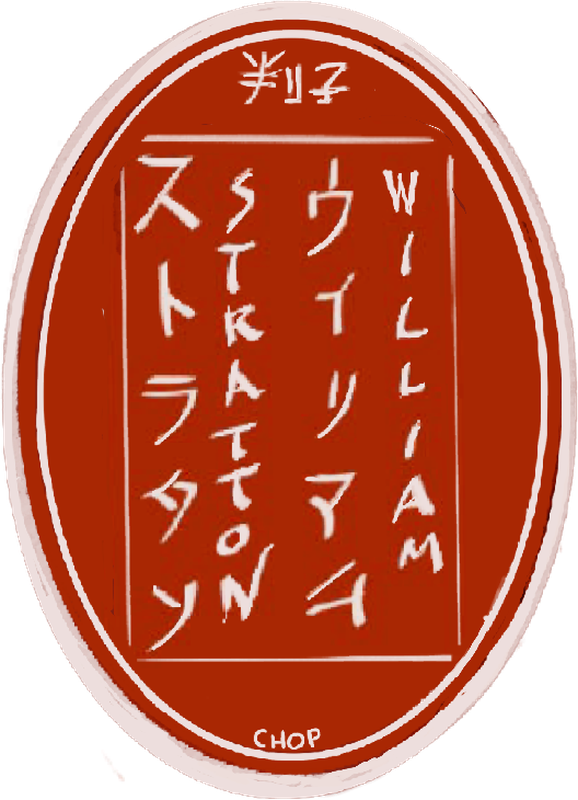 —Wm. F. Stratton, April 2026
Over 50 years of research into the Stratton, Schneider, King, and allied families—from colonial Massachusetts to Indiana and beyond. Built by Bill & Karen Stratton.
If you are tracing a Stratton line, start here. Harriet Russell Stratton's two-volume Book of Strattons is the most comprehensive Stratton genealogy ever compiled—both volumes are free and fully searchable online.